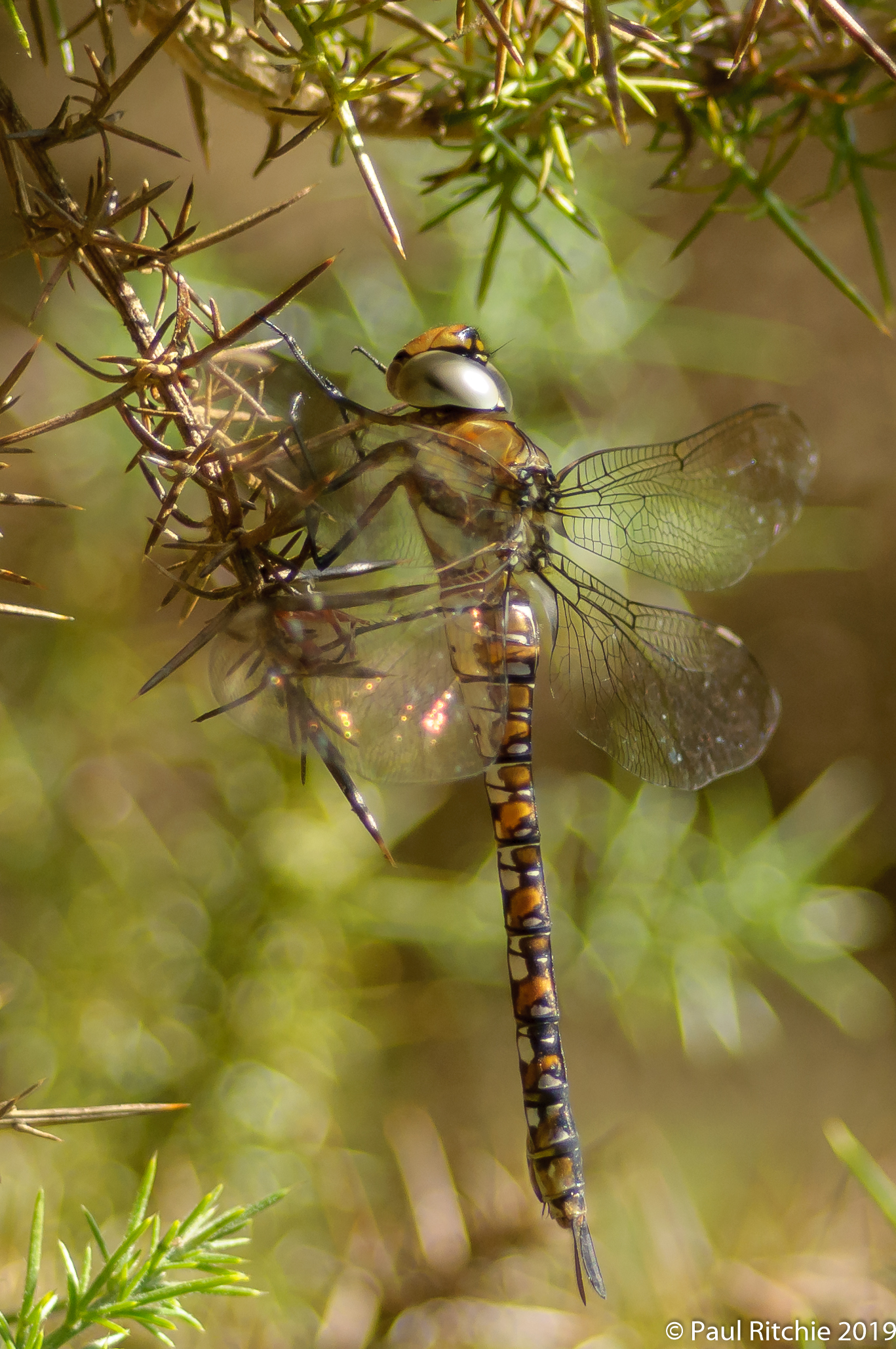
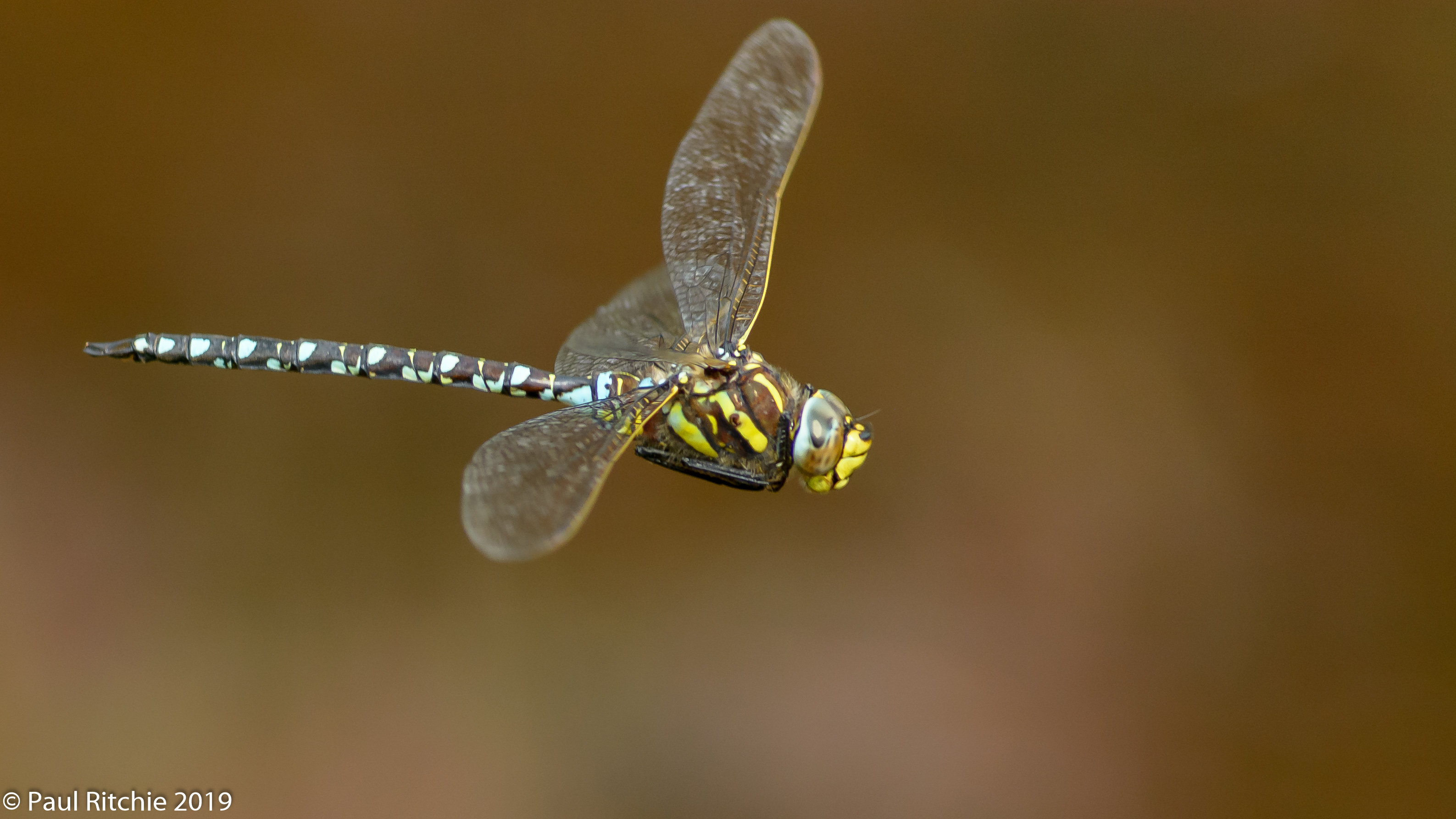
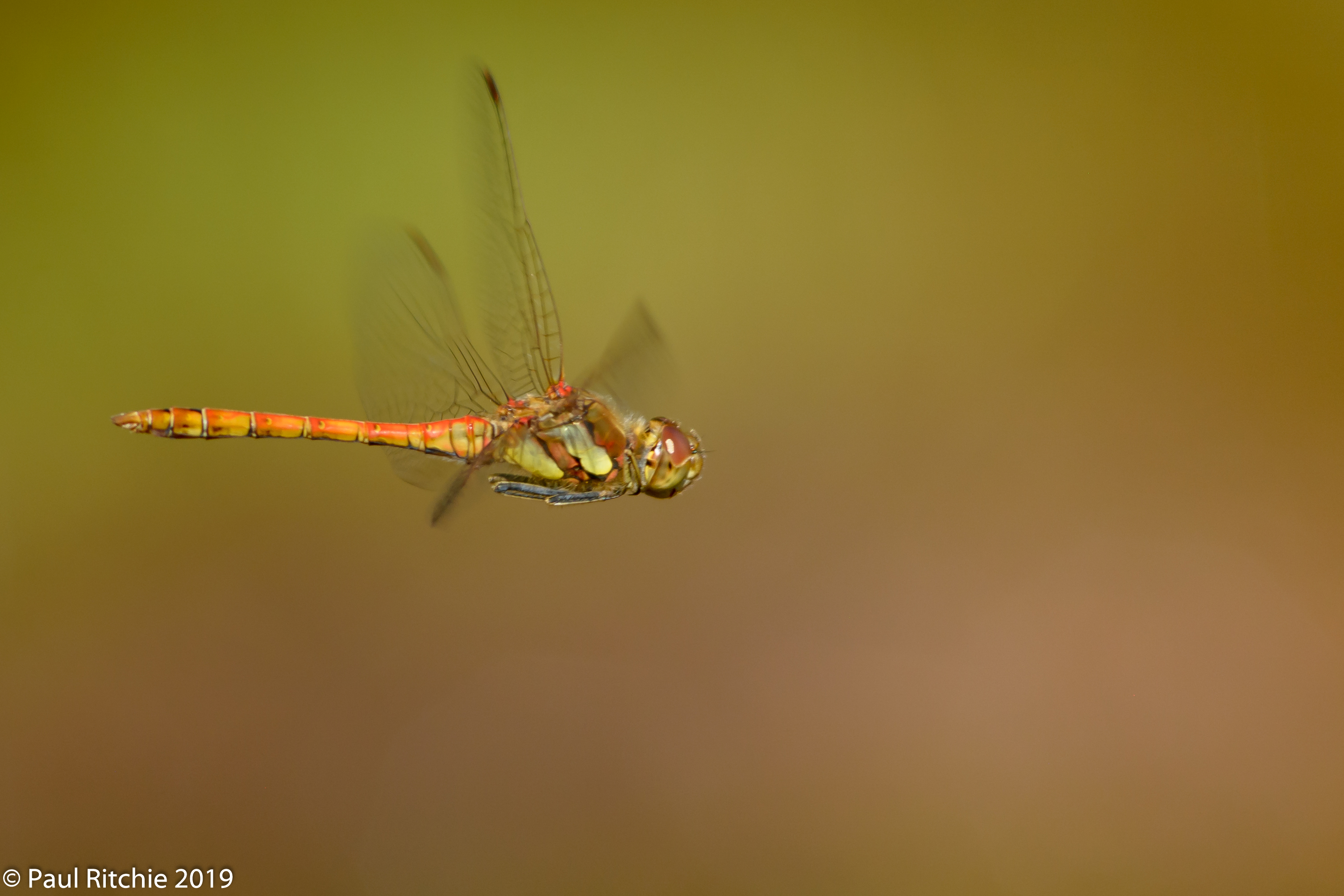
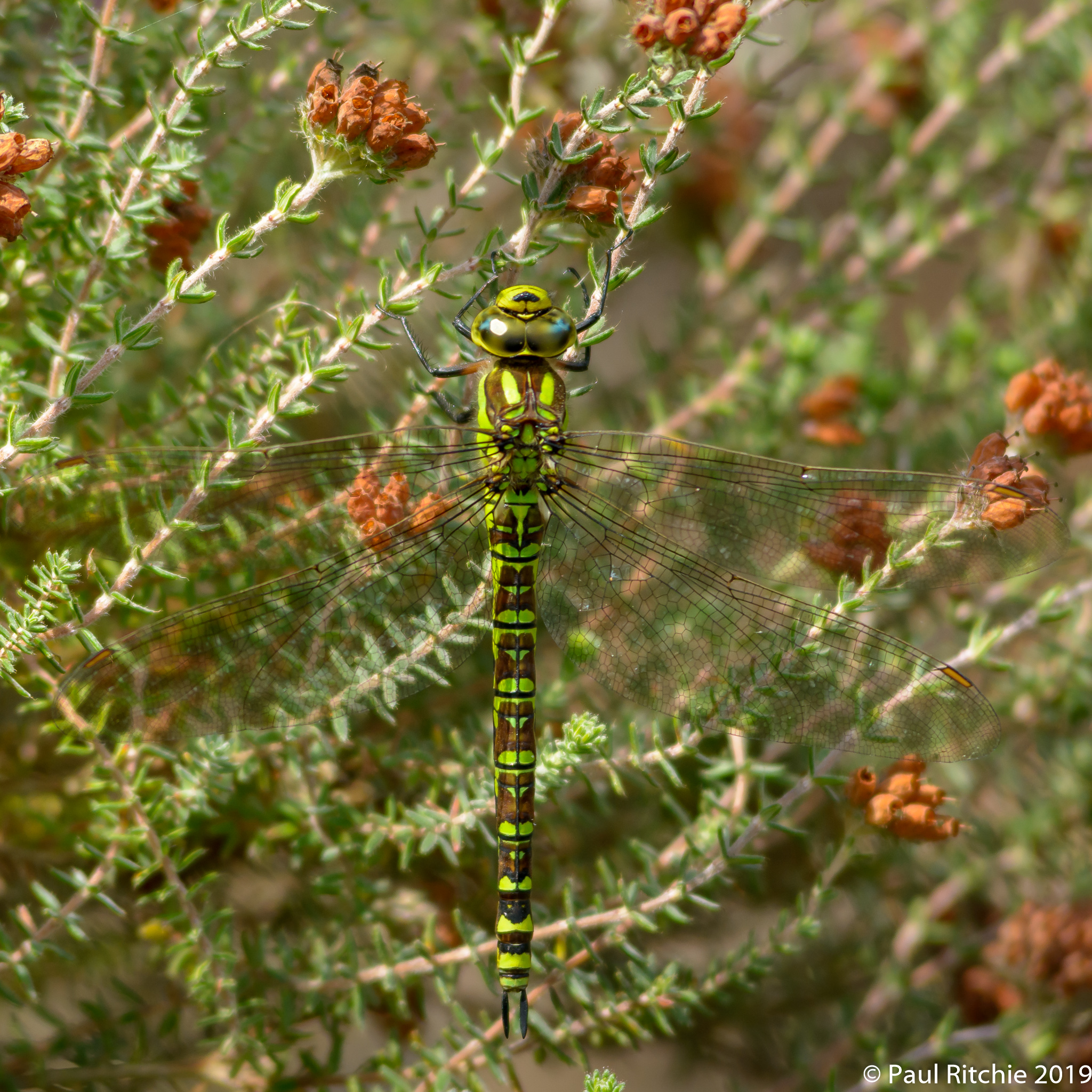
Now that we’ve reached a level of near normality I can visit some of those favourite sites at their peak. One such place is Crockford Stream where, provided it is sunny, warm and not too windy, you are guaranteed a good day during July.
Crockford is also a favourite with friends of ours from Wiltshire who try to make at least one visit during the season. Being able to catch up and chat during the few silent moments is one of those benefits of being in like-minded company.
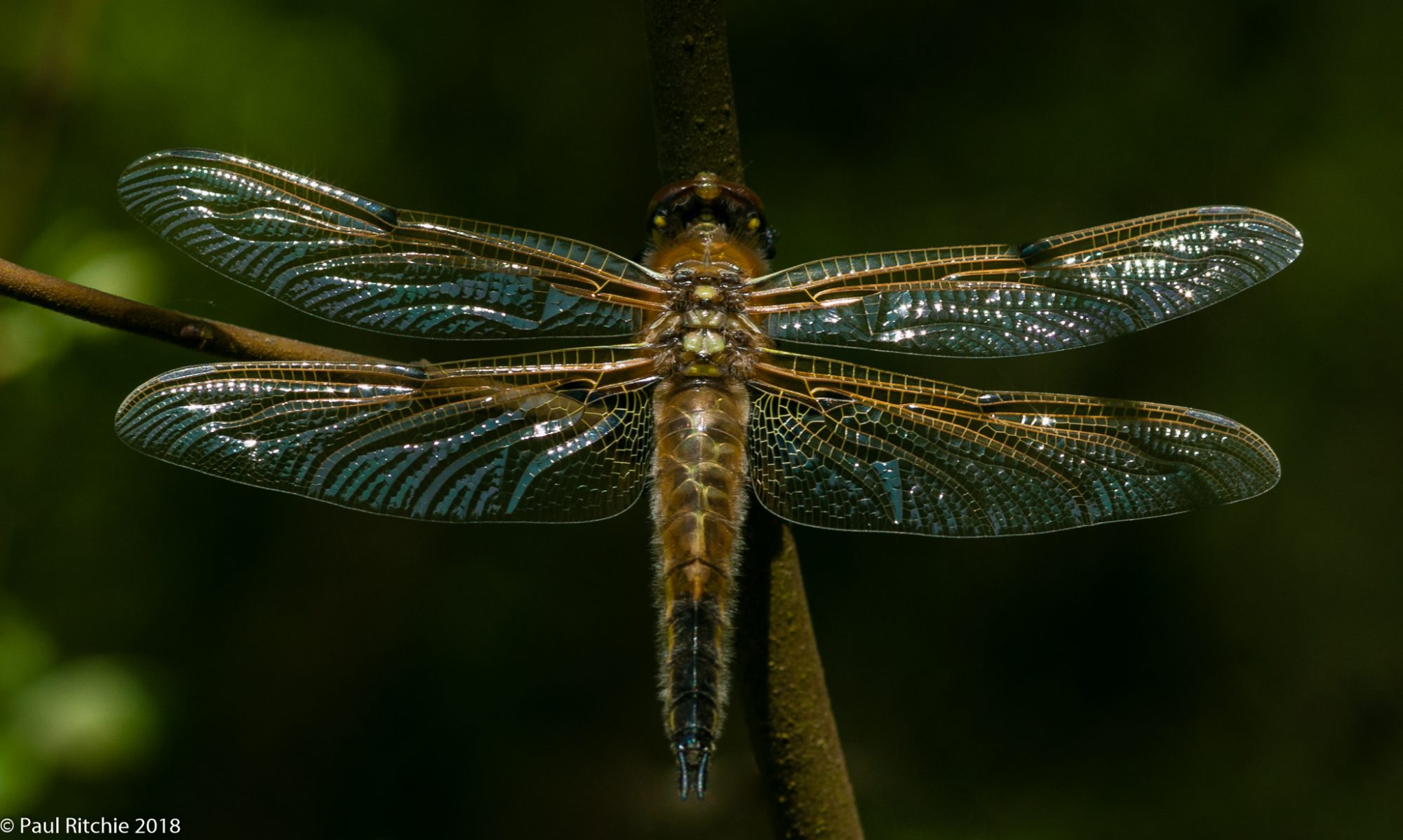
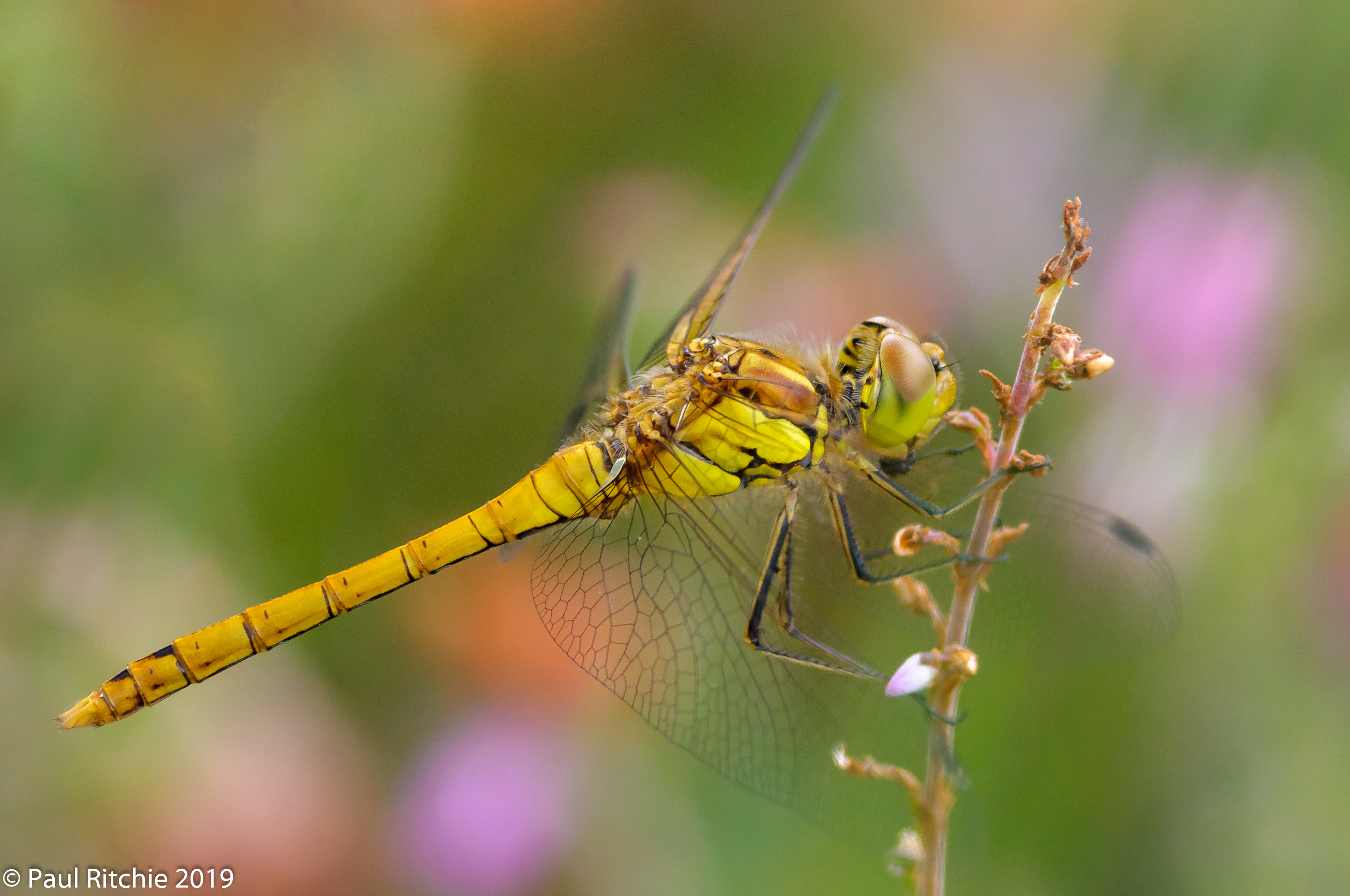
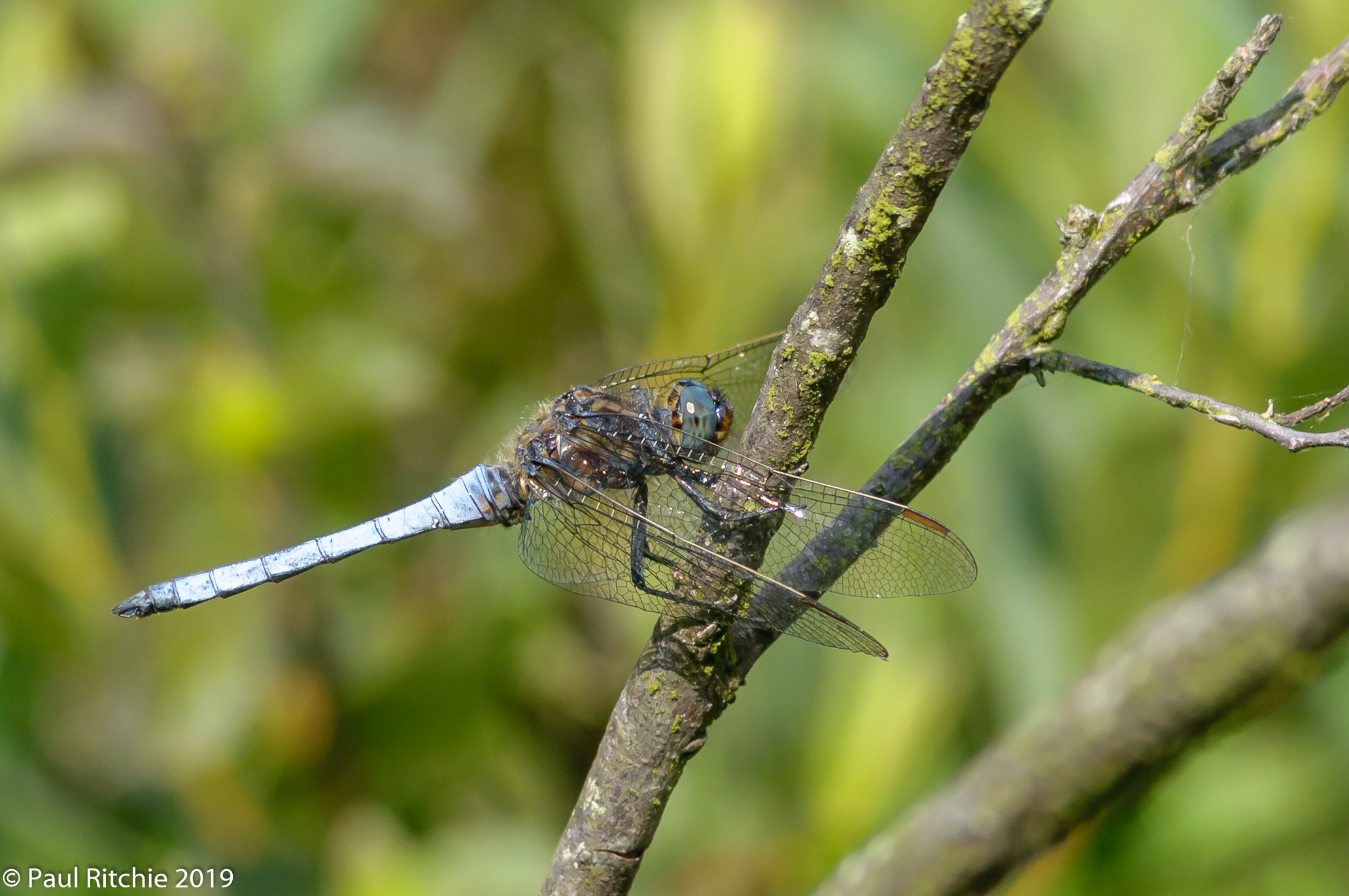
Keeled Skimmer (Orthetrum coerulescens) – male
There is no better cure for the soul than being beside a fast-flowing stream alive with activity. Losing yourself in empathy for creatures other than ourselves makes you appreciate this world isn’t all about humans.
Watching their behaviour over the course of a few hours reveal secrets
we would otherwise fail to understand. The seemingly unexplained
disappearance preceding a drop in temperature or change in pressure.
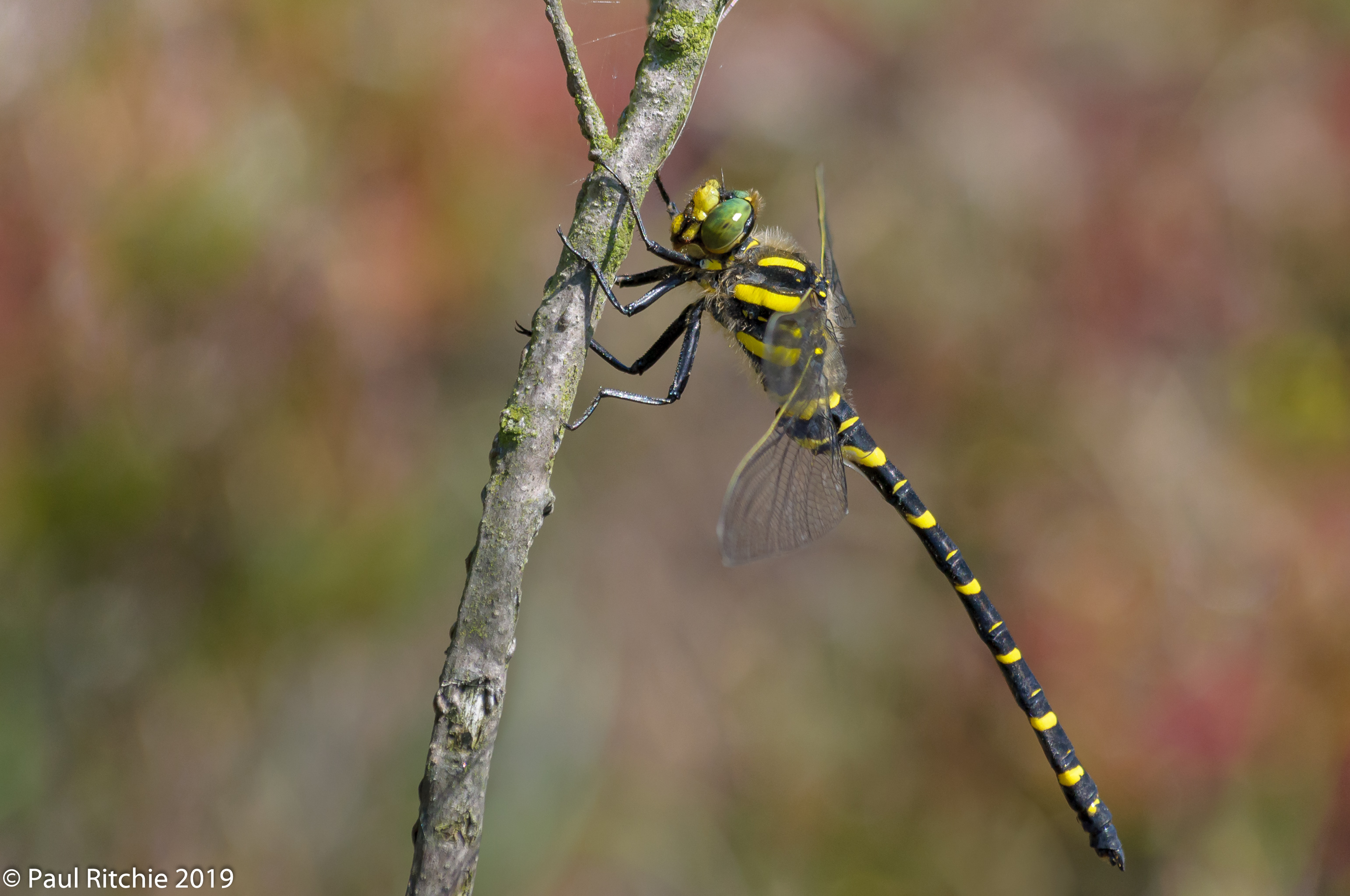
Female Golden-ringed dragonflies prefer to choose these quieter moments to come down to the stream to oviposit, avoiding the gaze and inevitable pursuit of any male in the vicinity.
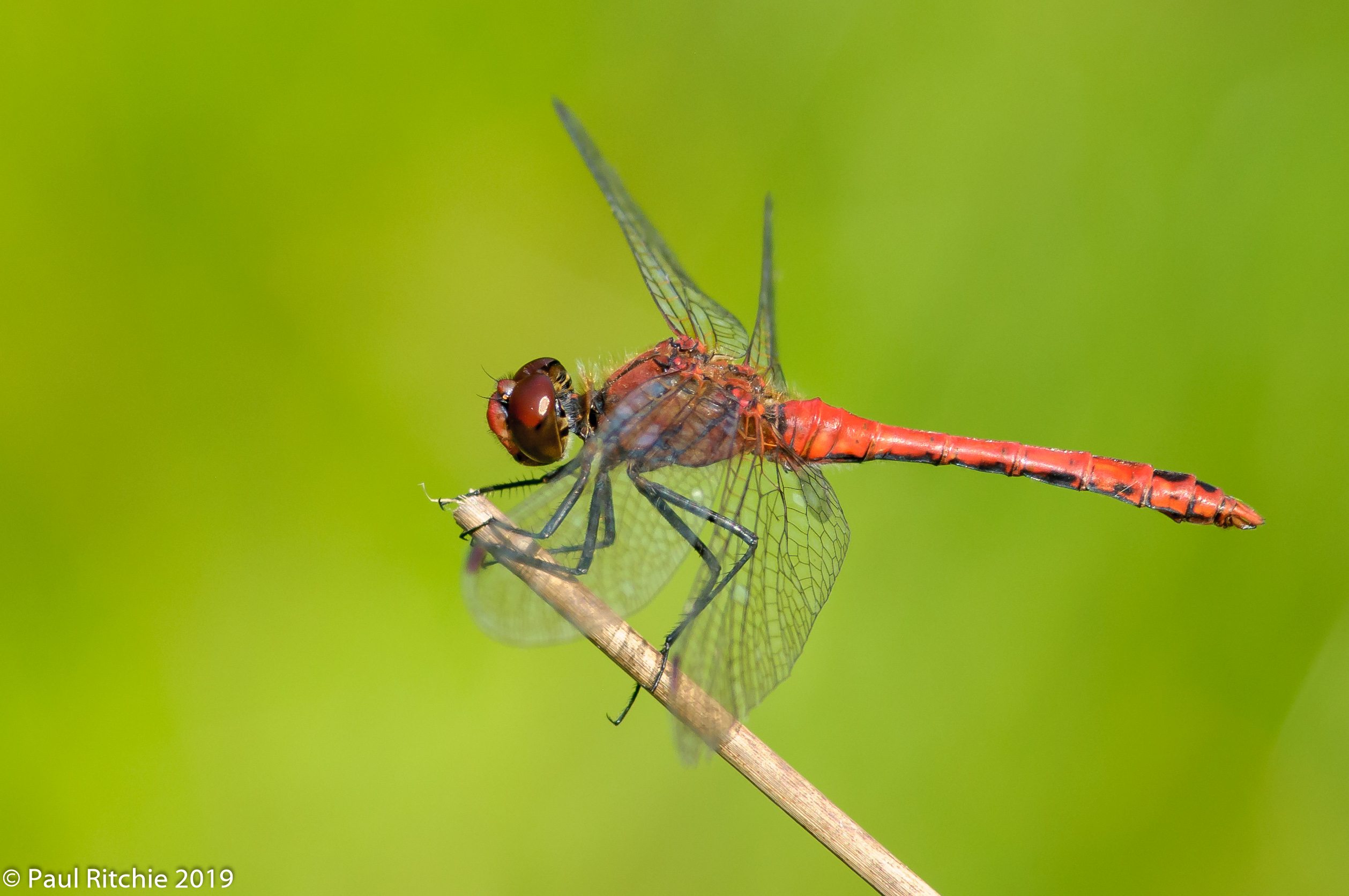
Ruddy Darter (Sympetrum sanguineum) – male
When I’m not engaged with friends or leading field trips I prefer to be alone or with just my partner in my pursuits, We therefore choose to avoid the New Forest and other honeypots on weekends.
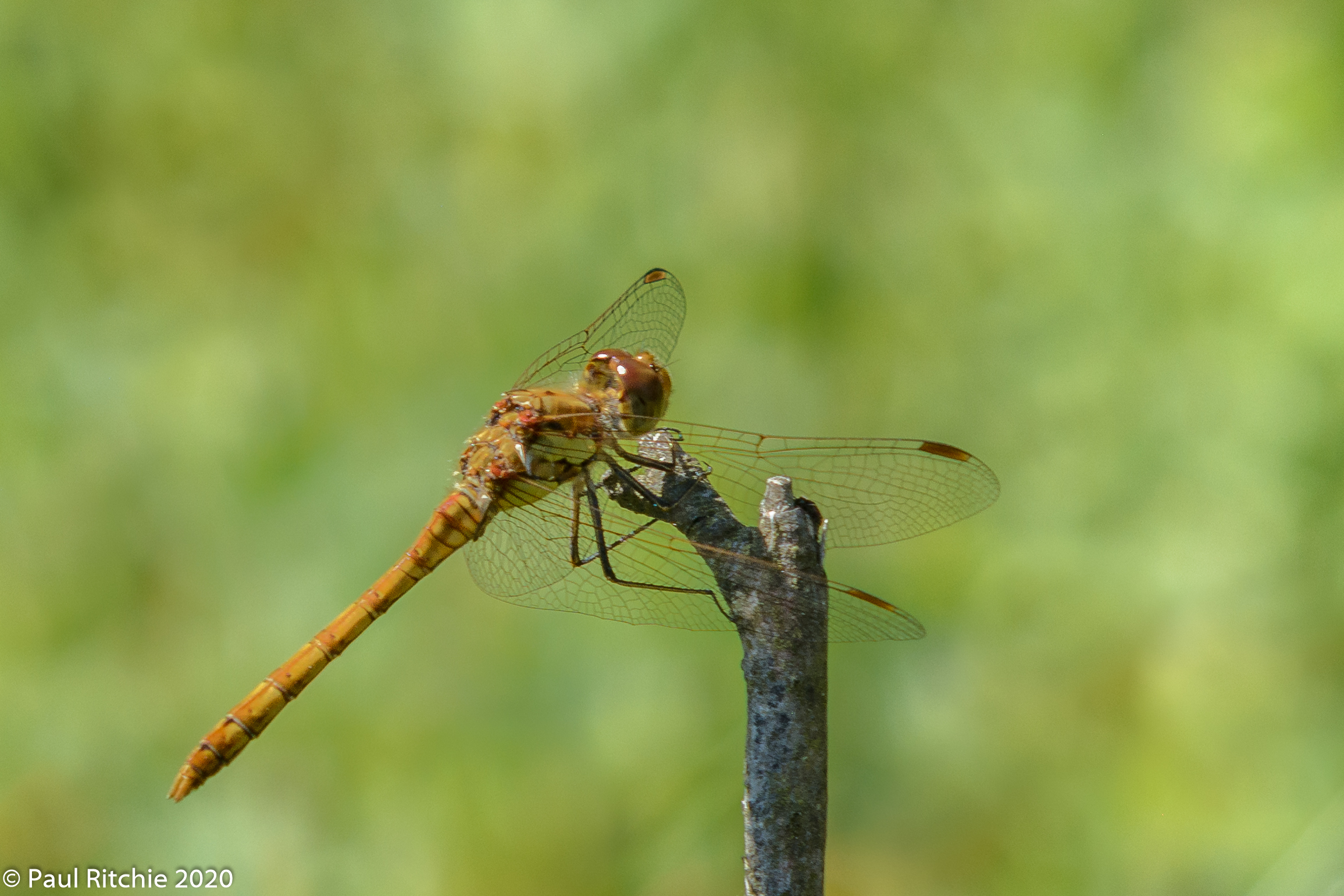
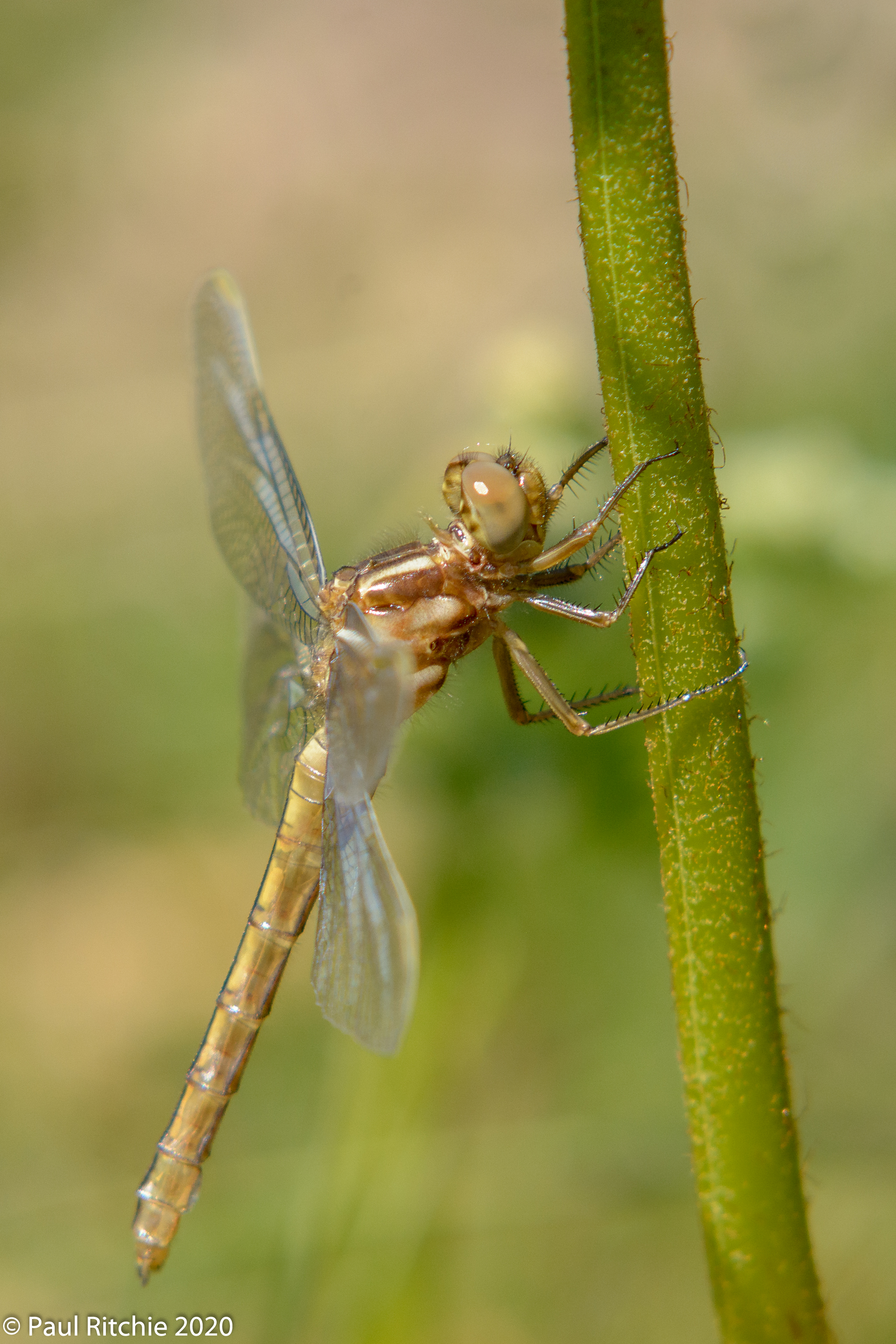
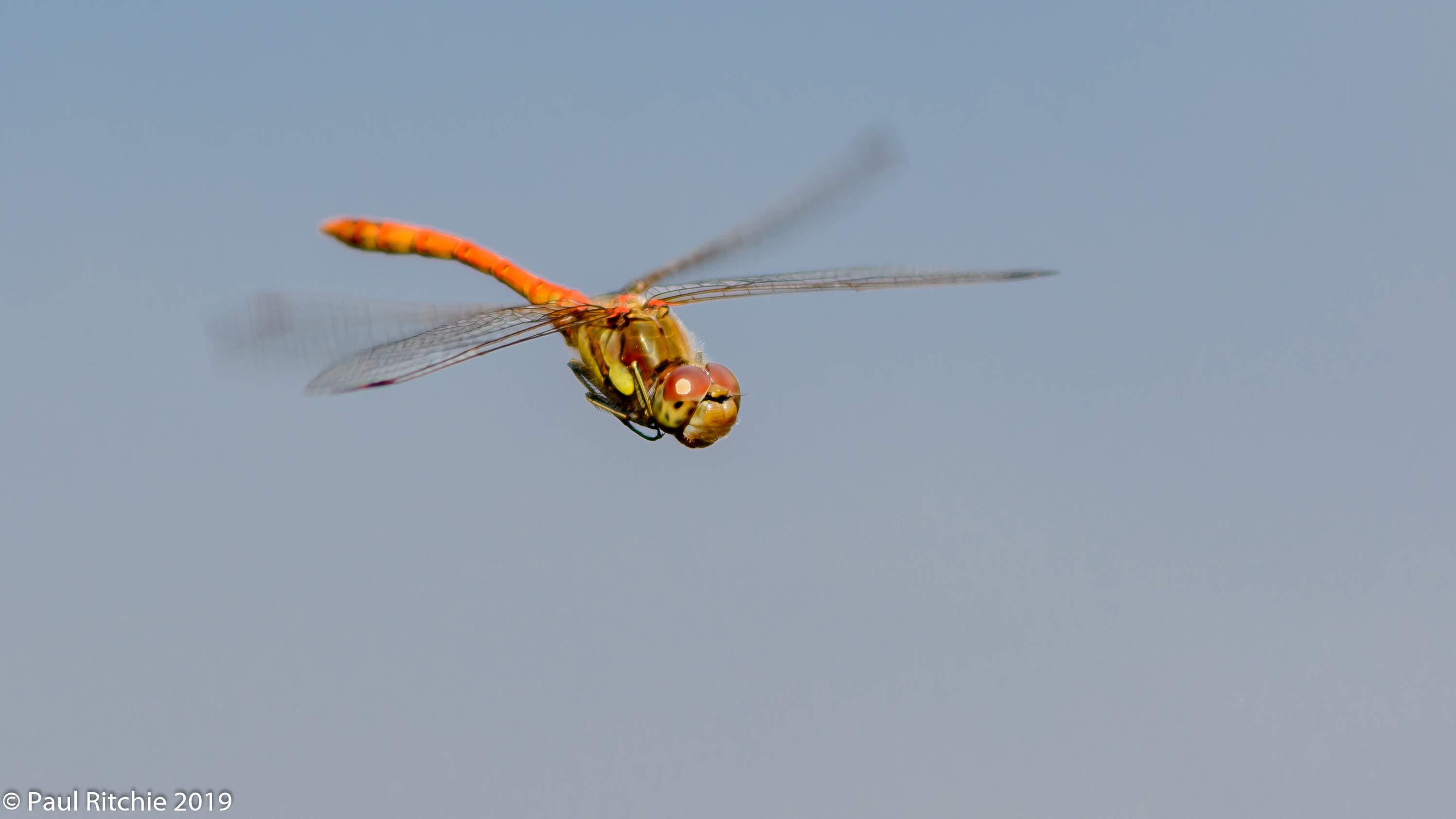
Common Darter (Sympetrum striolatum) – immature male
We have a few favourite hideaways where we barely encounter another human, something that is becoming ever more challenging in this overcrowded island of ours.
Sometimes these quiet hideaways are purely a form of relaxation and sometimes they reveal unexpected surprises.
The lack of opportunities to get out has hindered my usual seasonal routine of observe, reflect and surmise; a method I’ve been used to these past ten years, hence the delay in updates.
At least the easing of lock-down meant we could travel to some favourite spots to partake in our normal form of exercise.
A whole new strategy was needed this season. Those precious days needed to be used wisely. Choose only those locations which would bring maximum returns, waste no time searching for the proverbial needles and choose only to go out on the those days where the weather was at it’s most favourable.
Another consideration was sharing these days with Sue and making sure each day would be remembered as a day out rather than just an Odo hunt.
Having Sue with me had the added advantage of an extra pair of eyes; eyes which could lock in on those damselflies which managed to evade mine or see something happening outside of my peripheral vision.
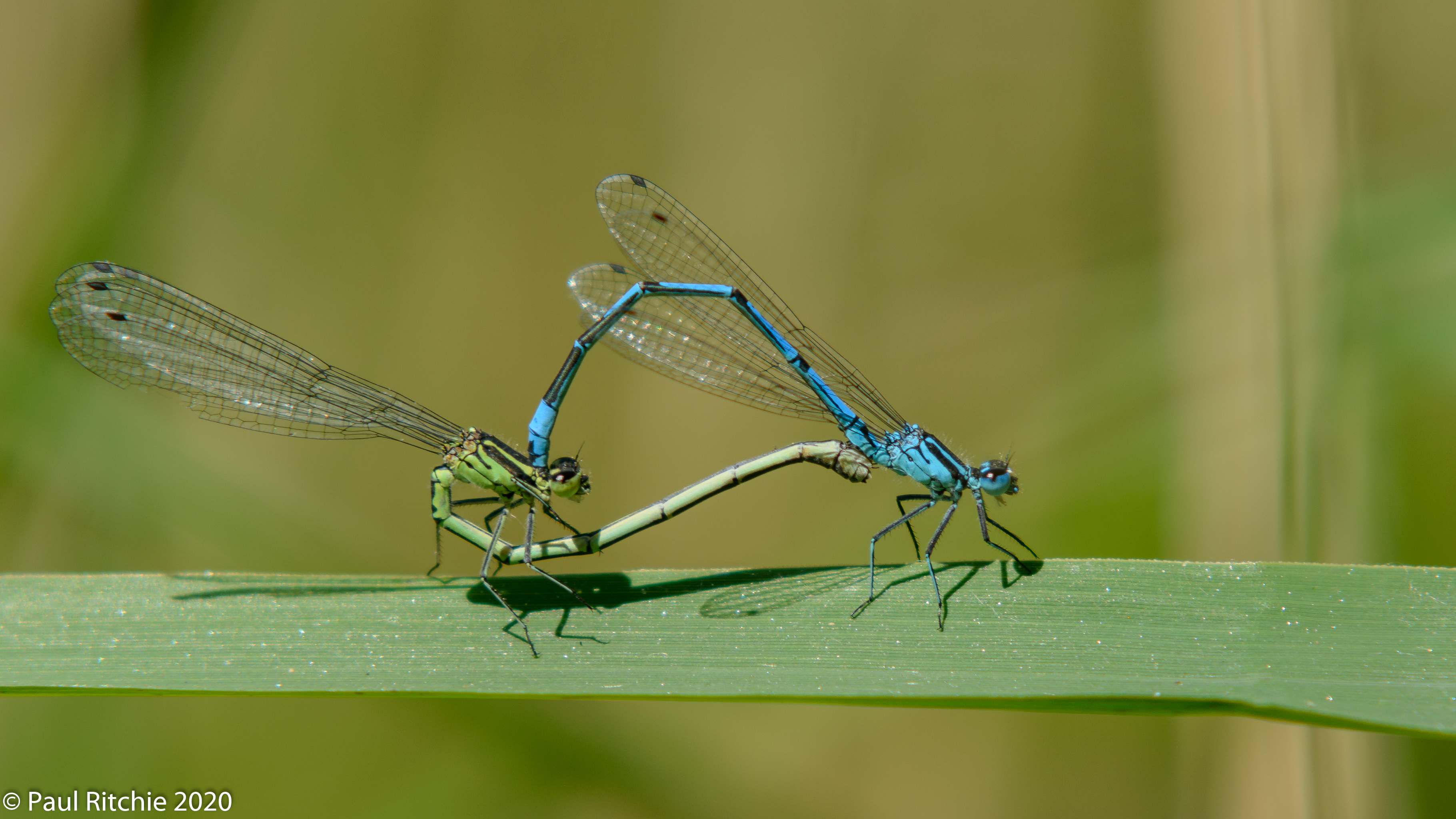
Azure Damselfly (Coenagrion puella) – pair in-cop
An unexpected benefit of the restrictions has been a greater appreciation of these days in the field, taking me back to those early years when I was fascinated and hungry, but without the impatience of inexperience.
Every observation was a delight where time slowed down,I could drink in the moment, searing it into memory. There wasn’t the urgency to capture the moment on camera.
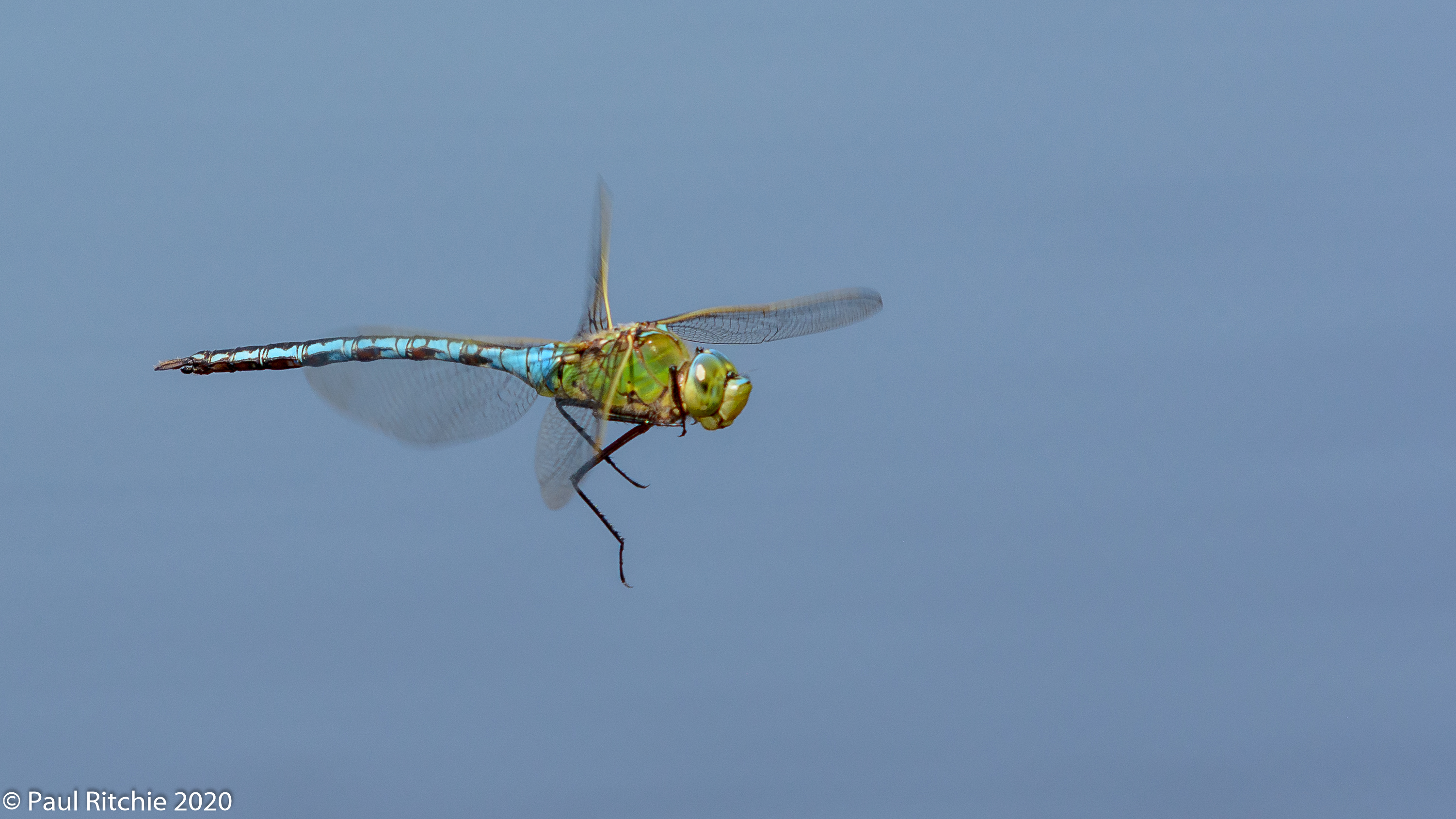
While I was walking along the edges of a meadow an immature Emperor would constantly rise up ahead of me. I wasn’t chasing him, I was looking around and ahead for other delights.
When I was reaching the end of the meadow he gave up escaping from an assumed threat and stayed put, allowing for a shot.
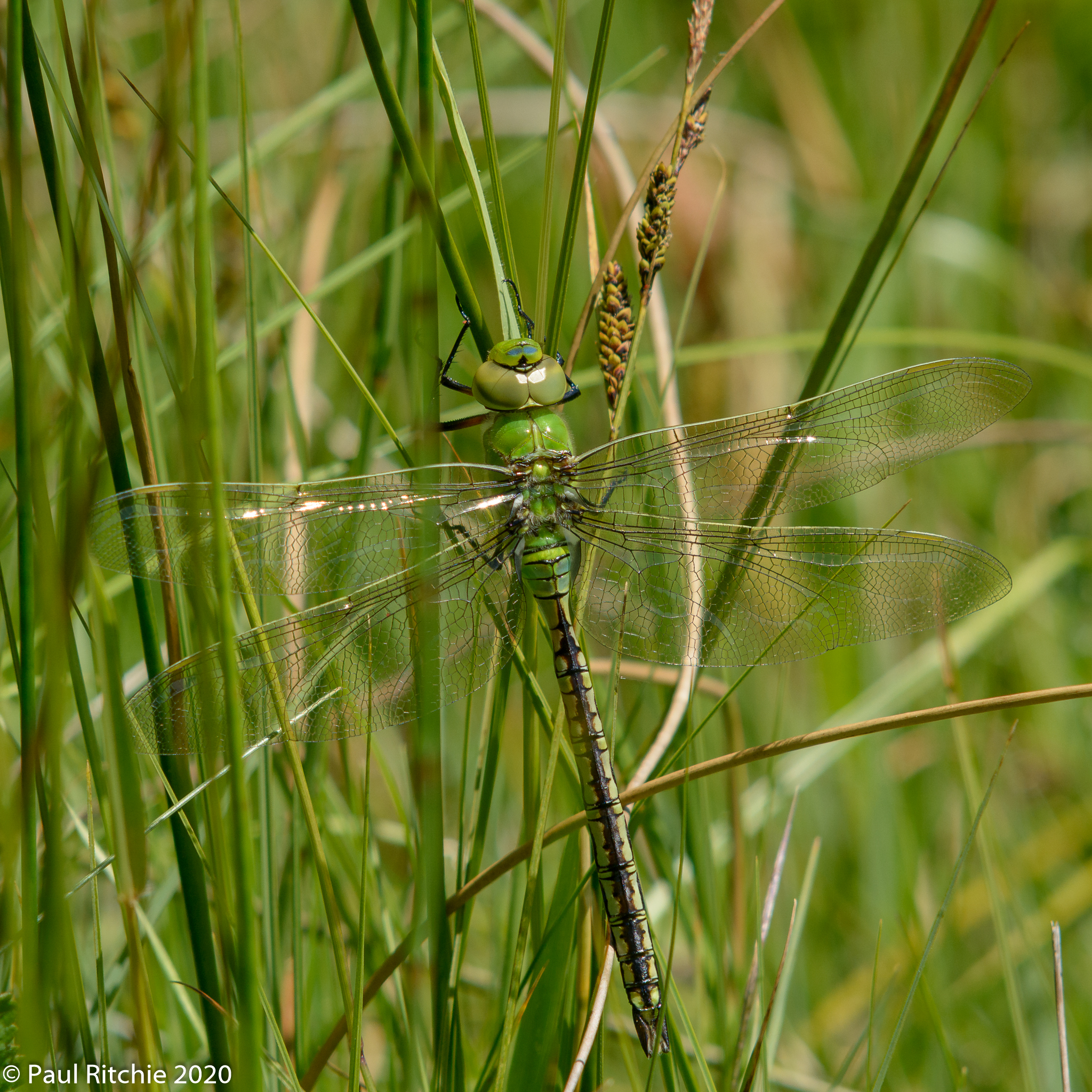
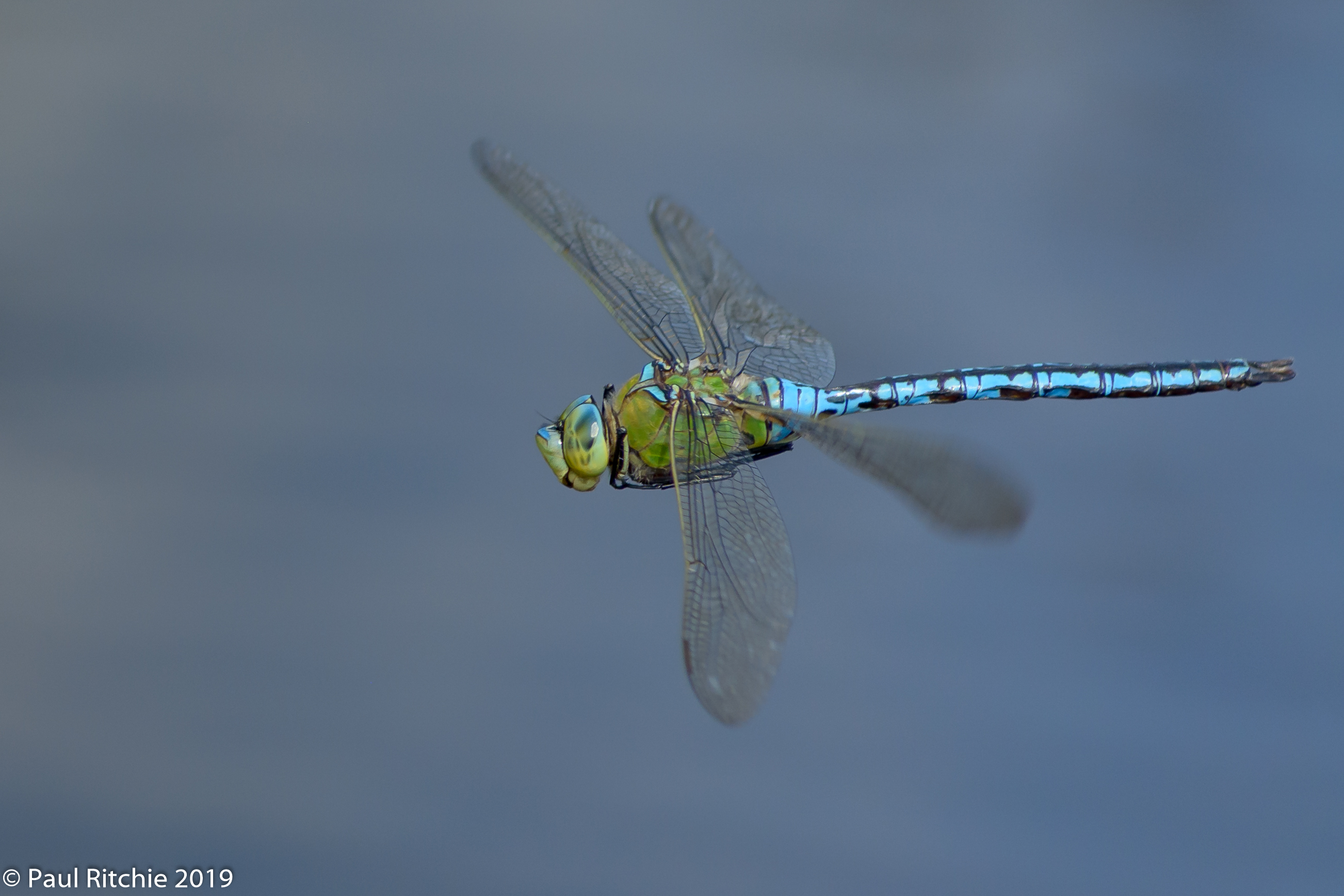
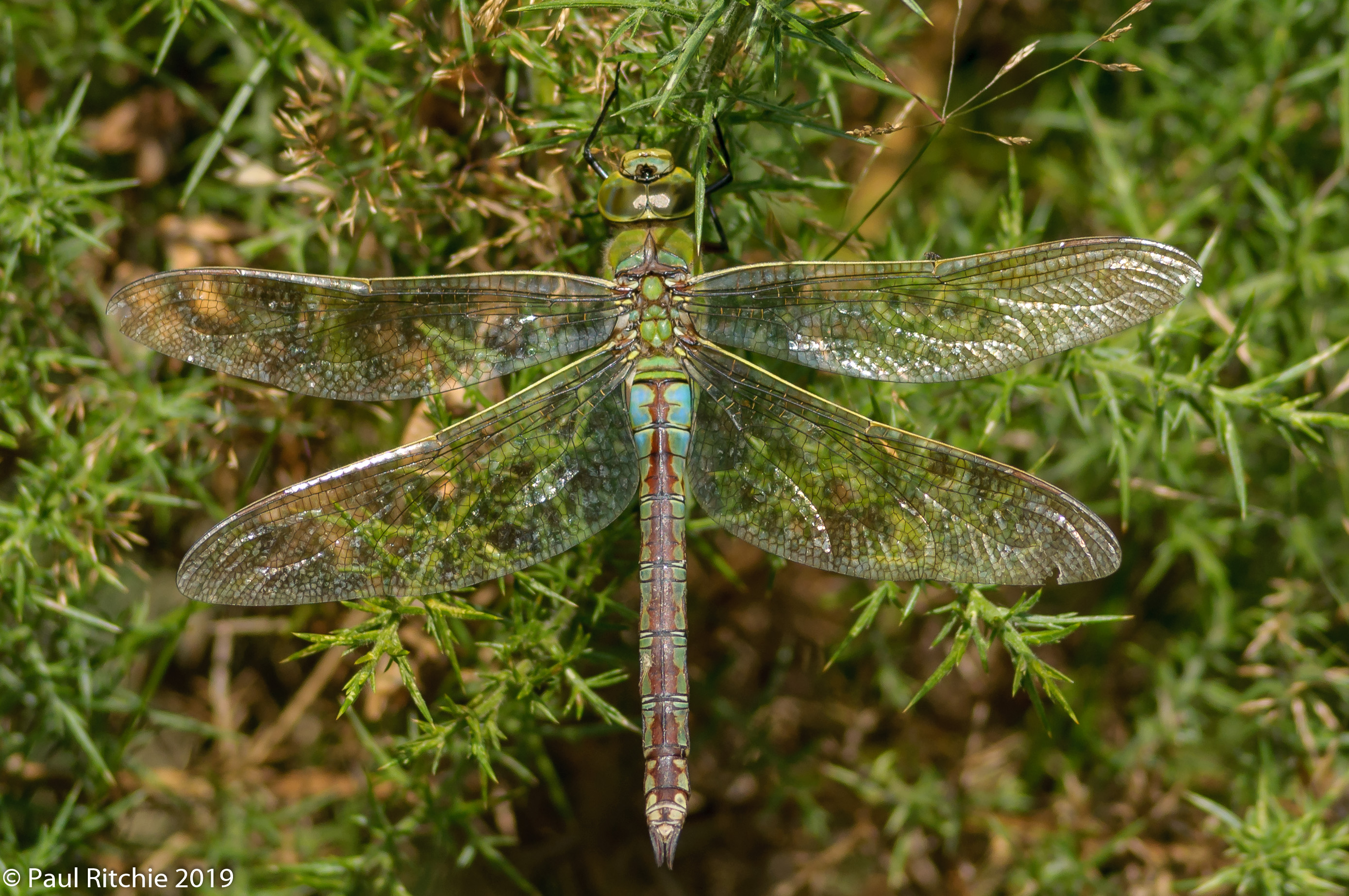
Emperor (Anax imperator) – immature male
After the lock-down restrictions were lifted there came a change in the weather. Not unexpected. The early emergence of many of our Spring species predicted as much.
I became even more picky, choosing only to go out when it was wall-to-wall sunshine and above 20 degrees. One, maybe two days out then a fortnight’s rest.
Emperor (Anax imperator) – male on patrol
One negative aspect of the lock-down has been land-grabs; by which I mean the taking away of available parking at chosen sites, whether it be outright ‘nimbyism’ as in the case of Bramshill or the extended closure of certain New Forest car parks, either through fear of overcrowding or that old excuse of ‘ground nesting birds’.
Don’t get me wrong, there is an obvious need for the latter’s protection, however I fail to see how preventing (minimal) human traffic is going to add to any damage already caused by free-roaming cattle and ponies.
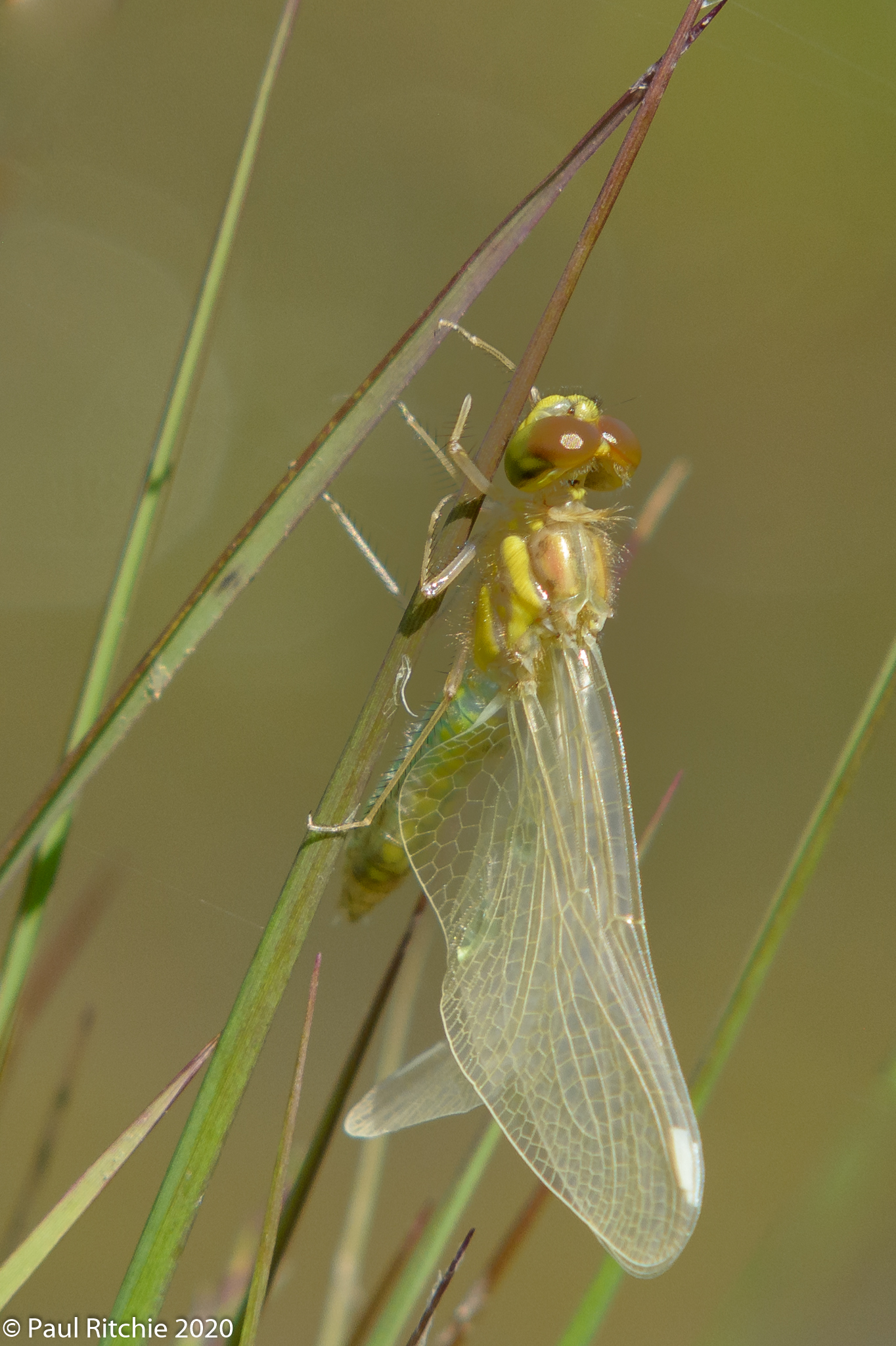
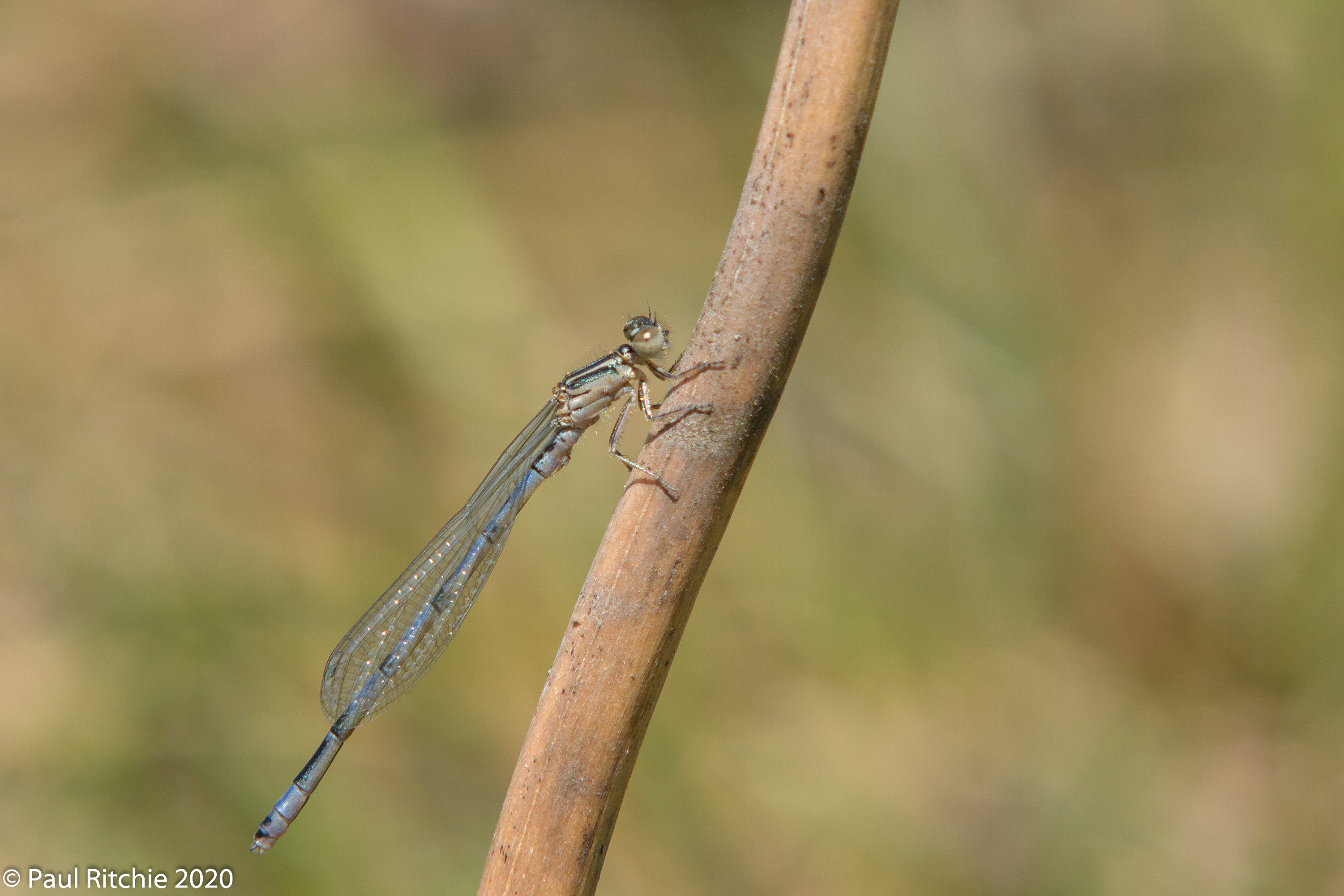
Southern Damselfly (Coenagrion mercuriale)- immature male
Fear maybe from general public’s outrageous behaviour of spilling into the verges or main road when honeypots are full, and here I can see their point.
The selfish actions of dozens of day-trippers at Hatchet Pond may likely see the introduction of dragons-teeth across the New Forest, or permanent closures affecting us all.
Keeled Skimmer (Orthetrum coerulescens)
Despite the restrictions it’s still been possible to count off the species at almost the same rate as usual, albeit in satisfying chunks rather than piecemeal. There is no need to go out every day, or week for that matter.
I recall an observation many years ago that, geographical problems aside, it is possible to witness every UK native dragonfly species by only going out three times a year.
Don’t take that too literally – make it over three weeks and you’ll stand a better chance!
Every season I look forward to the first Large Red. Every season I look forward to a little diversity a couple of weeks later. Every season I look forward to May when things really get going.
This season I’ve had to wait until late May to get my first real taste. Ironically, it’s proved to be one of the best dragonfly Springs ever, with most species appearing a couple of weeks earlier than expected.
All this of course witnessed from home via social media, except for the solitary Large Red I found locally on one of my daily exercise walks.
Thankfully the lock-down restrictions were eased and we can now drive to a favourite place to indulge in our favourite form of outdoor exercise.
My first proper dragonfly day was a revelation. All those species I so eagerly searched individually for now presented themselves in a flurry of activity. A feast for the eyes and soul. Quite fantastic, and a reminder of my very first encounter which started this whole obsession.
Now given such a bounty you’d imagine I’d be taking shots of every species encountered, but I didn’t feel the need to. It wasn’t a race! I could sit back and enjoy the spectacle, which is precisely what I did for those first few moments.
I took up a perch at the side of the pond and indulged in the explosion of life before me. Large Red and Azure pairing up and ovipositing around my feet. Emperor holding territory away from shore. Four-spotted Chaser bickering with every trespasser.
However on this welcome occasion the real stars were the Downy. Dozens of males overlapping personal territories along the pond edges, seeking out one of the many females ovipositing deep within the rushes.
Pairings were plenty, and a little disappointing in that every pair rose and flew towards the treeline several metres away. It would’ve been nice to have at least one pair choose a nearby bush or sapling but in truth I wasn’t actually that bothered.
My modus operandi this (delayed) season is to wait until an opportunity presents itself. Sitting at the edge of the pond presented plenty of opportunities, albeit challenging considering it had been eight months since I last pointed a camera at a dragonfly, and I needed to clear away the cobwebs.
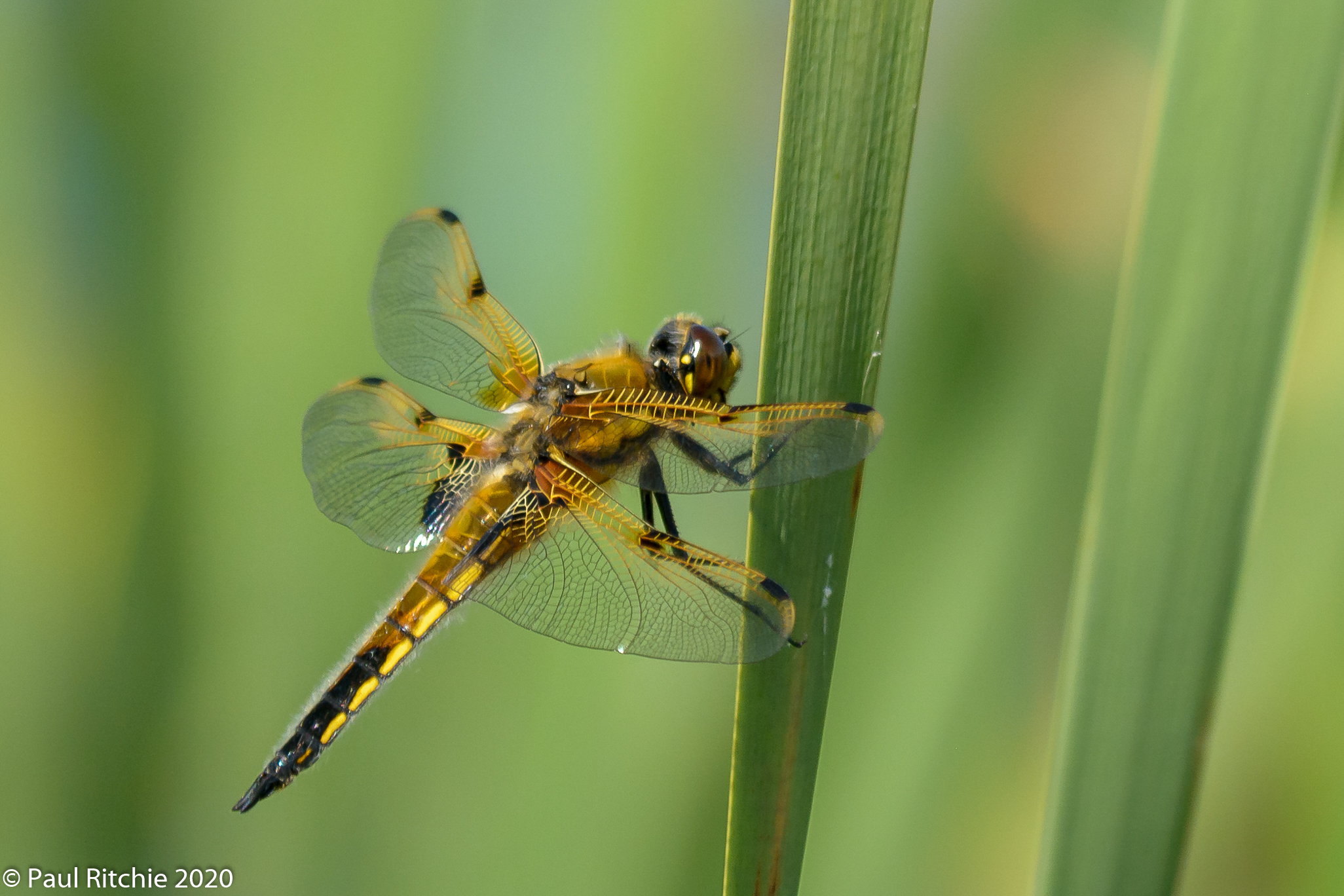
Four-spotted Chaser (Libellula quadrimaculata) – male
I did take a couple of walks around the pond just to take it all in, but was content to spend a few hours sat on my perch taking potshots at the Downy and reveling in the feel and sounds of nature all around.
No trains, no aircraft, no tractors, traffic or any human sound disturbing the ether. Just birdsong, raptor calls and the gentle clatter of battling wings before and around me.
Downy Emerald (Cordulia aenae) – male
A fantastic and most welcome return to the world of dragonflies, and an overdose of vitamin D to kick-start the body. Exercise and therapy in one marvelous package.
Reflecting on the days events reinforced the need to choose the days and locations wisely to minimise human contact and maximise returns.
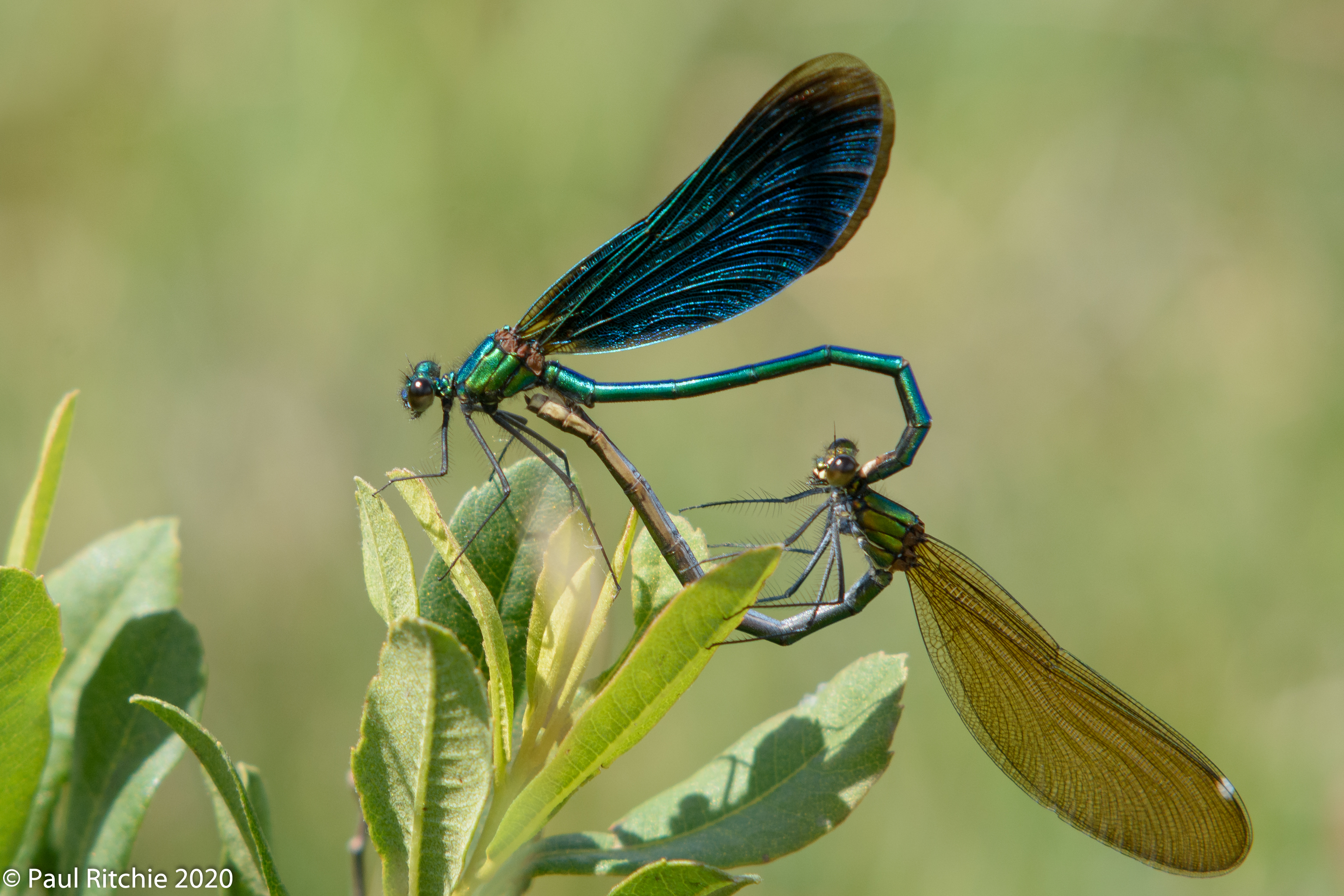
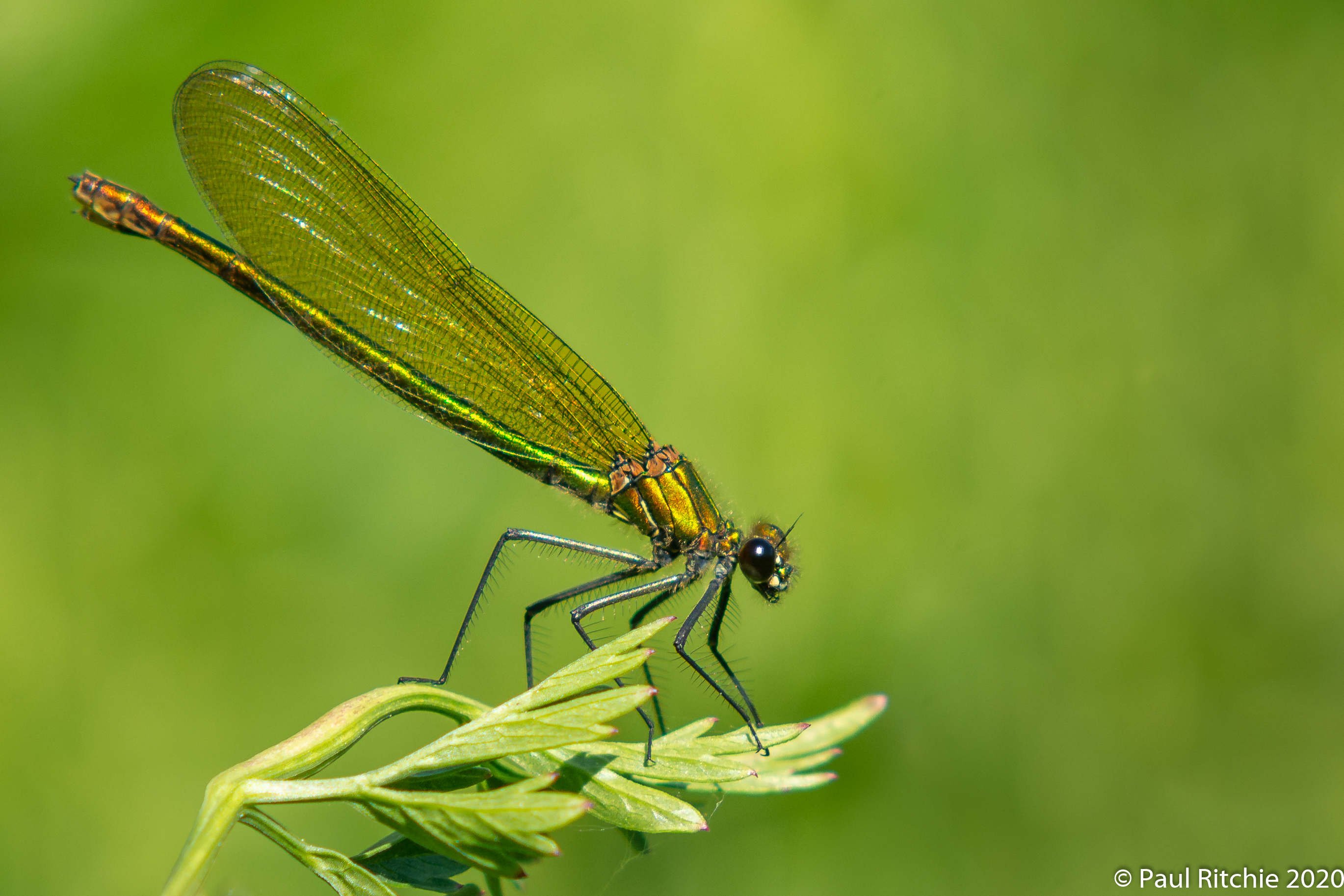
Banded Demoiselle (Calopteryx splendens) – female
The following week we chose another favourite place, except this time it was unusually filled with crowds of walkers – way more than we’ve ever encountered there before. Luckily we were able to avoid all by choosing hidden paths and ponds.
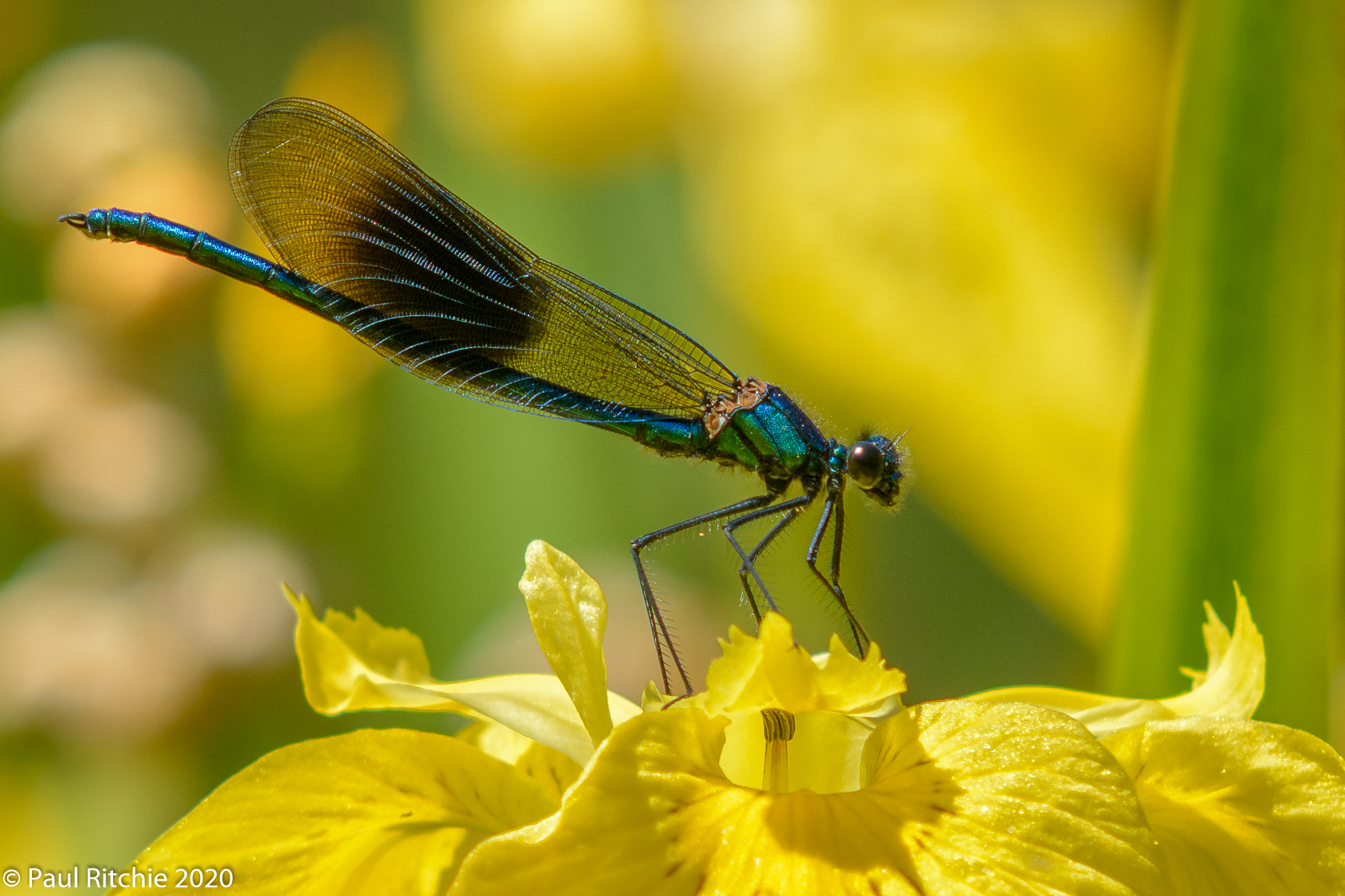
Banded Demoiselle (Calopteryx splendens) – male
An expected level of activity and a few more species to add to the season count, the best opportunities presented at a couple of favourite pockets.
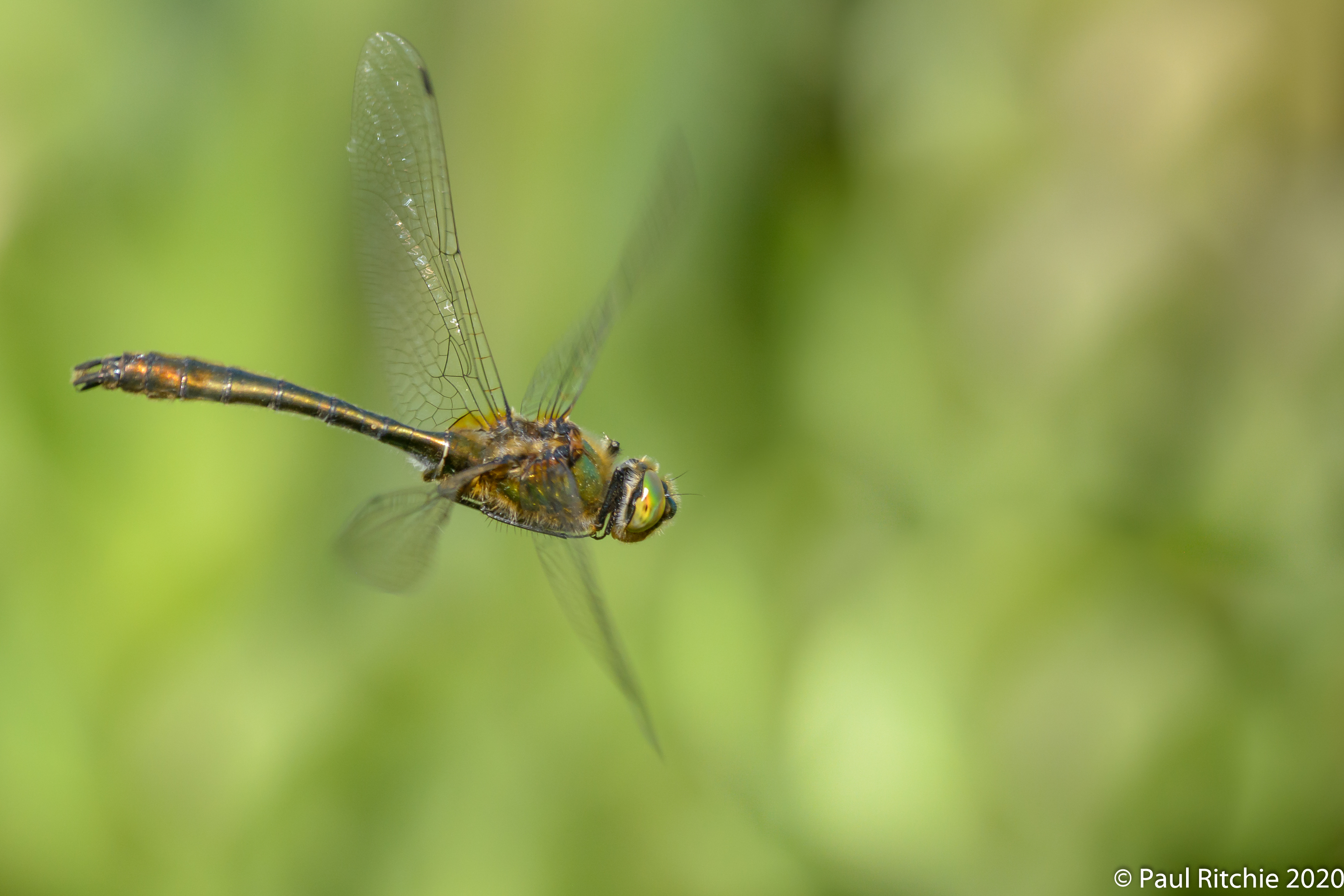
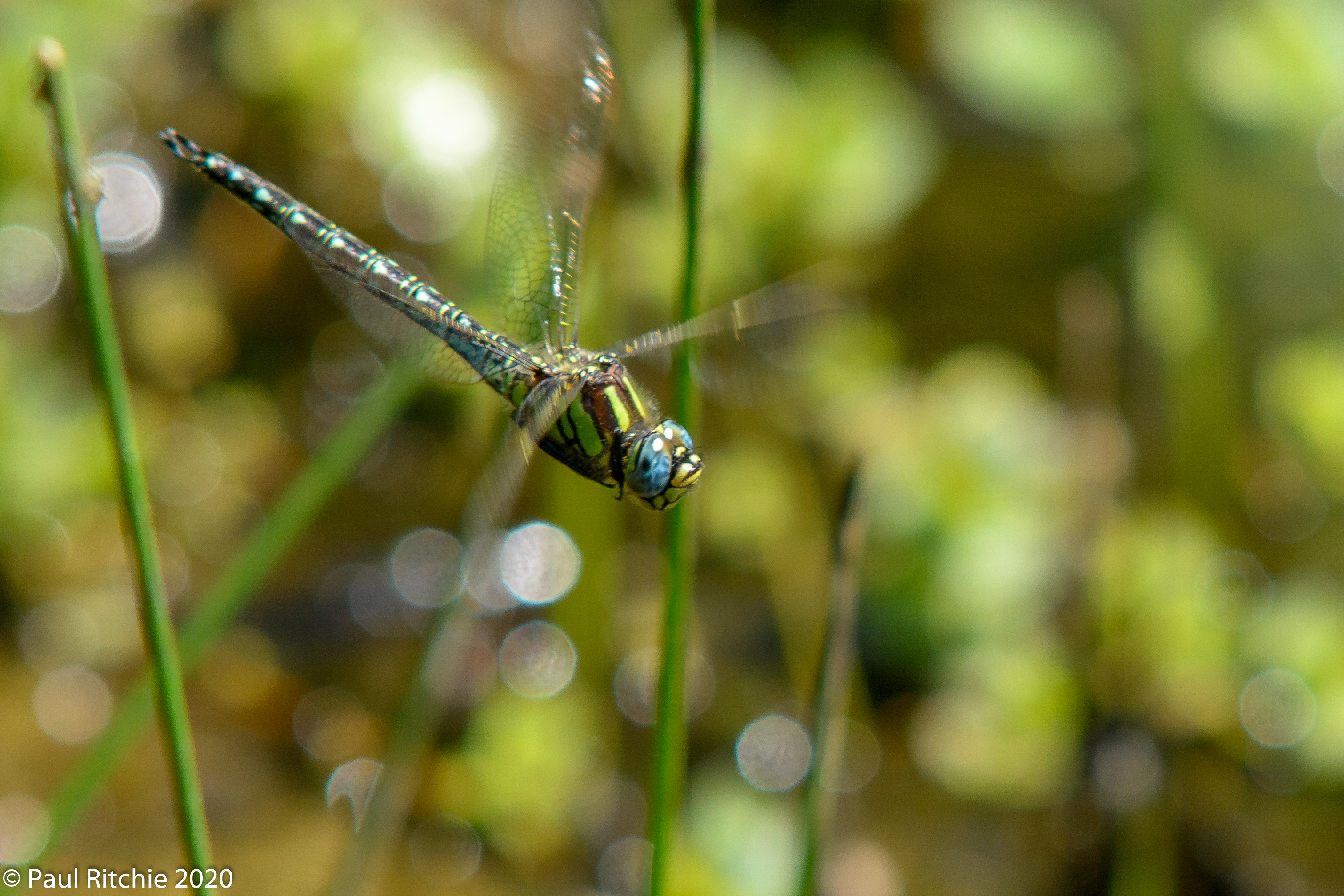
Hairy Dragonfly (Brachytron pratense) – male
A couple of most welcome days then, and the majority of sunny days following the rules. It’s sunny right now, as it was yesterday and will be for the next few days, so there’s no hurry.
Ten years chasing dragonflies and I’m still in love with them. Being a seasonal treat helps to forward the interest; every April I can’t wait to spot that first Large Red.
Then a wait for the other Spring species to emerge, then, all of a sudden, there’s a bounty to sink your teeth into. The spectacle of mass emergence where every step reveals the glitter of tenerals.
Species counts rising rapidly; the first sojourn to the Somerset Levels and local favourites providing endless opportunities. If the weather stays sweet it’s a non-stop feast throughout May, June and July while August allows some time to kick back, relax and enjoy the spectacle of a pond or stream.
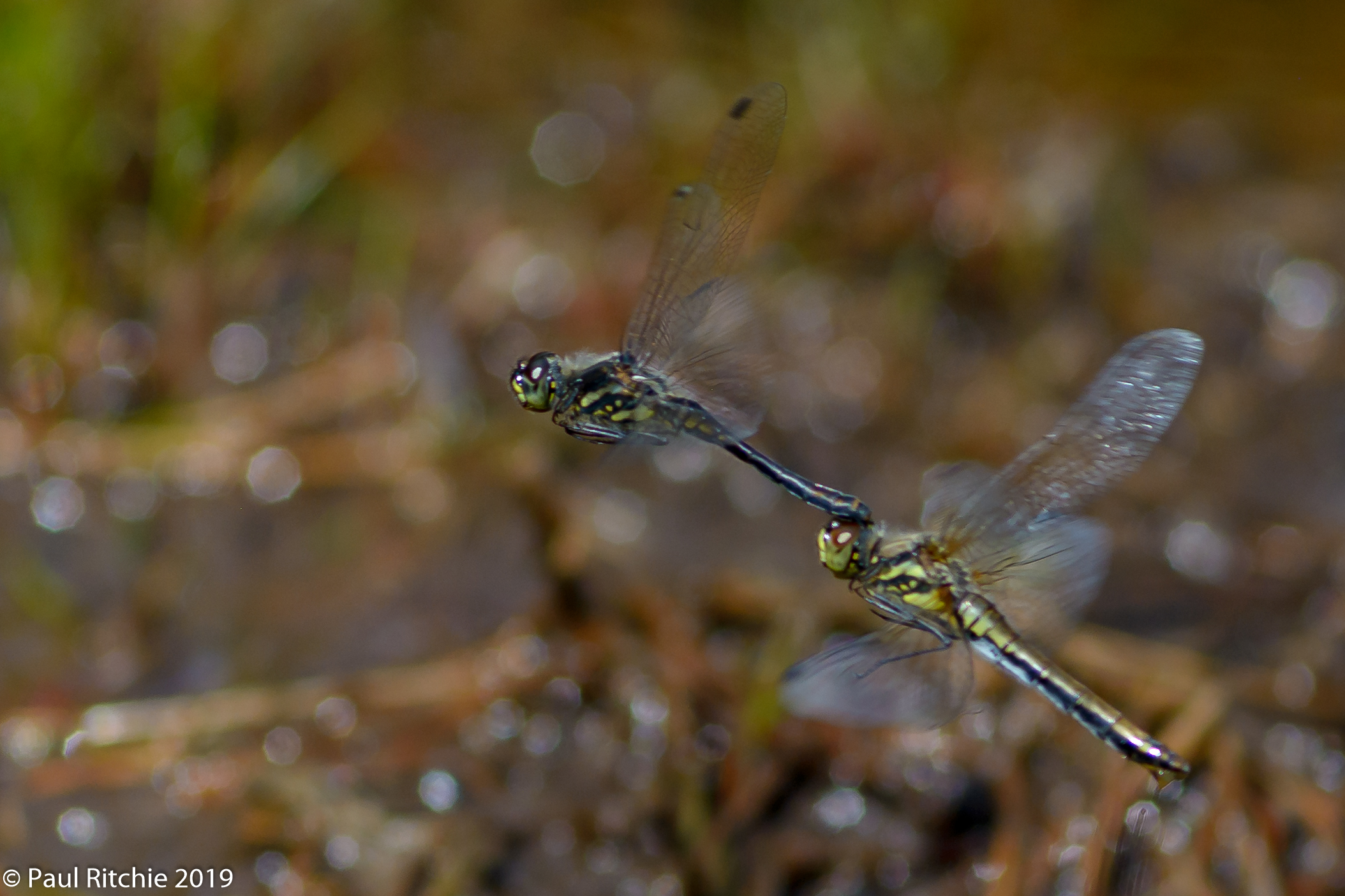
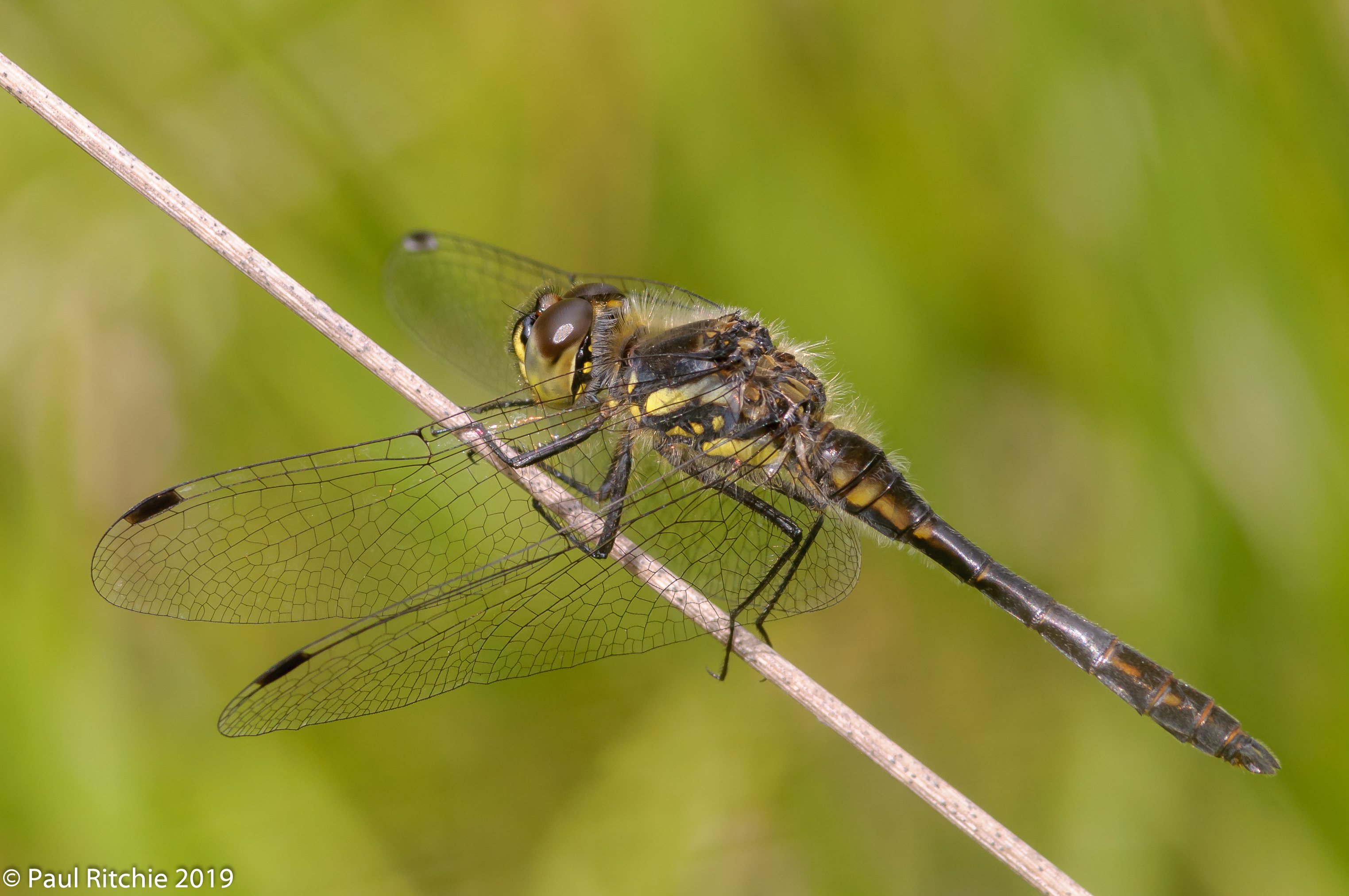
Black Darter (Sympetrum danae) – pair in tandem
August can be a fantastic month if the water levels are high enough and the temperatures remain above 20 degrees. This year however most of the ponds were dry, regardless of the rains we’ve had.
Emperor (Anax imperator) – male on patrol
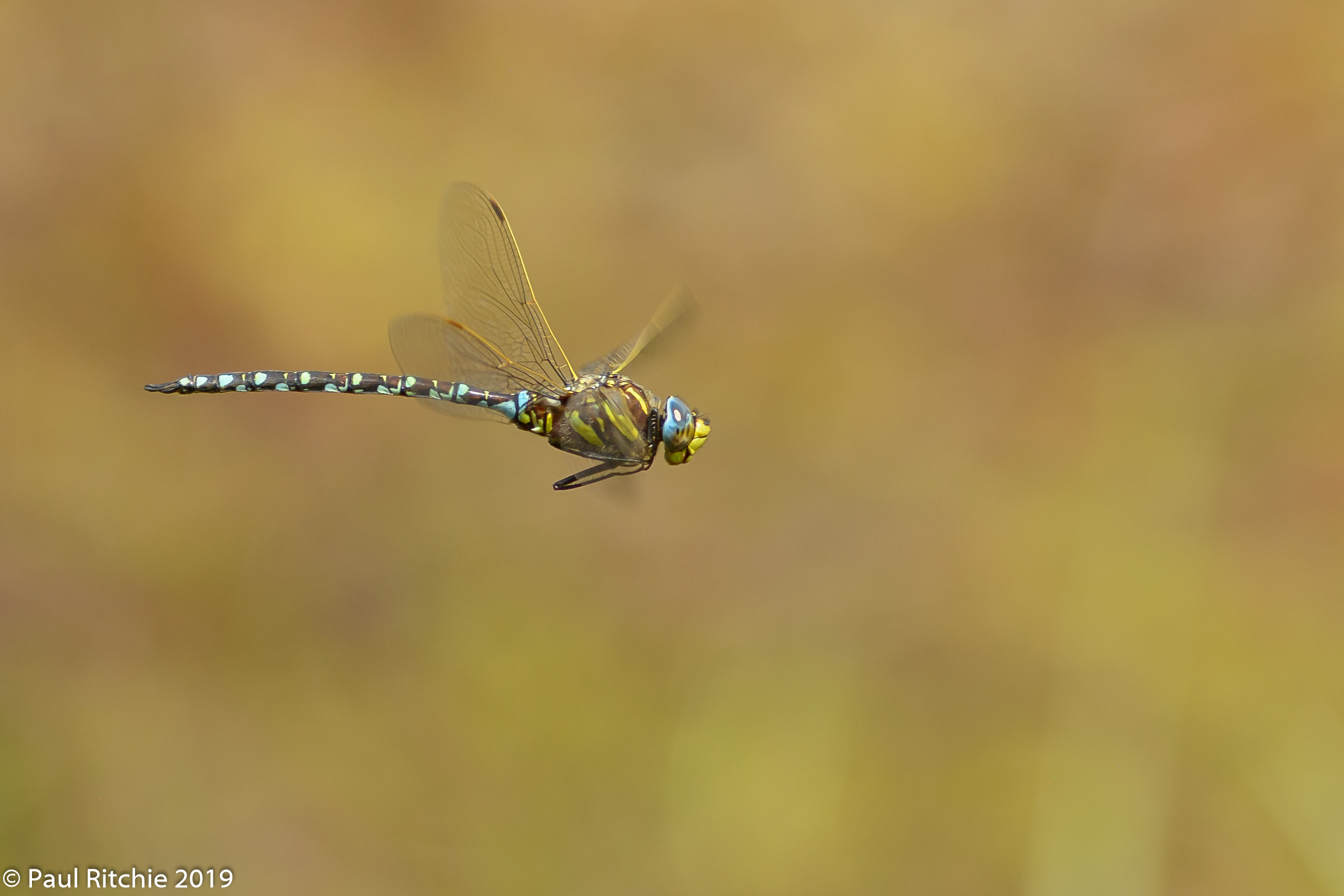
August is the month for Hawkers and there’s few things I enjoy more than spending a few hours at a pond engaging with a resident Southern, Moorland, Migrant or a Brown.
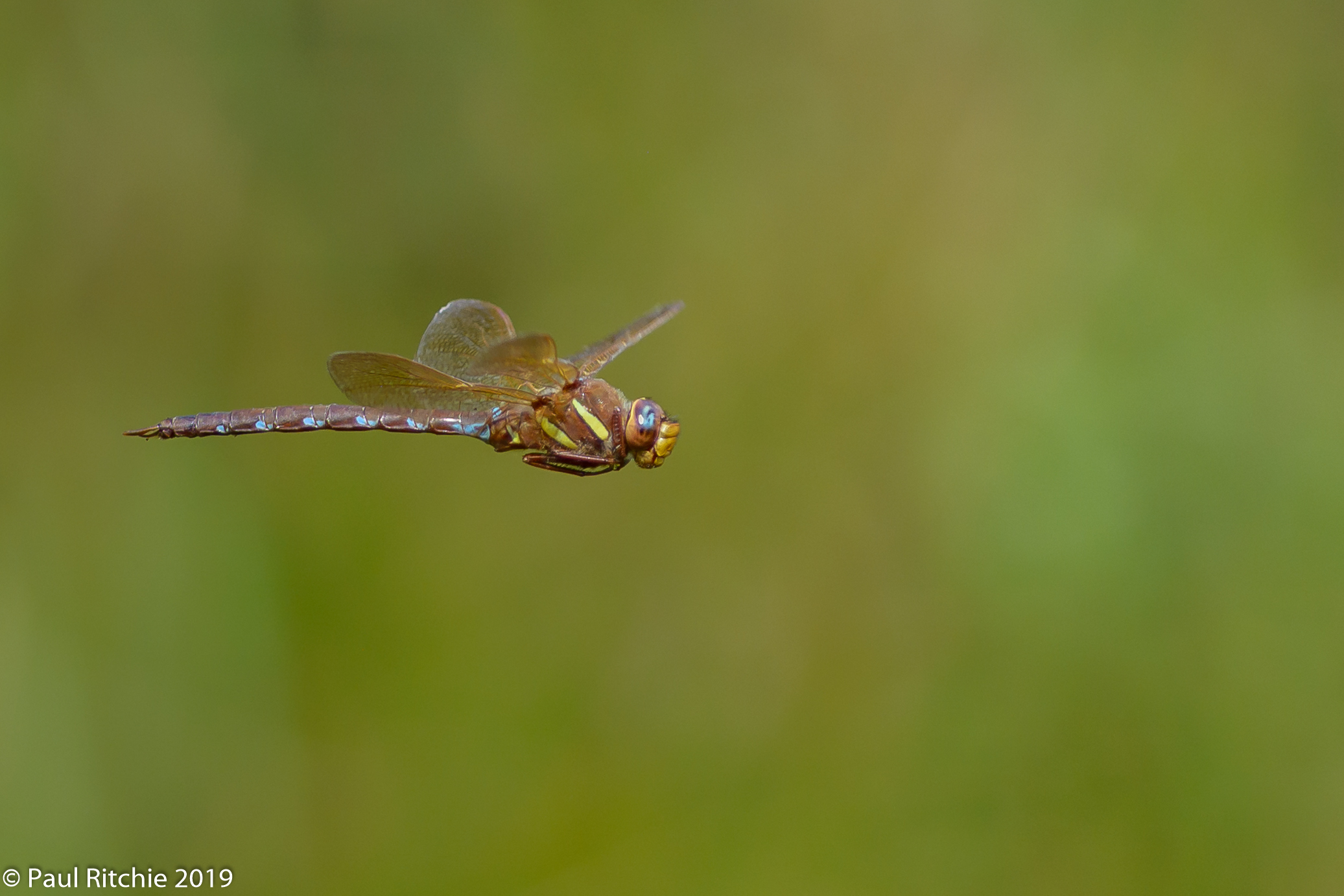
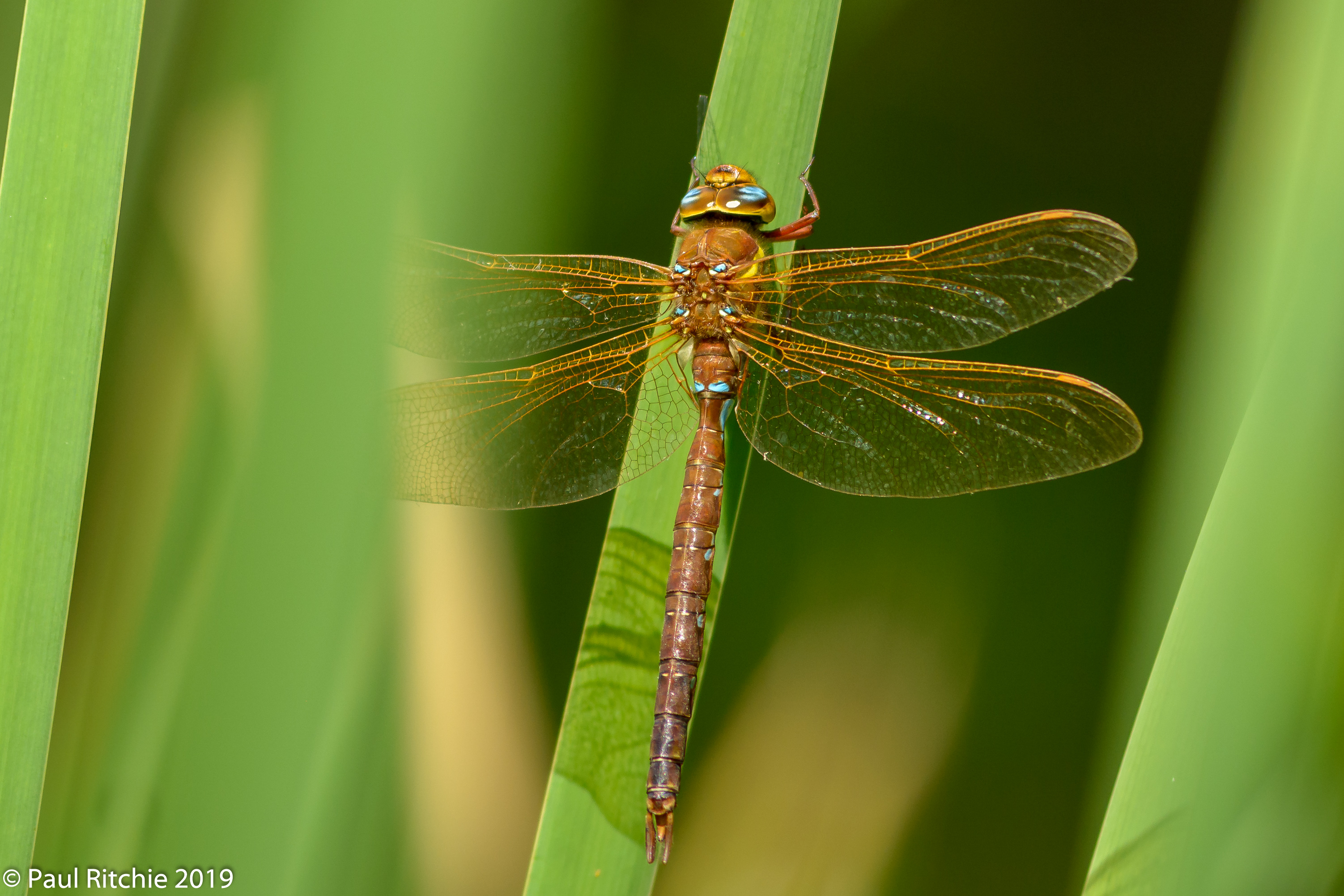
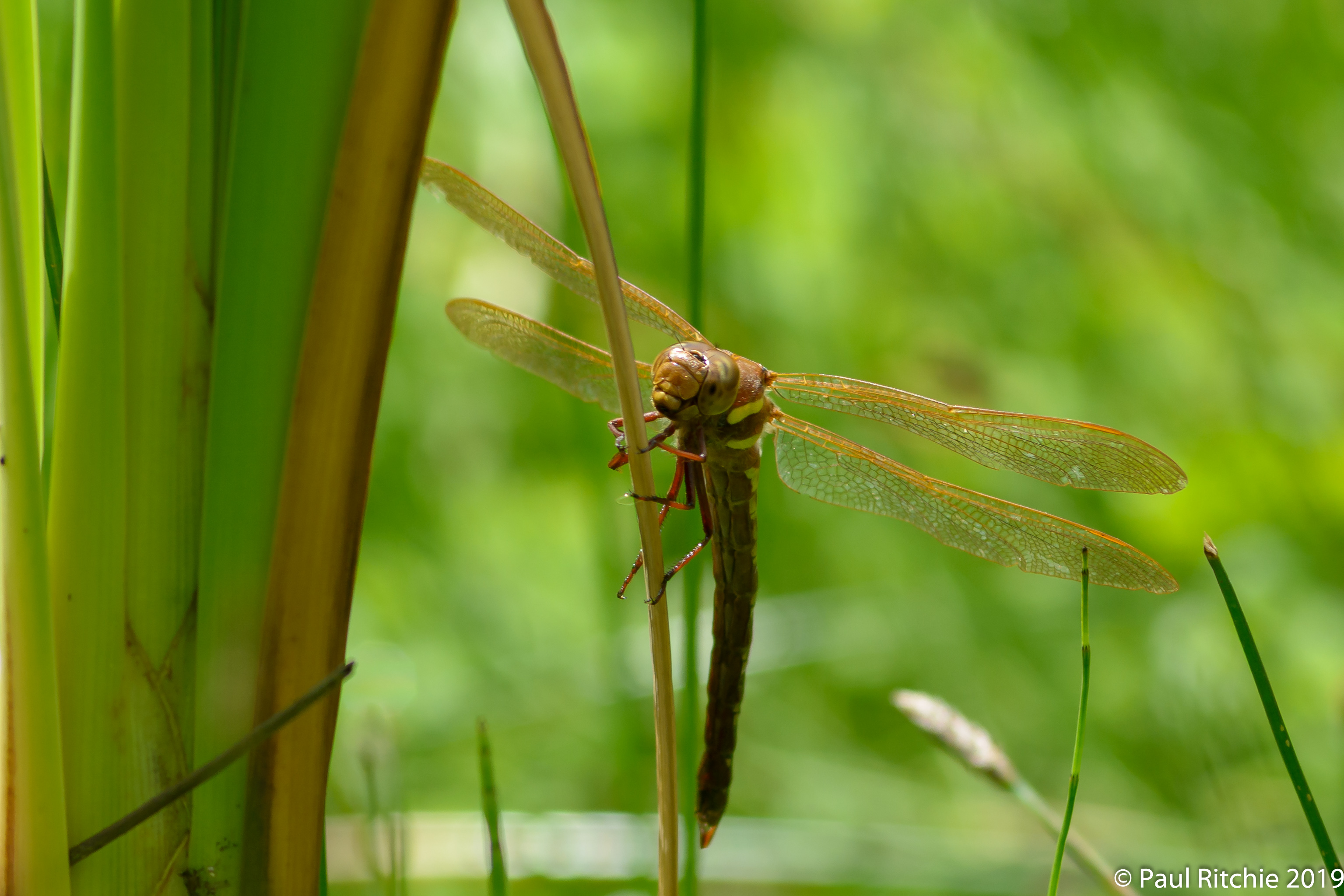
Brown Hawker (Aeshna grandis) – male on patrol
When all you’re left with is puddles the only dragonflies you’re likely to encounter are the hardier, less fussy species, and there comes a time when you have to prioritise.
Now I can happily wait at a pond for something interesting to fly in, and with the Moorland here in the New Forest you normally have to wait for one to appear.
Moorland (Common) Hawker (Aeshna juncea) – male on patrol
On the other hand you normally wouldn’t have to wait for a Southern; there’s usually one already on patrol when you arrive. None were waiting for me this year at Ramsdown, and I had to search hard to find one at Bramshill.
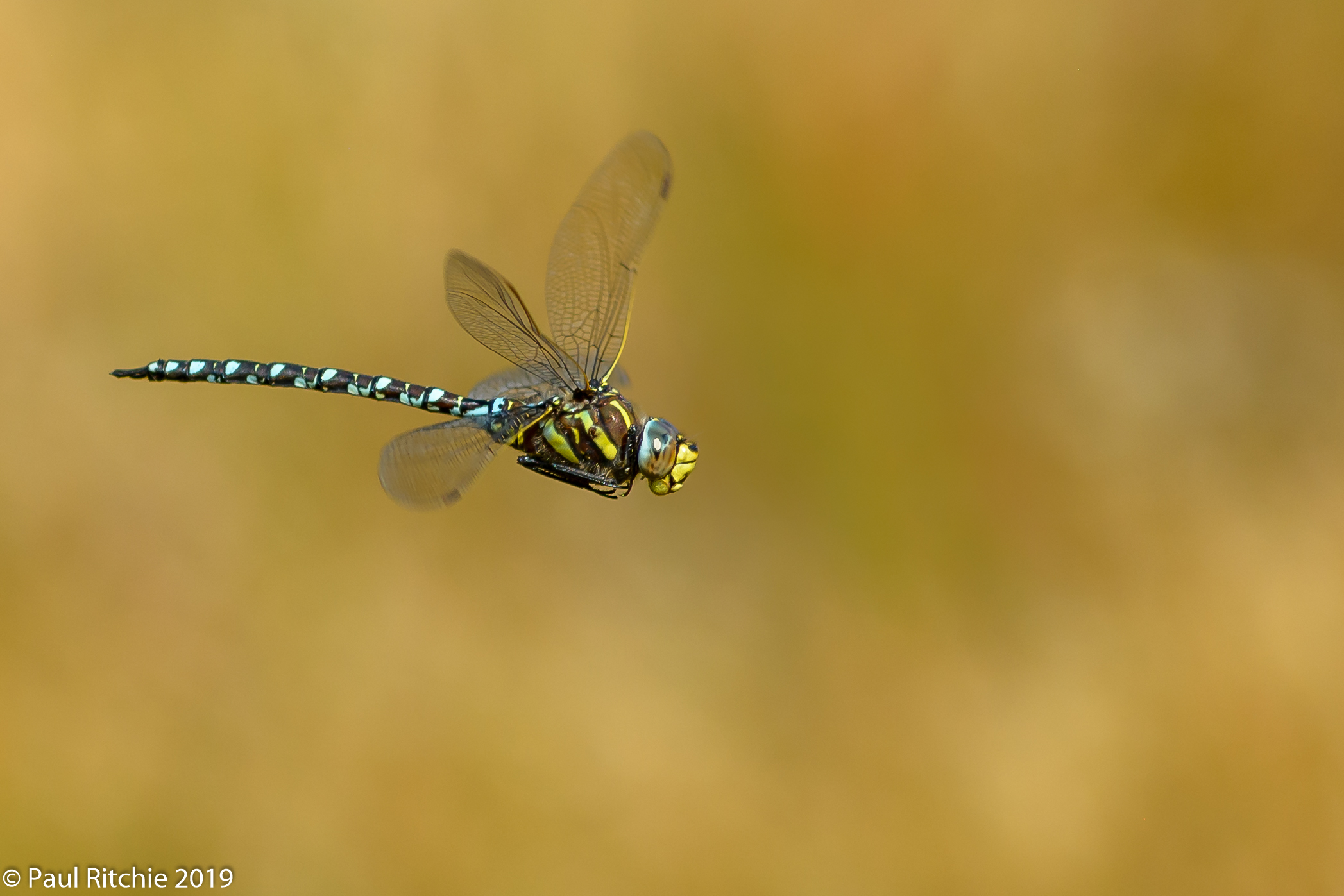
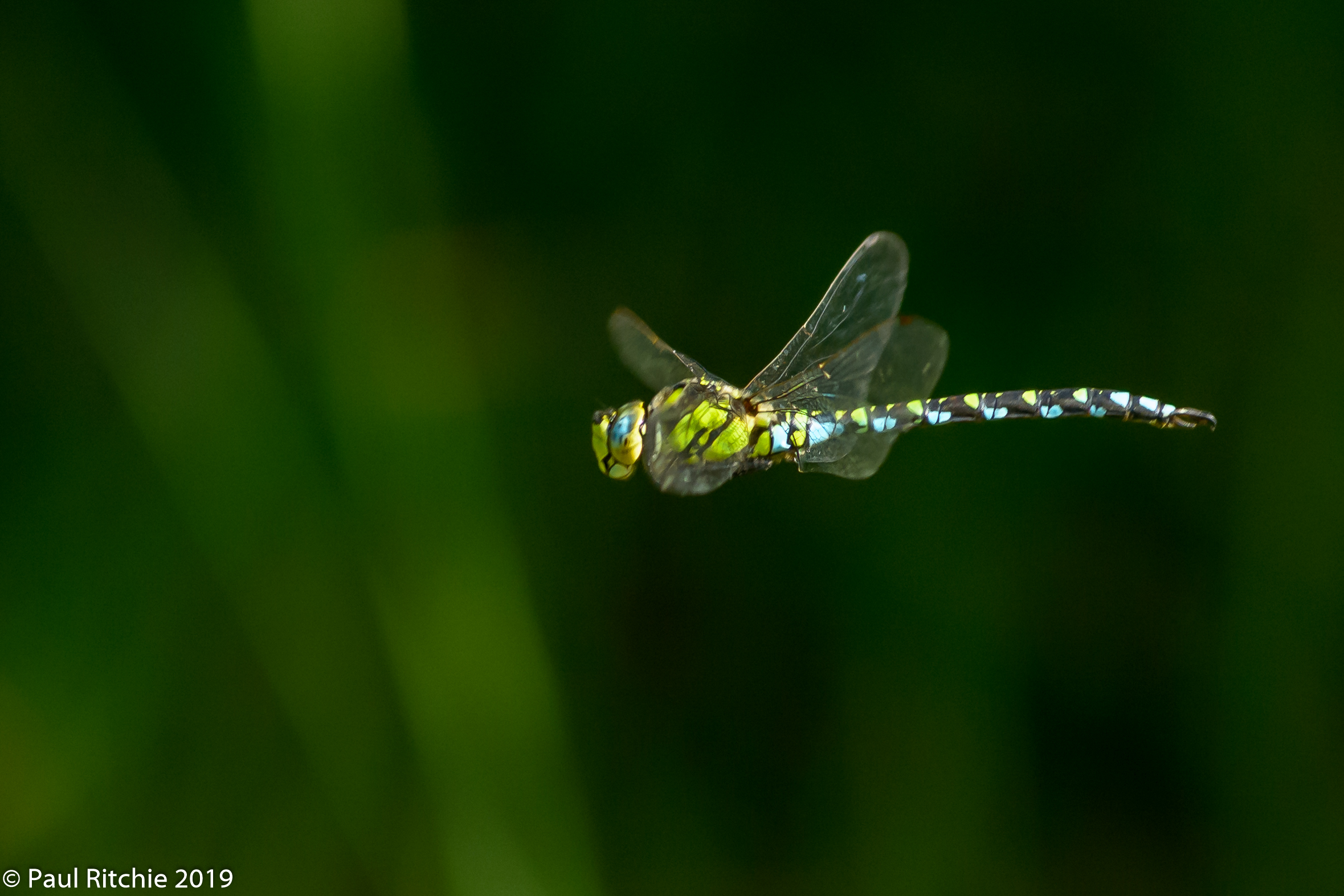
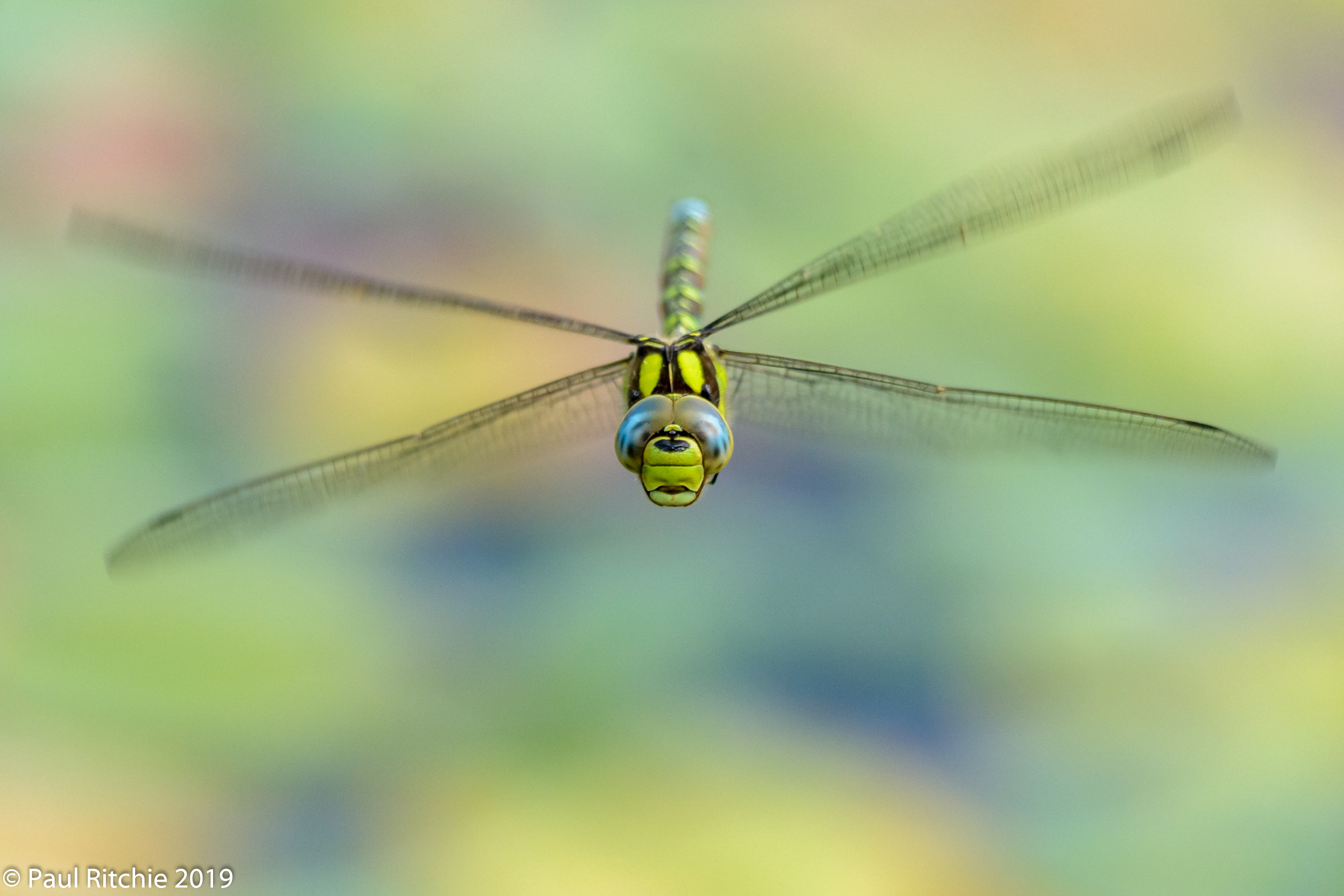
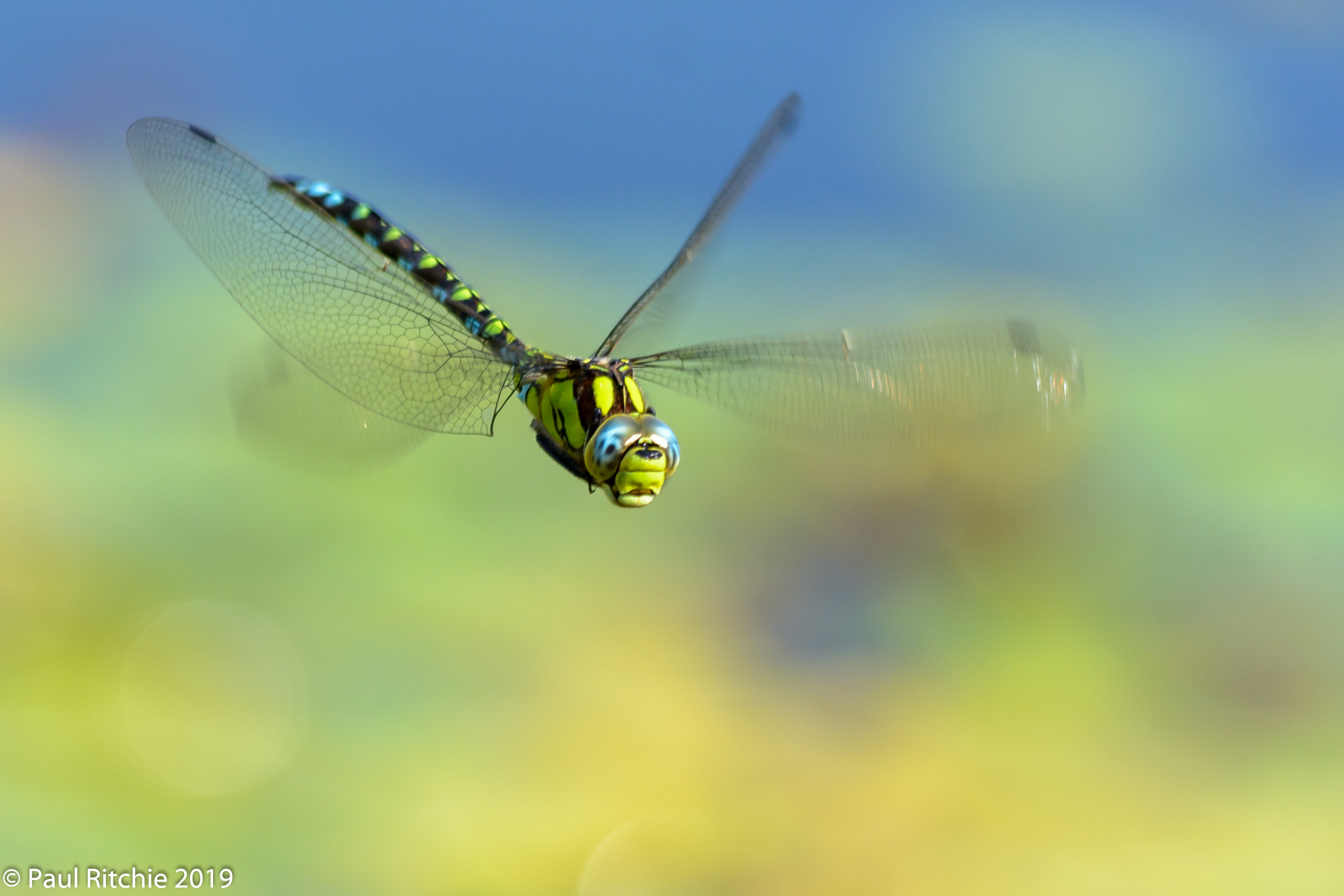
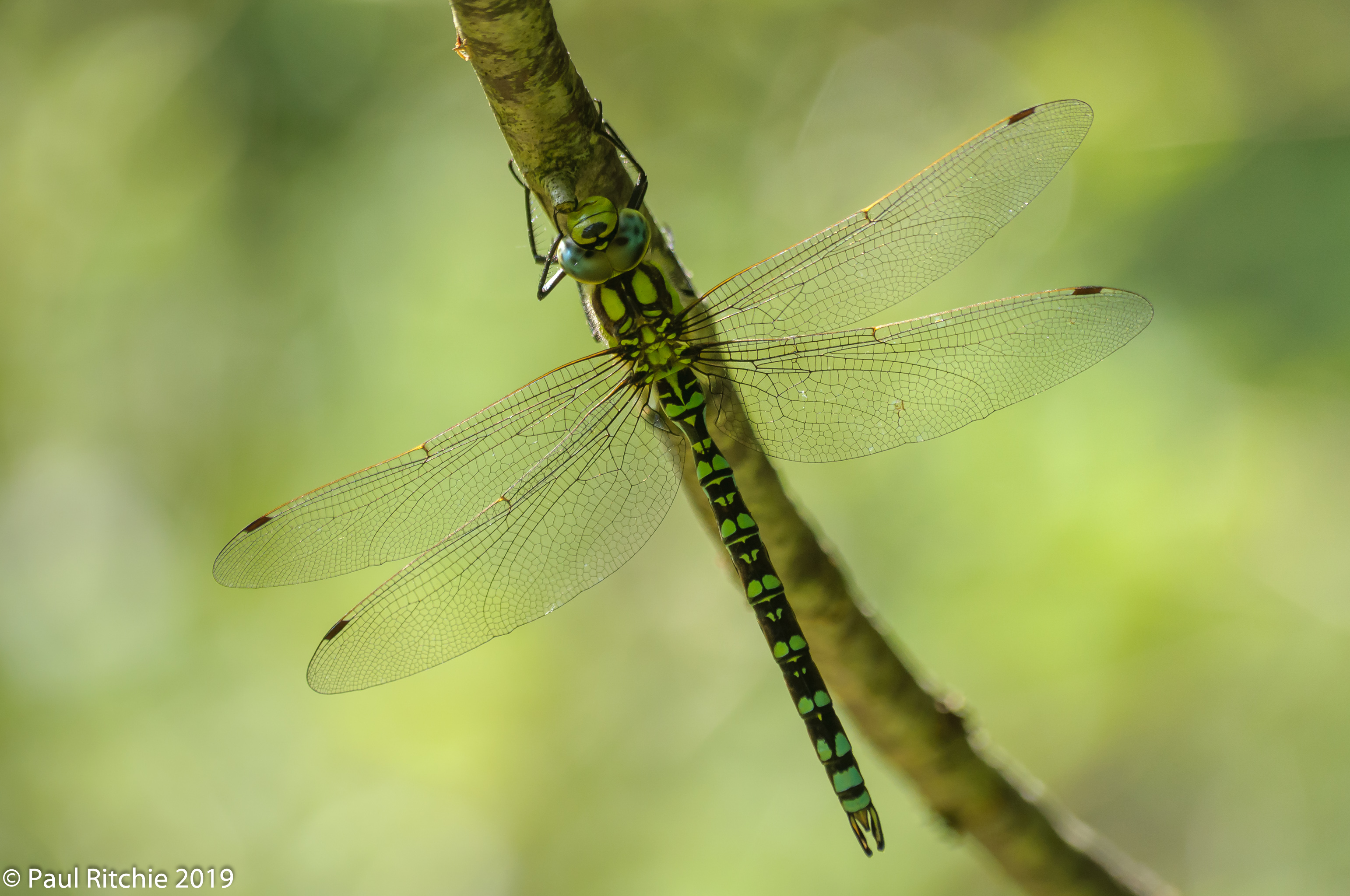
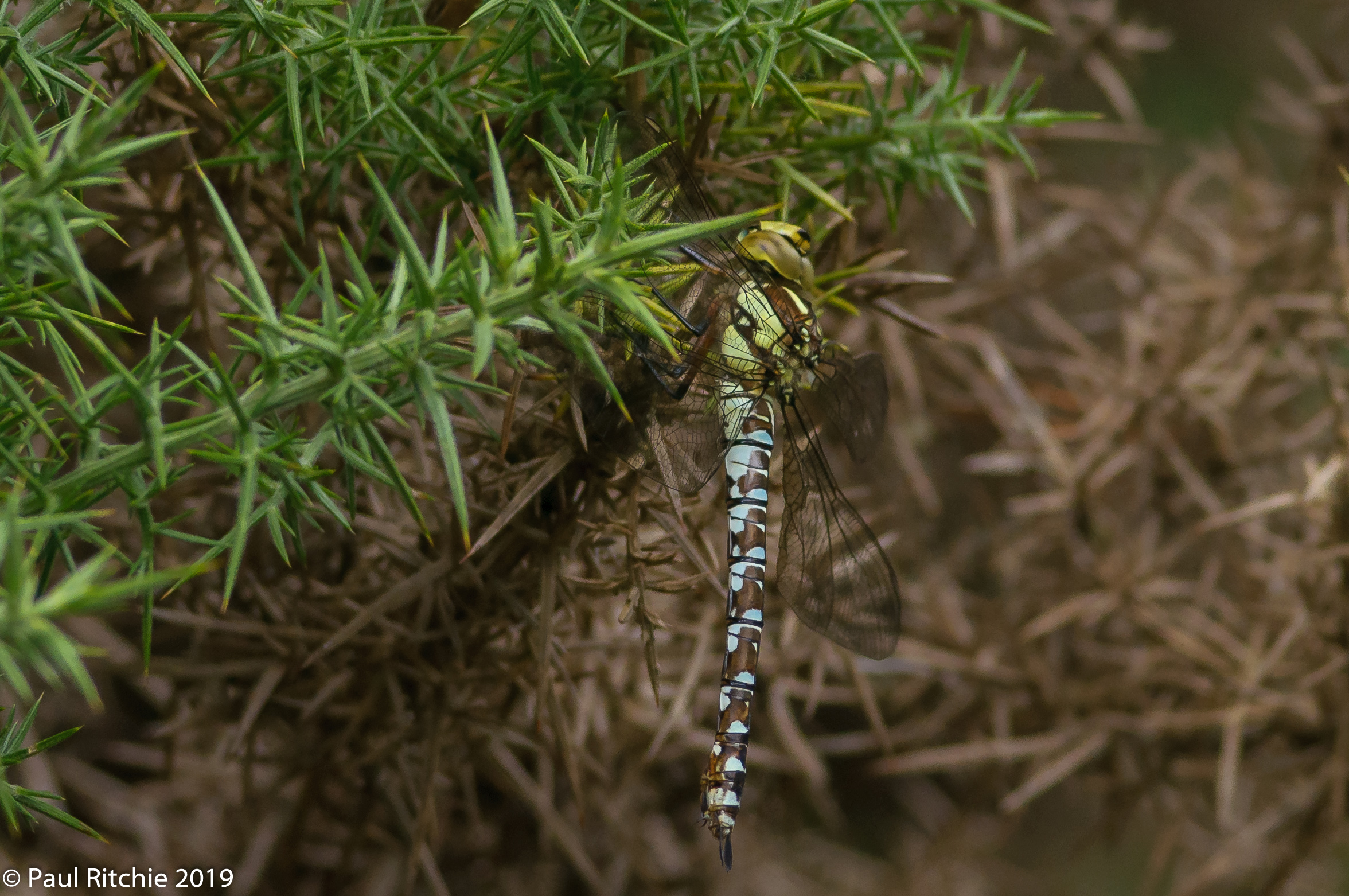
Southern Hawker (Aeshna cyanea) – male on patrol
Surprisingly I’ve had females show first at both locations, and with just the one male (so far) at Bramshill found myself running out of options
Ruddy Darter (Sympetrum sanguineum) – male
Cadnam Common usually comes up trumps, but alas resembles a silage pit right now and all we saw was a lone Migrant patrolling the reeds of the island, so we made the short drive to Bentley Wood.
Always a gamble and after a fair walk in you keep your fingers crossed there will be something over the water. Thankfully on our visit on 1st September not only was there a male present but a friendly, gregarious individual who it was a delight to engage with.
Southern Hawker (Aeshna cyanea) – male on patrol
At last! I had to wait until September for for the opportunity, but looking back I normally have my best moments with Southern in September.
Southern Hawker (Aeshna cyanea) – male on patrol
Since then it’s taken a downward turn. A couple of friends were down this week for a little late Odo action and were disappointed; as was I when I ventured out on Thursday.
Too
cool, too windy and mostly too dull, and I wasn’t prepared to root
around for roosters as my stealth has taken a beating since an ankle
injury a fortnight ago.
I had planned to venture forth today, but with only a possible 17 degrees I couldn’t bear the disappointment of another fruitless search.
If the temperature improves and we get a late blast of warm sunshine I’ll see things through until the end of the month. A late blast of enjoyment before Autumn takes hold and I can look forward to next season.
On Thursday I returned to Ramsdown full of hope. The first pond had a few more puddles after the recent rain yet the pond at the base of the hillock was bone dry!
The clearing showed a couple of twitchy Southern, the inevitable Brown Hawker rising in panic at my passing and the expected Migrant Hawkers.
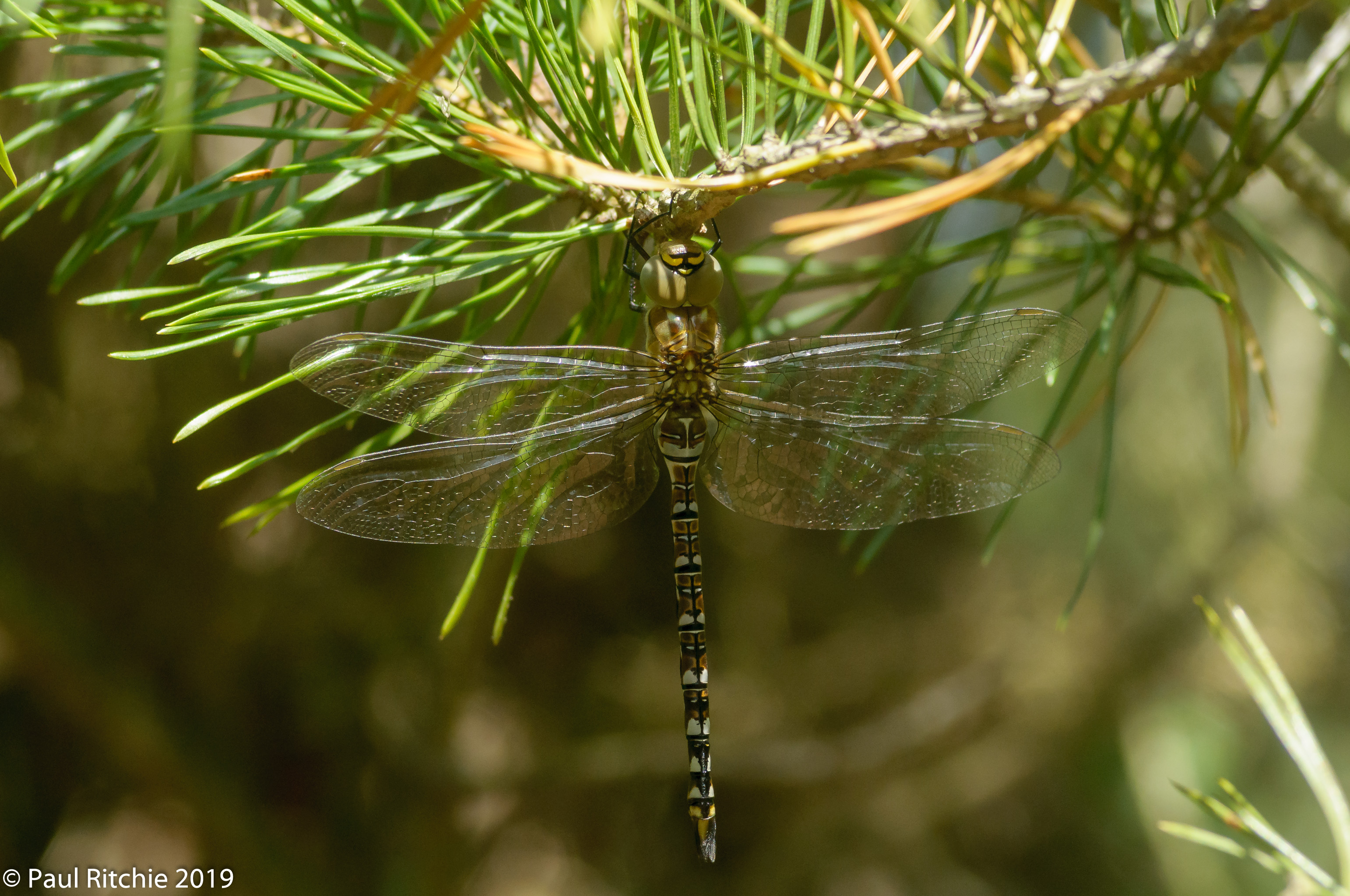
Migrant Hawker (Aeshna mixta) – immature female
At my favourite pond a Moorland Hawker gave me the most frustrating challenge by refusing to keep to a regular patrol. |This wasn’t helped by the presence of a particularly aggressive Emperor who drove him off at every opportunity.
Moorland (Common) Hawker (Aeshna juncea) – male
Azure and Emerald Damselflies and a single Black Darter kept the interest and a female Emperor flew in to try to oviposit under the harassment of the patrolling male.
A Broad-bodied Chaser still held court at his favourite perch, occasionally flying out to do battle with one of the many Common Darters.
Common Darter (Sympetrum striolatum) – male
The sound of fluttering wings alerted me to the presence of a female Southern Hawker ovipositing deep down under cover into the muddy bank before rising up, circling me and settling down on a patch of heather.
Southern Hawker (Aeshna cyanea) – female
After a brief rest she continued laying her eggs in hard to reach places
until she decided upon a log, which offered a better opportunity.
Southern Hawker (Aeshna cyanea) – female
As there was no sign of the Moorland returning I decided to camp out for
an hour at the other pond just in case a male, or indeed female flew
in, but it was not to be. However it was pleasant to observe the many
Migrant Hawkers feeding along the treeline.
I had hoped for a male Southern to come in for a patrol, but I’ll have to wait until next time. Best not become too entitled, eh?
With the miserable weather we’ve experienced recently it’s already feeling like autumn. You could be forgiven for mistaking this month for September.
Having to choose my destinations carefully to benefit from the most sun I chose Bramshill on Tuesday. As I haven’t been for a while I decided to take the long walk around the reserve, checking out the rides for roosting hawkers.
I didn’t have to wait too long for a sighting; the first being a male Southern Hawker which disappeared off at my approach, followed by a more agreeable female.
Southern Hawker (Aeshna cyanea) – immature female
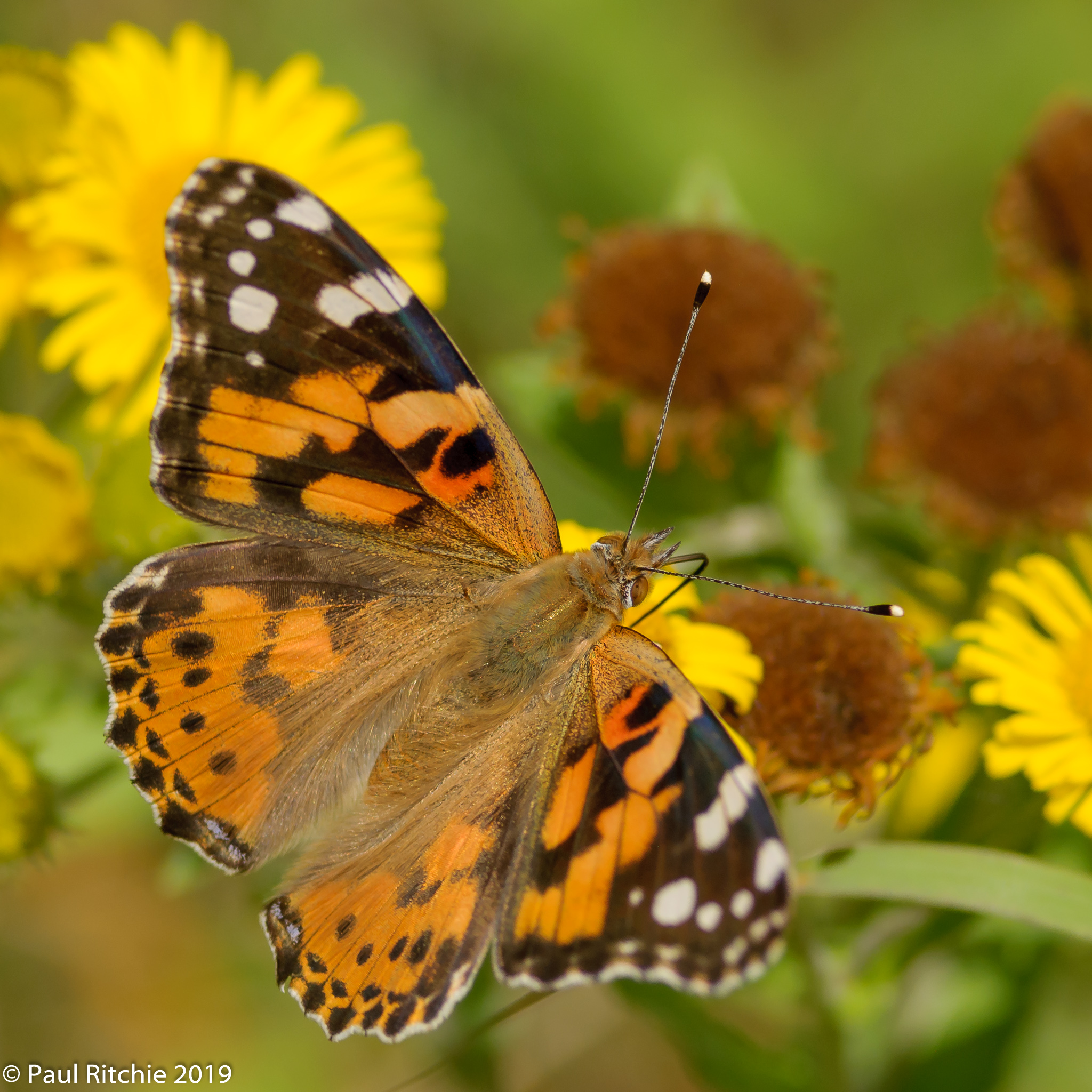
It as a delight to see the rides festooned with a large presence of Painted Lady butterflies. I counted at least 50 throughout the day, mainly feeding of Fleabane.
Painted Lady ( Vanessa cardui)
With a stiff breeze and too much cloud cover activity over the water was subdued, with only the hardier damselflies and Common Darters braving the conditions at the North-east pond.
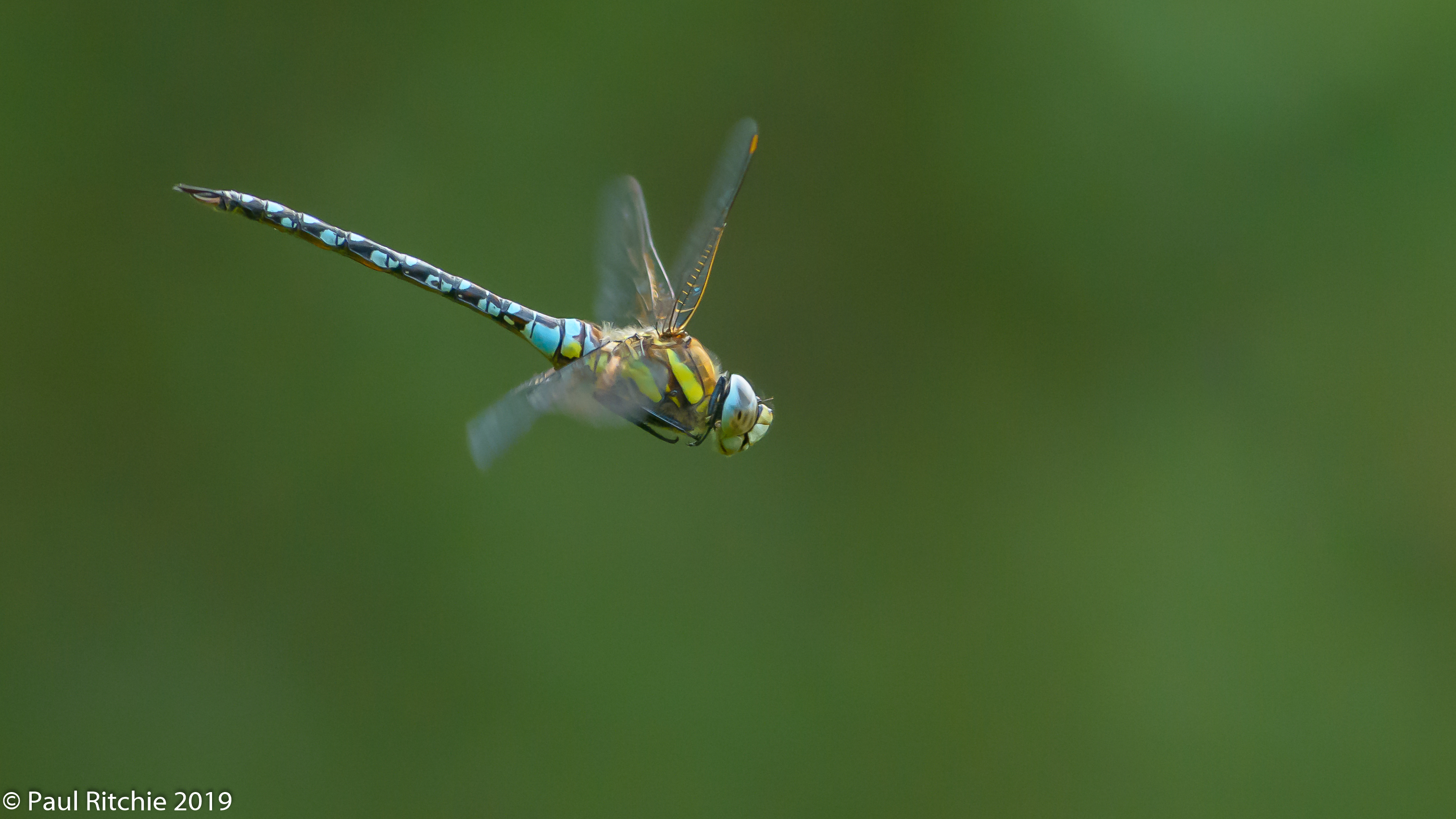
Things were much better at Long Pond with a Migrant Hawker showing briefly, just enough time to grab and in-flighter.
Migrant Hawker (Aeshna mixta) – male
Ruddy Darters were plentiful with many pairings and plenty of ovipositing – possibly the most I’ve seen in this section. Also patrolling was a Brown Hawker which, much to my surprise, landed on a Bulrush to finish his meal.
Brown Hawker (Aeshna grandis) – male
A female could be heard ovipositing in the depths and she took a little time out to perch.
Brown Hawker (Aeshna grandis) – female
During an extended spell of cloud I took a walk towards the small ponds, meeting a female Emperor perched in the gorse along the way.
Emperor (Anax imperator) – female
The clearing containing the small ponds has really deteriorated now; impossible to fight a way through to even the nearest pond. I really hope they clear this soon. I had to be content with a visit to the Green Pond where only a few Ruddy, Common Blue and Common Emerald were present.
Despite my initial trepidation it turned out to be quite a rewarding visit.
I was looking forward to an August sitting by a pond, engaging with a hawker or two and generally watching the world go by – which I have done on a couple of occasions when the sun decided to shine.
However the past week of inclement weather has put pay to my plans for the moment. No point staring at a pond under cloudy skies; better to take a stroll and find some action elsewhere.
Common Darter (Sympetrum striolatum) – immature male
A walk around Town Common usually produces a hawker or two along the paths, and sure enough there were a few Brown Hawkers rising ahead of me.
Down in the shelter of the scrub were the expected Emerald and Small Red Damselflies and among the heather a Black Darter or two.
Black Darter (Sympetrum danae) – female on heather
Across the road at Ramsdown I hoped for a female Moorland taking advantage of the gloom to oviposit, avoiding the attentions of patrolling males, but in this weather even the Common Darters were noticeably absent.
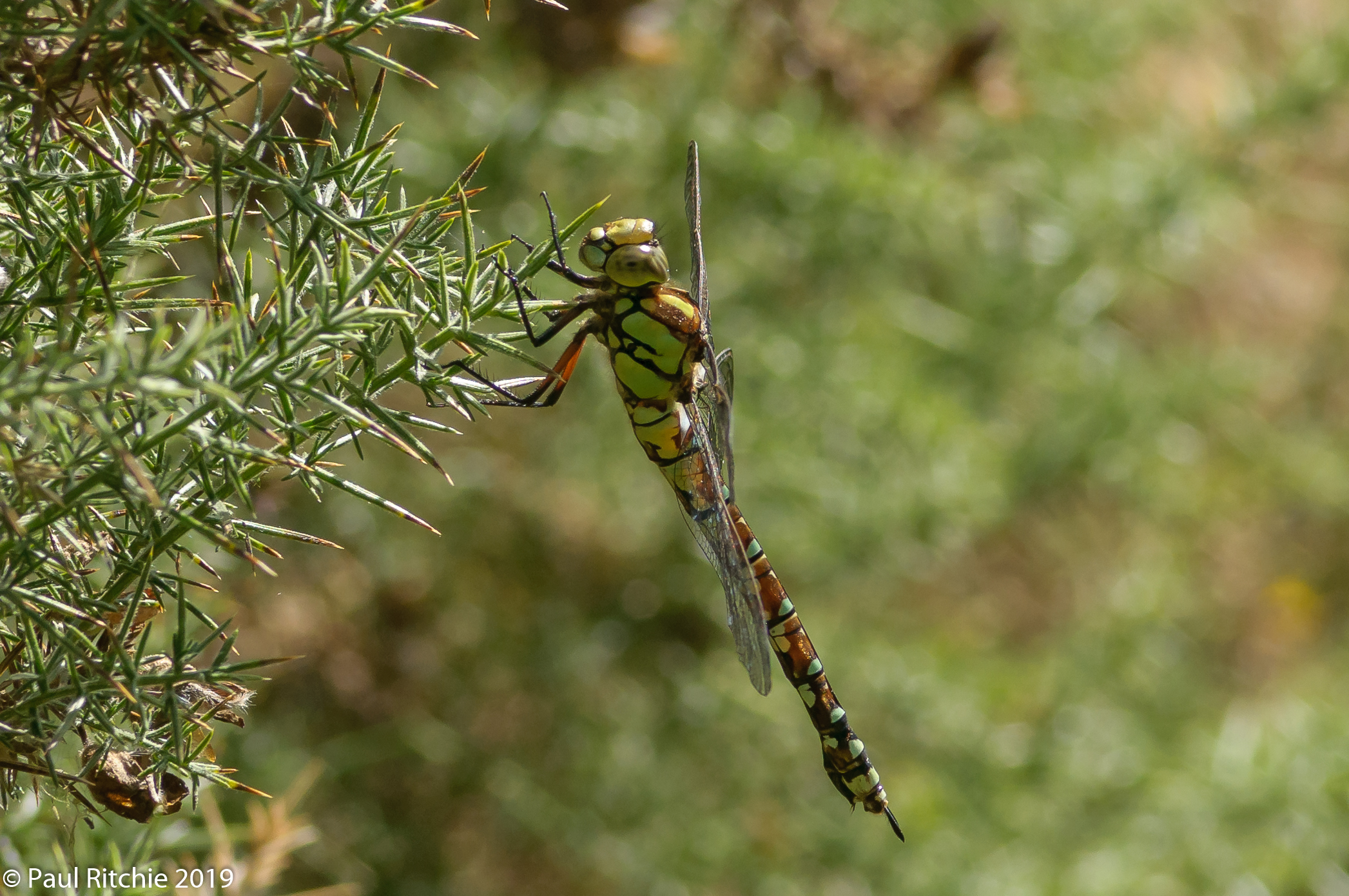
In the clearing at least there was an immature female Southern Hawker resting up in the gorse.
Southern Hawker (Aeshna cyanea) – immature female
The Hill Pond was unsurprisingly quiet, a startling contrast to a week previously, however around the margins you could find a willing subject or two if you were prepared to hunt.
Black Darter (Sympetrum danae) – immature male
At my favourite pond the sun shone all to briefly to kick-start a little activity from the Common Darters – irresistible only in the absence of others.
Common Darter (Sympetrum striolatum) – male
Back at the clearing these all too brief but welcome late afternoon sunny spells produced a frenzy of feeding activity from the Brown Hawkers, teasingly gliding a meter or so from yours truly and never once landing in sight.
Low down in the heather a Golden-ringed provided the last opportunity of the day.
Golden-ringed Dragonfly (Cordulegaster boltonii) – male
The tail-end of summer is the time of the Hawker. This season has been especially good for the Brown Hawker, with swarms seen around Bramshill, Ramsdown and Town Common; neither offering a chance of a photo!
I’m a little more philosophical these days, preferring to trust to luck rather than judgement. If an opportunity presents itself, all well & good. If it doesn’t, no matter; it’s just as enjoyable watching them glide effortlessly while feeding.
On a particularly hot day in Bramshill we had our first Migrant Hawker of the season, sensibly holed up under the shade of a tree.
Migrant Hawker (Aeshna mixta) – immature male
One of the better sites to encounter hawkers is Bentley Wood; just across the border in deepest Wiltshire. A walk through the forest rides usually produces sightings; often more so than ponds while they’re still maturing.
Southern Hawker (Aeshna cyanea) – male
I went out to Ramsdown a couple of times in the hope of bagging a Moorland Hawker. The first visit I had to make do with Emperor; in fact at one pond there were no less than 12 male and 6 female enjoying the sunshine! Certainly the most I’ve ever seen at one pond.
I returned a couple of days later and my first encounter was this freshly-emerged male Moorland; a first for me, and a delight to confirm this pond has them breeding.
Common (Moorland) Hawker (Aeshna juncea) – freshly-emerged male
Shortly afterwards a male came in to patrol for a few moments, just before I was bombarded by a short shower! In fact the skies were under cloud for most of the day – not what we’d been forecast on what was to be a record-breaking sunny day!
I had to wait three hours for the next appearance. A male returned and stayed for an hour, the first few minutes being the best for in-flighters.
Common (Moorland) Hawker (Aeshna juncea) – male on patrol
Although they have been out since June I’ve yet to encounter a Southern Hawker patrolling a water body, although others have already seen females ovipositing! Until I get the chance to engage with one of my favourite in-flight species I’ll have to be content to encounter them at rest.
Southern Hawker (Aeshna cyanea) – immature female
Now I’ve completed my Hampshire species count I can relax a little, take a stroll through the forest rides or, better still, camp out for a few hours at a pond and see who comes to visit!
June & July are peak times for the streams of the New Forest. Whether you choose Latchmore, Ober Water, Silver Stream or Crockford you are always guaranteed a feast of favourites.
Keeled Skimmer, Golden-ringed, Beautiful Demoiselle, Southern and Small Red Damselfly all flourish, and depending on your choice you can add Scarce Blue-tailed and White-legged to the list.
Keeled Skimmer (Orthetrum coerulescens) – male
When I’m not gallivanting off chasing rarities or running field trips I like to indulge myself in the peace & tranquility of a babbling brook, refreshing in even the humid heat of a glorious summer day.
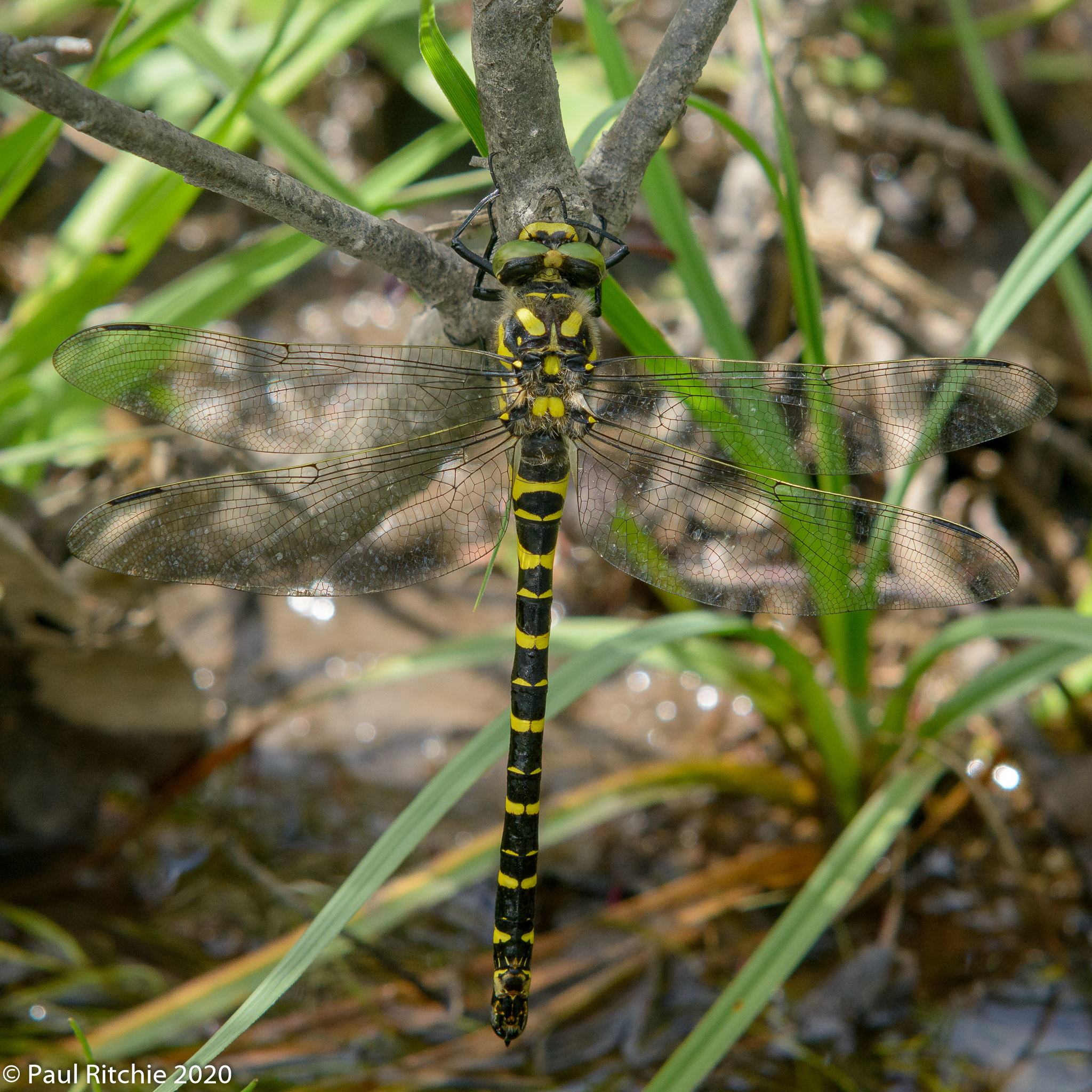
Golden-ringed Dragonfly (Cordulegaster boltonii) – male
Time spent strolling the water course, wading through fords or simply staying put to see who may visit, rarely are two days the same.
Within the eddies and flows are frequent, open pools created by livestock who come down from off the heath to bathe and drink. Here you can find Broad-bodied Chasers and Emperor holding territories.
Emperor {Anax imperator) – male on patrol
Move on too quickly and you may miss the arrival of a female Emperor flying in to oviposit in the emergent vegetation.
Emperor {Anax imperator) – female ovipositing
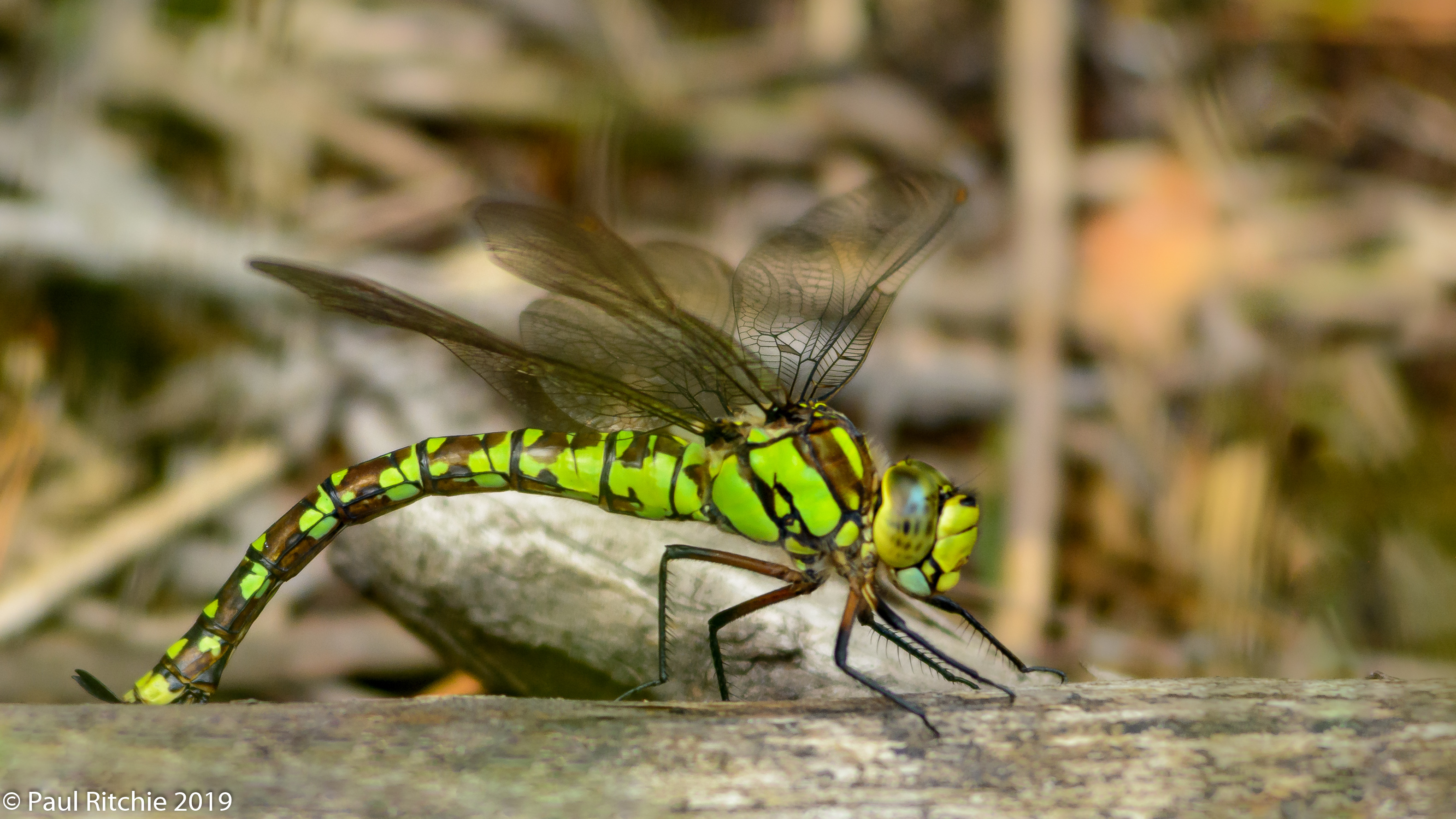
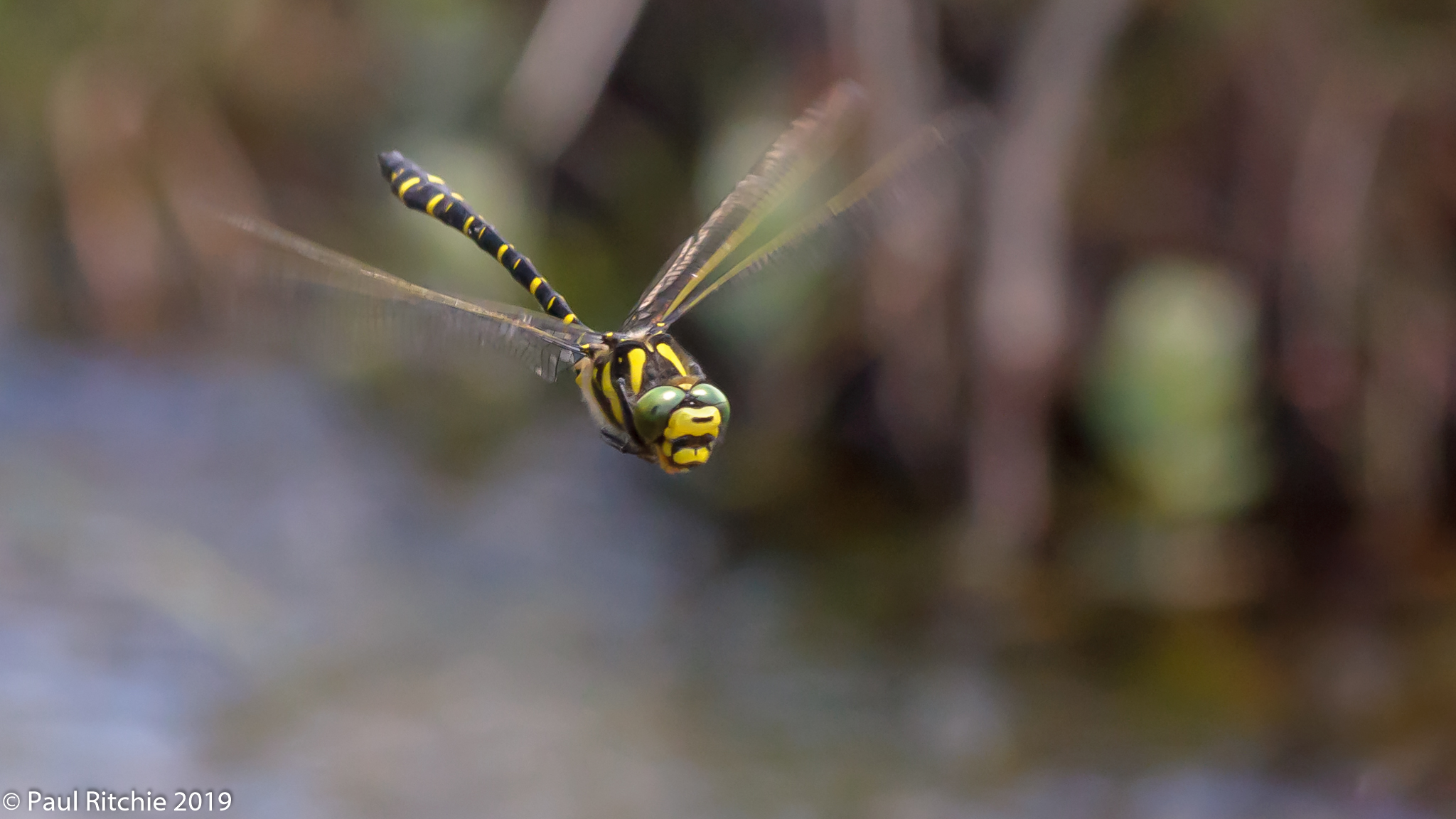
In the faster flowing sections male Golden-ringed hold territories, chosen carefully to entice the females. If they have chosen a suitable place their seed is the one she’ll choose for the next generation.
Golden-ringed Dragonfly (Cordulegaster boltonii) – male on patrol
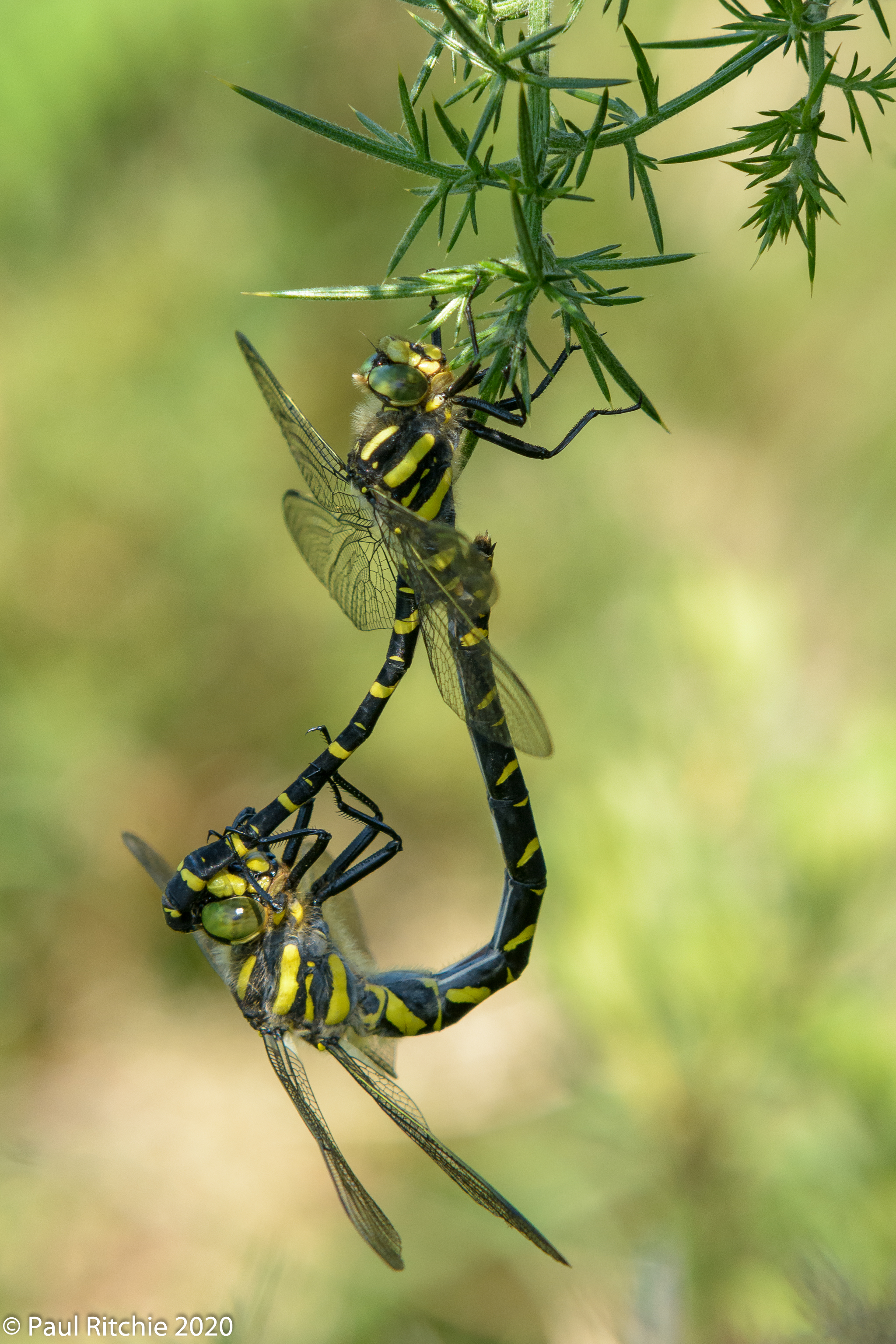
If a coupling is successful they rise up in search of some peace and quiet for half an hour, usually a meter or two above ground, secluded in the shade of a gorse stand.
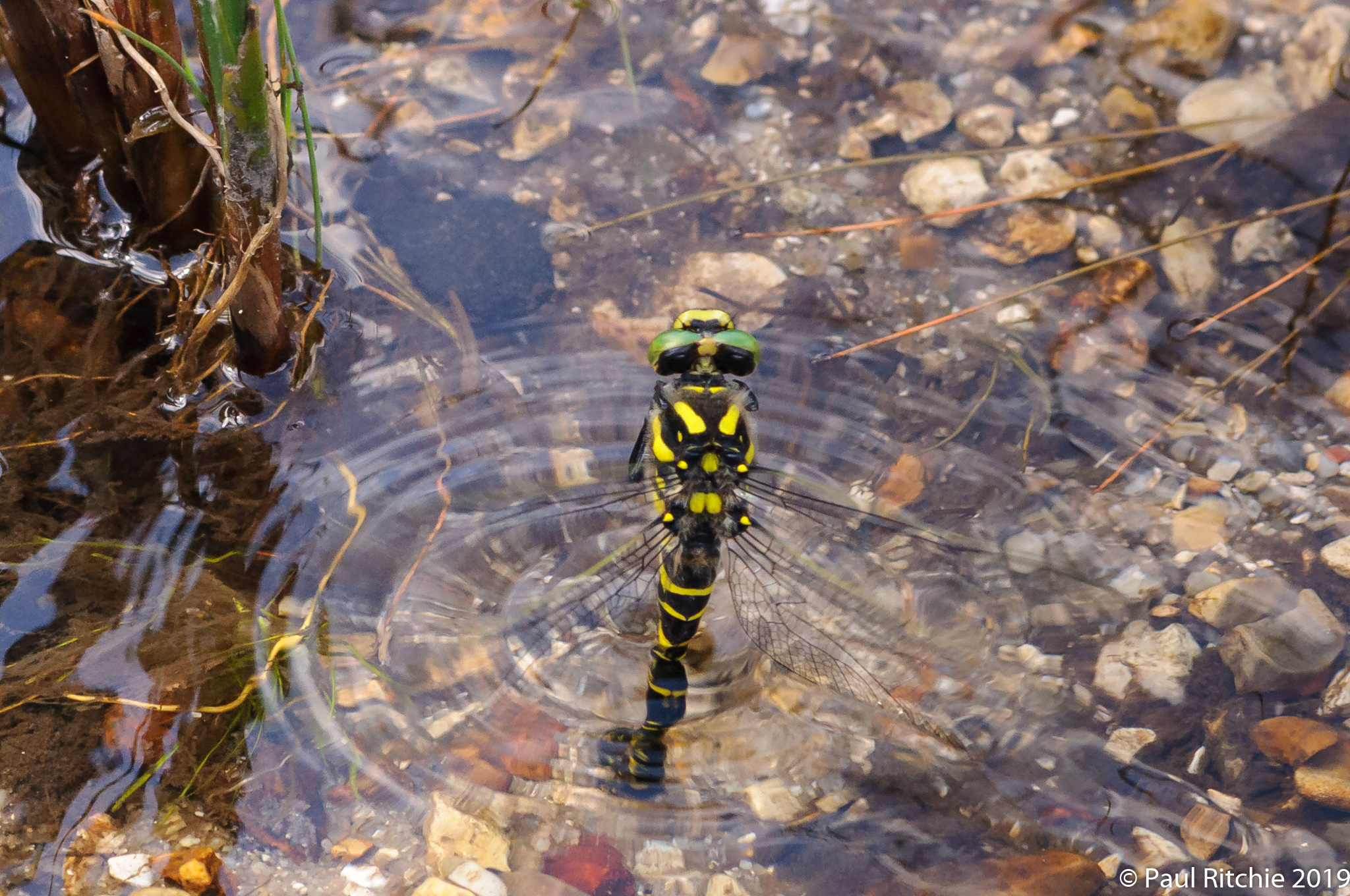
When this union is complete the male returns to his territory while the female deposits her eggs with frequent, violent thrusts into the gravel substrate of the stream.
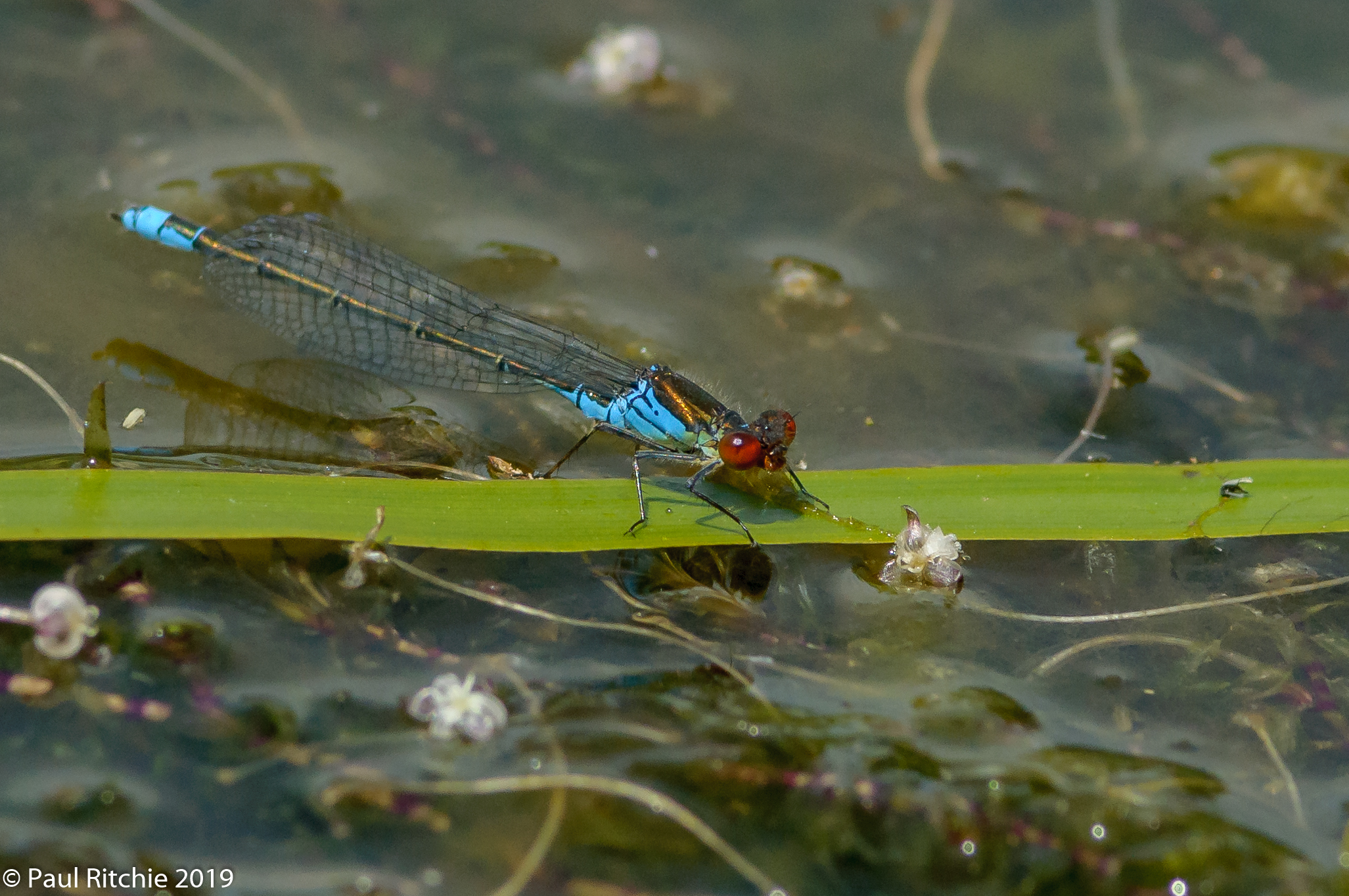
After the screaming hordes of Thursley I needed a little peace & quiet, so decided to add the Small Red-eyed damselfly to my count.
I took a walk around the meadow searching for roosters and mainly encountered butterflies. There was however a male Emperor flying low and feeding along the treeline.
The pond has become choked with bulrush – normally a blessing for dragonfly habitat but when it splits the pond into it leaves little room for activity.
At the pontoons I saw my first SRE; just the one for now, too far out to grab a decent shot. Besides I was still trying to get to grips with the TC, yet to grasp the full benefits.
Small Red-eyed (Erythromma viridulum) – male
The invasive weed was ideal for this species, but I could’ve done with a better background. After I’d had my fill with what were now just three males and a brief visit from a female I took another walk around the reserve.
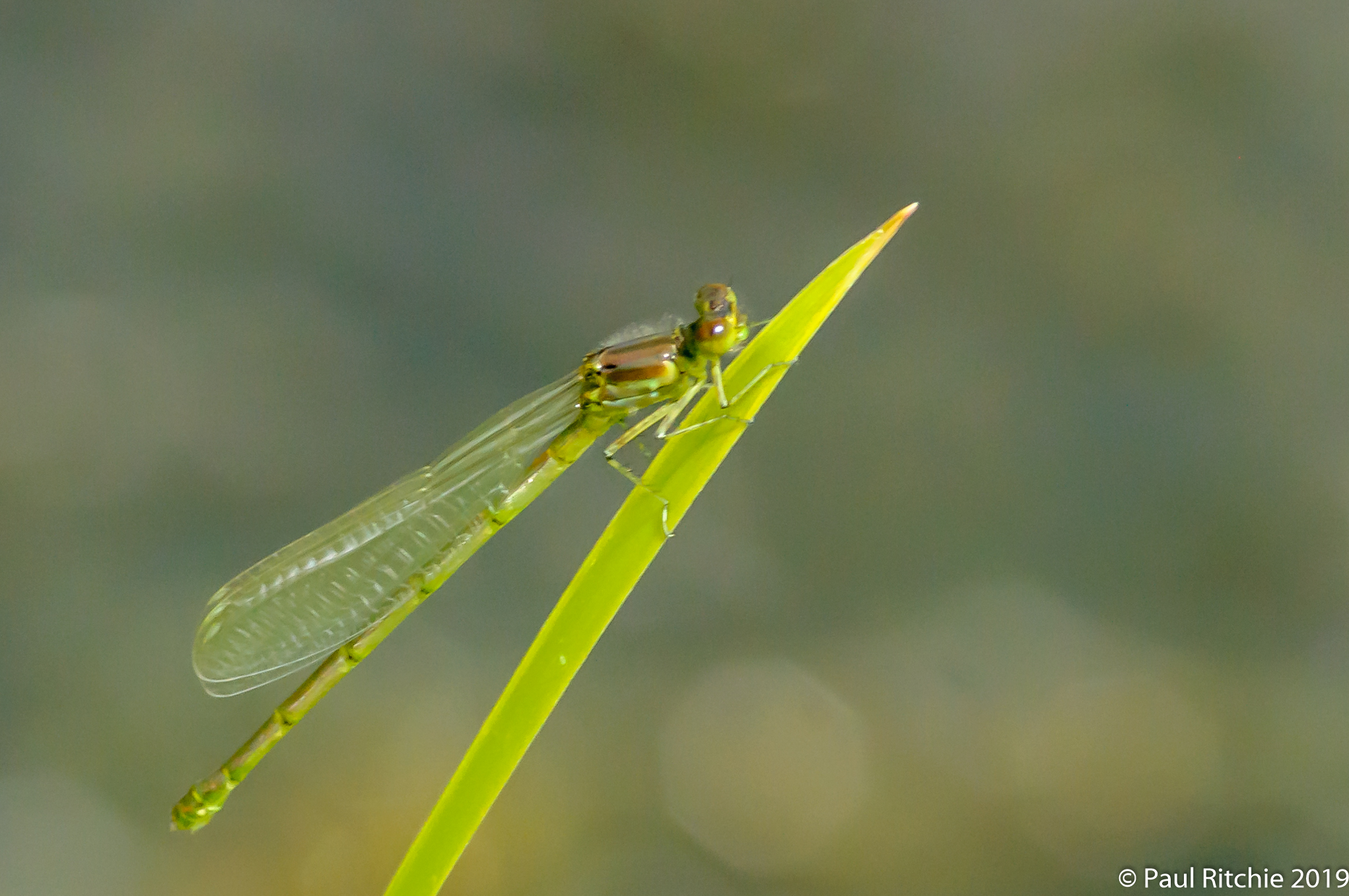
In what was previously a nice little opening to the sure a teneral rose to land briefly. Fabulous colours, and one I hadn’t encountered before
Small Red-eyed (Erythromma viridulum) – teneral female
At the far end of the pond a male Emperor – possibly the one I saw earlier – was holding territory and tried to engage with the female which flew in, but she was only there to oviposit.
Another quick look from the pontoon to see if numbers of SRE had increased (they hadn’t) before I moved on to Crockford.
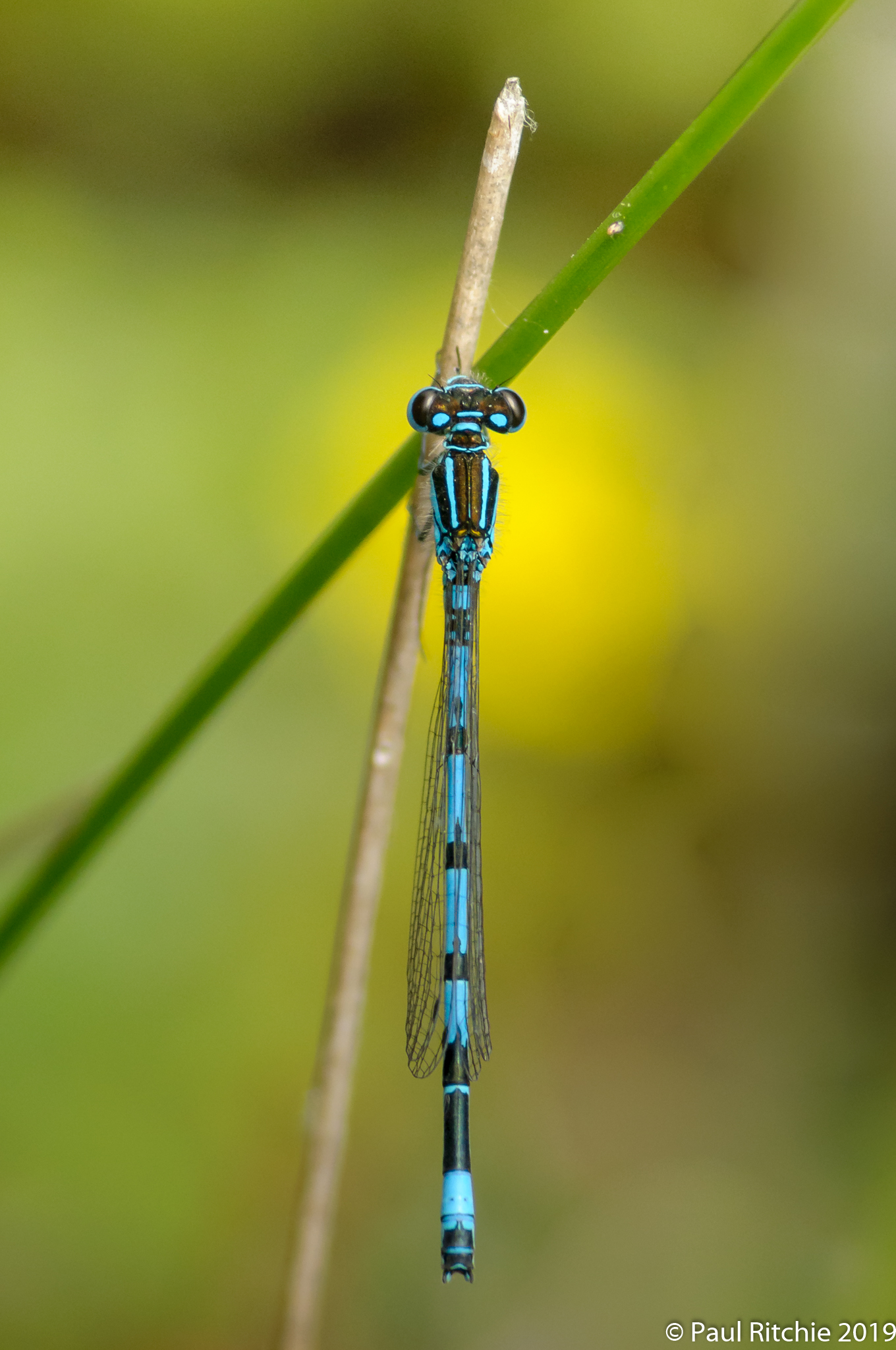
A brief visit found the expected residents, including several Southern Damselflies.
Southern Damselfly (Coenagrion mercuriale) – male
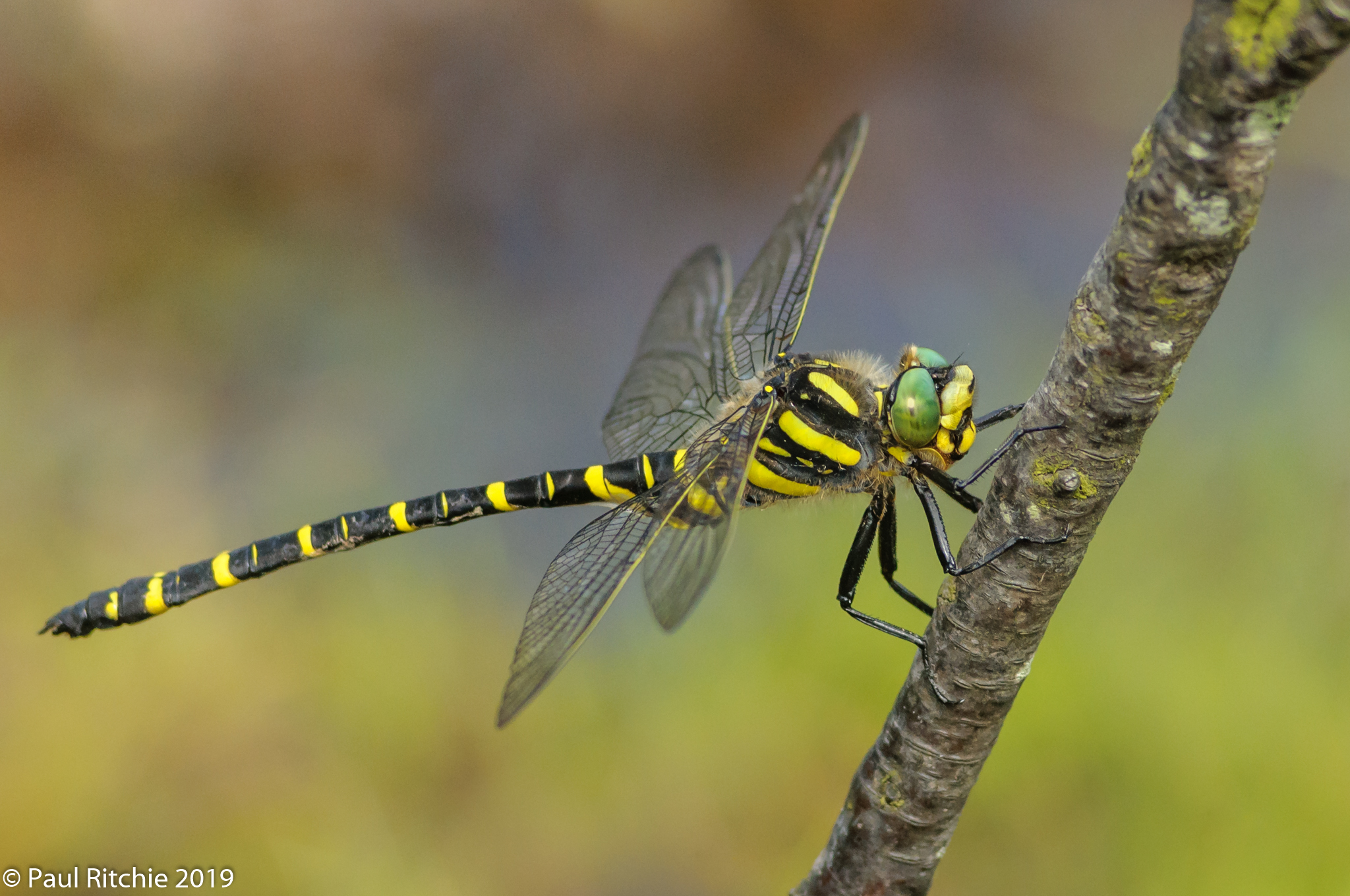
At the basin a Golden-ringed was holding territory, peacefully returning to his chosen perch without being harassed by Keeled Skimmers for a change.
Golden-ringed Dragonfly (Cordulegaster boltonii) – male
A quick summation of one day then, mainly to engage with the Small Red-eyed and notable for the discovery of a teneral for the first time. These are the moments which keep me interested.