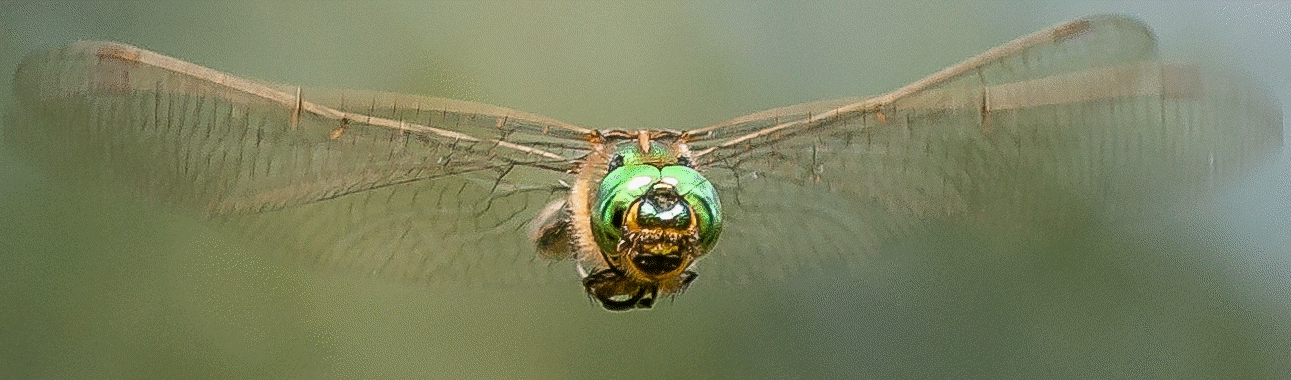
Dorset
Dorset, renowned for its picturesque rolling hills, ancient woodland, pristine rivers, prehistoric coastland, and lowland heath, has long resisted the inevitable march of modern urbanisation. Its remote location, away from major road and railroad corridors, has preserved its natural beauty.
While the county has not been immune to urbanisation and subsequent habitat degradation, particularly in the east, where valuable heathland has been encroached upon by the growth of Bournemouth and Poole, these conglomerations have occasionally yielded remarkable gems.
Fortunately, the western region of Dorset continues to embrace rural charm, with the ancient heaths surrounding Wareham offering a haven for diverse wildlife. The River Stour serves as a haven for Brown Hawkers, Banded Demoiselles, and White-legged Damselflies, while the River Avon is home to Scarce Chasers and most of the New Forest species.
While the county has not been immune to urbanisation and subsequent habitat degradation, particularly in the east, where valuable heathland has been encroached upon by the growth of Bournemouth and Poole, these conglomerations have occasionally yielded remarkable gems.
Fortunately, the western region of Dorset continues to embrace rural charm, with the ancient heaths surrounding Wareham offering a haven for diverse wildlife. The River Stour serves as a haven for Brown Hawkers, Banded Demoiselles, and White-legged Damselflies, while the River Avon is home to Scarce Chasers and most of the New Forest species.
Canford Magna
Canford Magna, situated conveniently near Wimborne Minster along the picturesque River Stour, offers an ideal habitat for the captivating displays of Banded Demoiselles and supports substantial populations of White-legged Damselflies. Additionally, Brown Hawkers are also known to inhabit the area.
From the school, cross the footbridge and proceed either left or right, following the riverbank. You will likely encounter a large number of Banded Demoiselles in this area. Additionally, observe the long grasses along the riverbank and the opposite side of the path for roosting White-legged Damselflies.
Scarce Chasers, Brown Hawkers, and other species tend to roost in the boundary hedges and the undergrowth upstream on the same side as the school.
From the school, cross the footbridge and proceed either left or right, following the riverbank. You will likely encounter a large number of Banded Demoiselles in this area. Additionally, observe the long grasses along the riverbank and the opposite side of the path for roosting White-legged Damselflies.
Scarce Chasers, Brown Hawkers, and other species tend to roost in the boundary hedges and the undergrowth upstream on the same side as the school.
Town Common

Town Common, a vast expanse of heath, spans the historic Ringwood to Christchurch railway line. It serves as an ideal habitat for all six of our native reptile species, with its numerous shallow, peaty pools providing the perfect environment for Black Darters, Emerald Damselflies, and Small Red Damselflies. Conversely, the paths and track are often frequented by hunting or roosting hawkers perched in the bushes.
Earlier in the reptile season, the pools come alive with Broad-bodied and Four-spotted Chasers engaged in a lively battle against patrolling Emperors. However, this spectacle is contingent upon favourable weather conditions. Opt for a warm, sunny day with minimal wind for the optimal viewing experience, as the open areas naturally cool down sufficiently under grey skies or during strong winds. It’s important to note that the entire site can be susceptible to flooding following excessive rainfall, with the summer of 2012 being a particularly severe instance.
An additional advantage of Town Common is its relative tranquility, with only the main track occasionally encountering dog-walkers or cyclists. The smaller paths may occasionally witness horse riders, but even these are subject to restrictions during the reptile season. For optimal viewing, park at the lay-by and follow the track south.
Earlier in the reptile season, the pools come alive with Broad-bodied and Four-spotted Chasers engaged in a lively battle against patrolling Emperors. However, this spectacle is contingent upon favourable weather conditions. Opt for a warm, sunny day with minimal wind for the optimal viewing experience, as the open areas naturally cool down sufficiently under grey skies or during strong winds. It’s important to note that the entire site can be susceptible to flooding following excessive rainfall, with the summer of 2012 being a particularly severe instance.
An additional advantage of Town Common is its relative tranquility, with only the main track occasionally encountering dog-walkers or cyclists. The smaller paths may occasionally witness horse riders, but even these are subject to restrictions during the reptile season. For optimal viewing, park at the lay-by and follow the track south.
Dunyeats Hill Nature Reserve
Dunyeats Hill Nature Reserve is a small area of heathland situated on the western side of Gravel Hill, the primary road leading to Poole from Wimborne. This urban reserve experiences significant traffic noise and frequent dog walkers, but those who can disregard these disturbances will be rewarded with a microcosm of the Dorset lowland heaths.
The Bulrushes are particularly noteworthy, hosting an annual mass emergence of Emperor butterflies. This environment is ideal for Hairy Dragonflies, and it provides the perfect habitat for Migrant Hawks during the late season. The heathland itself also harbours Black Darters, Common Emeralds, and Black-tailed Skimmers.
To access the reserve, park at the small lay-by and proceed through the gate to reach the pond.
The Bulrushes are particularly noteworthy, hosting an annual mass emergence of Emperor butterflies. This environment is ideal for Hairy Dragonflies, and it provides the perfect habitat for Migrant Hawks during the late season. The heathland itself also harbours Black Darters, Common Emeralds, and Black-tailed Skimmers.
To access the reserve, park at the small lay-by and proceed through the gate to reach the pond.
Higher Hyde Heath
A diminutive, unassuming yet rewarding woodland nature reserve reclaimed from former gravel pits, featuring an extensive heath to the north.
Enter through the gate and follow the path until you reach an open glade. This area is particularly suitable for Ruddy Darters during the breeding season. At the conclusion of this open glade lies a bird hide overlooking the upper pond, which has recently undergone significant vegetation removal along its bank. This development has sparked some debate among dedicated visitors, but it undoubtedly enhances the accessibility of the pond for dragonfly enthusiasts.
Opposite the bird hide, a steep path descends to the lower pond, which, as a result of the recent clearing work, has become considerably brighter and more accessible. This pond is particularly favoured by the Hairy Dragonfly, among other species.
From the bird hide, continue along the track to reach the open heath, which encompasses numerous pools more suited to heathland species. Turning left before the heath, you will discover a disused concrete yard that has been reclaimed by nature, where Sand Lizards bask atop discarded roofing tiles.
The rear wall of this yard has been home to the most impressive Downy Emerald sighting I have yet encountered, and all margins should be thoroughly explored, as unexpected discoveries may be made.
Enter through the gate and follow the path until you reach an open glade. This area is particularly suitable for Ruddy Darters during the breeding season. At the conclusion of this open glade lies a bird hide overlooking the upper pond, which has recently undergone significant vegetation removal along its bank. This development has sparked some debate among dedicated visitors, but it undoubtedly enhances the accessibility of the pond for dragonfly enthusiasts.
Opposite the bird hide, a steep path descends to the lower pond, which, as a result of the recent clearing work, has become considerably brighter and more accessible. This pond is particularly favoured by the Hairy Dragonfly, among other species.
From the bird hide, continue along the track to reach the open heath, which encompasses numerous pools more suited to heathland species. Turning left before the heath, you will discover a disused concrete yard that has been reclaimed by nature, where Sand Lizards bask atop discarded roofing tiles.
The rear wall of this yard has been home to the most impressive Downy Emerald sighting I have yet encountered, and all margins should be thoroughly explored, as unexpected discoveries may be made.
Kilwood Copse
A small reserve situated within the Purbeck Hills, in close proximity to Corfe Castle.
Commence your journey along the primary track from the lay-by, maintaining your visual observation for perched dragonflies. The path will eventually lead to a diminutive glade, which is teeming with insects on a particularly warm day. Within this glade, conduct a search for feeding or roosting individuals. To the right, there is a break in the canopy leading to a sheltered pond, where you will likely encounter the majority of the activity. Additionally, ample sheltered undergrowth will be available for your comfort.
Commence your journey along the primary track from the lay-by, maintaining your visual observation for perched dragonflies. The path will eventually lead to a diminutive glade, which is teeming with insects on a particularly warm day. Within this glade, conduct a search for feeding or roosting individuals. To the right, there is a break in the canopy leading to a sheltered pond, where you will likely encounter the majority of the activity. Additionally, ample sheltered undergrowth will be available for your comfort.
Moors Valley Country Park
Moors Valley Country Park is a popular destination for both tourists and locals, attracting visitors with its vibrant atmosphere. While the park is often filled with children’s laughter, it offers a variety of attractions to suit all interests.
The park boasts a network of lakes and ponds, each home to a diverse selection of dragonflies. Red-eyed Damselflies are particularly abundant around the main lake, especially in the fishing stands. At the lake’s far end, the path crosses the tranquil Moors River, providing an ideal habitat for Demoiselles and Golden-ringed Dragonflies.
For those seeking a more secluded and cost-effective experience, the Verwood side of the park offers a convenient alternative. Free parking is available along the Ringwood to Verwood Road, allowing visitors to avoid crowds and parking fees.
Following the track due south, take the second path through the woods on the right. This path leads down to a spacious boggy area featuring several small pools. This area is particularly well-suited for observing Black Darters and Common Emerald Dragonflies. Additionally, the forest rides provide an excellent opportunity to patrol for hawkers during the late season.
The park boasts a network of lakes and ponds, each home to a diverse selection of dragonflies. Red-eyed Damselflies are particularly abundant around the main lake, especially in the fishing stands. At the lake’s far end, the path crosses the tranquil Moors River, providing an ideal habitat for Demoiselles and Golden-ringed Dragonflies.
For those seeking a more secluded and cost-effective experience, the Verwood side of the park offers a convenient alternative. Free parking is available along the Ringwood to Verwood Road, allowing visitors to avoid crowds and parking fees.
Following the track due south, take the second path through the woods on the right. This path leads down to a spacious boggy area featuring several small pools. This area is particularly well-suited for observing Black Darters and Common Emerald Dragonflies. Additionally, the forest rides provide an excellent opportunity to patrol for hawkers during the late season.
Mordon Bog
Morden Bog is situated within the expansive expanse of Wareham Forest, characterised by its extensive boggy sections, mires, and pools. These habitats support a diverse array of heathland specialists, including substantial populations of Small Red, Common Emerald, and Black Dart.
To access the bog, commence your journey by parking at one of the designated lay-bys along the B3075. Subsequently, venture westward along the road to explore the bog’s surroundings.
To access the bog, commence your journey by parking at one of the designated lay-bys along the B3075. Subsequently, venture westward along the road to explore the bog’s surroundings.
Ramsdown Forest
Ramsdown Forest and the adjoining Town Common comprise a vast expanse of heathland, bisected by the heavily trafficked A338 dual carriageway, which connects Ringwood to Bournemouth. The section adjacent to the road offers an optimal habitat for Scarce Chasers due to the proximity of the River Avon.
The heathland features a slight elevation, which serves as an ideal refuge for Scarce Chasers and numerous hawks, including the elusive Brown Hawker. Golden-ringed and Emperor hawks also select this area as a primary roosting ground, particularly during their maturation period.
Within the heathland, there are several small seasonal ponds that provide an ideal environment for observing and photographing Common Emerald, Small Red, Black Darter, Black-tailed Skimmer, Broad-bodied and Four-spotted Chaser, Emperor, and even the occasional Moorland (Common) Hawker.
For parking, please utilise the designated car park located to the left of the recycling area.
The heathland features a slight elevation, which serves as an ideal refuge for Scarce Chasers and numerous hawks, including the elusive Brown Hawker. Golden-ringed and Emperor hawks also select this area as a primary roosting ground, particularly during their maturation period.
Within the heathland, there are several small seasonal ponds that provide an ideal environment for observing and photographing Common Emerald, Small Red, Black Darter, Black-tailed Skimmer, Broad-bodied and Four-spotted Chaser, Emperor, and even the occasional Moorland (Common) Hawker.
For parking, please utilise the designated car park located to the left of the recycling area.
Studland Heath
Studland Heath has consistently been a preferred destination for me due to its diverse fauna and status as a prominent dragonfly habitat. Large populations of Hairy Dragonflies can be observed among the heath to the south of Little Sea. It is advisable to visit the site as early as possible in the morning to avoid crowds.
A National Trust car park is available nearby, where parking charges apply. This car park is particularly suitable for the Hairy Dragonflies, as they tend to congregate around the pools and channels in the area.
Another prime location is the northern bank of Little Sea, which can be accessed by parking at the designated car park. Follow the track south-west to the thickets of gorse and heather, where you can explore the entire area. Downy Emerald, Four-spotted Chasers, and Hairy Dragonflies can be found along with hundreds of Blue-tailed, Large Red, and Azure Dragonflies.
The entire area from the ferry crossing, along the shoreline, and to the first major path left from the road is an ideal spot for observing Ruddy Darter.
A National Trust car park is available nearby, where parking charges apply. This car park is particularly suitable for the Hairy Dragonflies, as they tend to congregate around the pools and channels in the area.
Another prime location is the northern bank of Little Sea, which can be accessed by parking at the designated car park. Follow the track south-west to the thickets of gorse and heather, where you can explore the entire area. Downy Emerald, Four-spotted Chasers, and Hairy Dragonflies can be found along with hundreds of Blue-tailed, Large Red, and Azure Dragonflies.
The entire area from the ferry crossing, along the shoreline, and to the first major path left from the road is an ideal spot for observing Ruddy Darter.
Troublefield
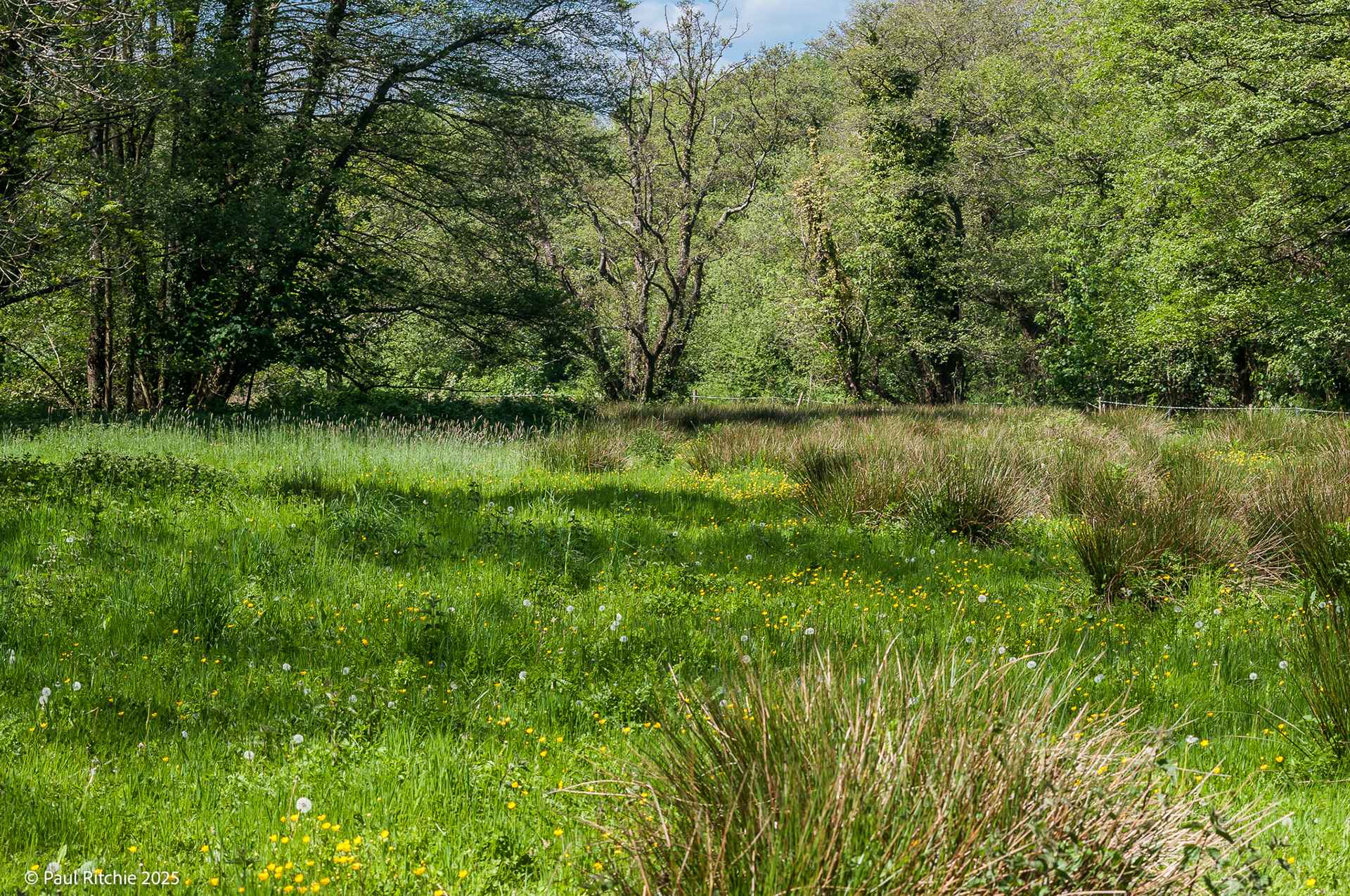
Troublefield Nature Reserve, managed by Dorset Wildlife Trust, is situated on the banks of the Moors River near Hurn Village. It is renowned as the last known UK habitat of the Orange-spotted Emerald.
The reserve boasts a diverse range of dragonfly species, with 28 recorded at the site. However, observing such a high number during the season requires exceptional observation and luck.
Spring and early summer are particularly noteworthy for the abundance of wildflowers in the water meadows. These meadows not only serve as a rich source of nectar for butterflies and insects but also provide ideal perching opportunities for numerous dragonflies.
Late summer offers an excellent opportunity to observe Migrant, Brown, and Southern Hawkers. I had the privilege of witnessing an impressive display of over 50 Orange-spotted Emeralds soaring above the meadow and perching in the treeline along the back leat.
The north meadow, despite losing its vibrant wildflowers in late summer, remains an ideal spot for observing and photographing hawkers. The site features numerous low-level perching posts, making it convenient for capturing these magnificent creatures.
It is crucial to wear sturdy wellingtons at this location, as the deep mud scattered throughout the site can damage footwear.
In wet years, such as 2012, flooding can render the entire site impassable. Be advised that the site is home to a small herd of grazing cattle, which are managed by an electric fence along the back leat. Therefore, individuals with a fear of large mammals or those who wish to photograph dragonflies near the fence should exercise caution.
For newcomers, locating Troublefield Nature Reserve can be challenging due to its remote location at the end of a permissive drive. The most effective approach is to drive slowly from Hurn Village. As you approach the end of the 30mph speed limit, you will notice two drives on the left-hand side. The second drive is the one you seek.
Please note that both the entrance and exit of the reserve require careful driving observation.
The reserve boasts a diverse range of dragonfly species, with 28 recorded at the site. However, observing such a high number during the season requires exceptional observation and luck.
Spring and early summer are particularly noteworthy for the abundance of wildflowers in the water meadows. These meadows not only serve as a rich source of nectar for butterflies and insects but also provide ideal perching opportunities for numerous dragonflies.
Late summer offers an excellent opportunity to observe Migrant, Brown, and Southern Hawkers. I had the privilege of witnessing an impressive display of over 50 Orange-spotted Emeralds soaring above the meadow and perching in the treeline along the back leat.
The north meadow, despite losing its vibrant wildflowers in late summer, remains an ideal spot for observing and photographing hawkers. The site features numerous low-level perching posts, making it convenient for capturing these magnificent creatures.
It is crucial to wear sturdy wellingtons at this location, as the deep mud scattered throughout the site can damage footwear.
In wet years, such as 2012, flooding can render the entire site impassable. Be advised that the site is home to a small herd of grazing cattle, which are managed by an electric fence along the back leat. Therefore, individuals with a fear of large mammals or those who wish to photograph dragonflies near the fence should exercise caution.
For newcomers, locating Troublefield Nature Reserve can be challenging due to its remote location at the end of a permissive drive. The most effective approach is to drive slowly from Hurn Village. As you approach the end of the 30mph speed limit, you will notice two drives on the left-hand side. The second drive is the one you seek.
Please note that both the entrance and exit of the reserve require careful driving observation.