Ruddy Darter
Common Darter
Broad-bodied Chaser
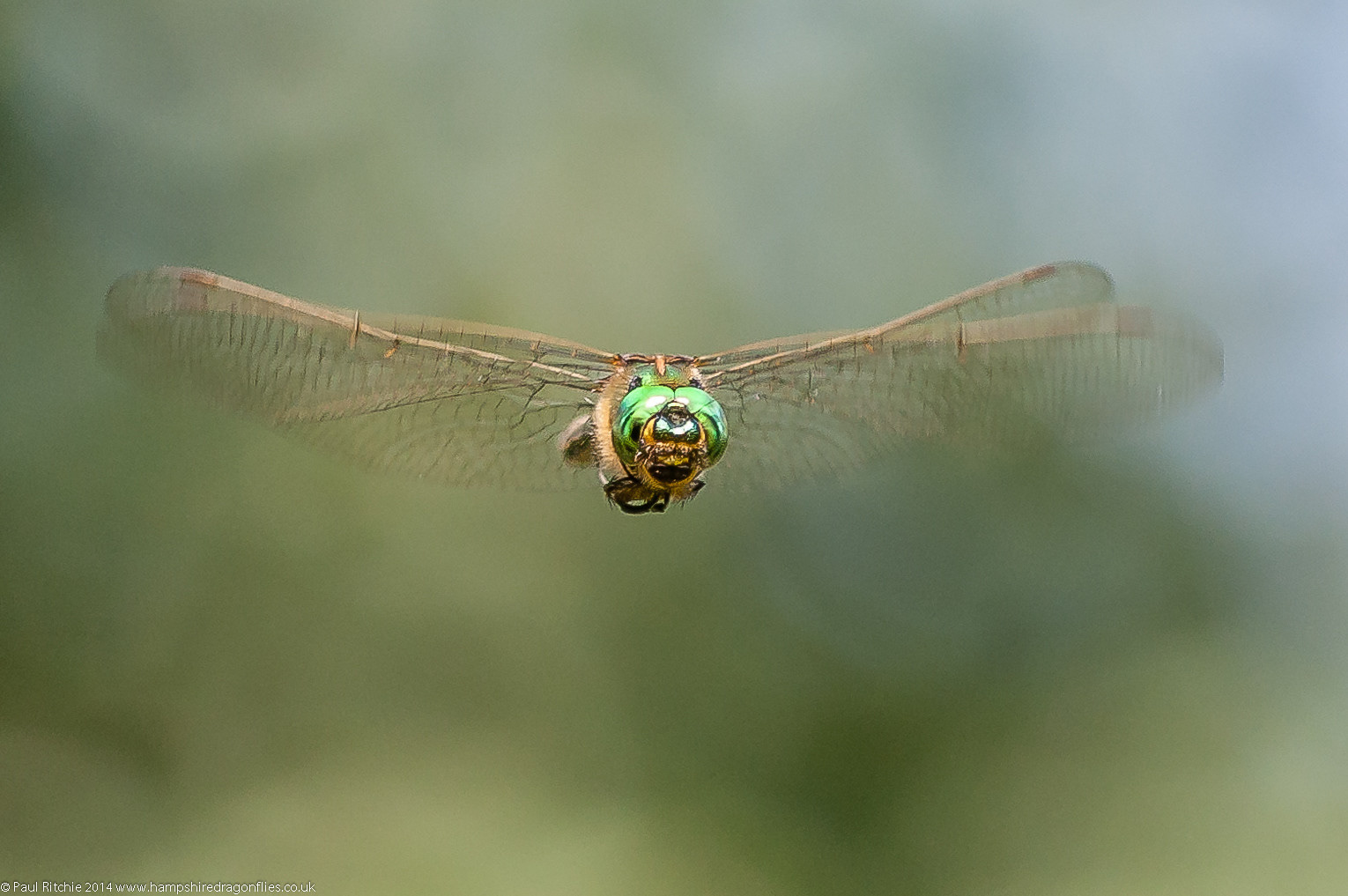
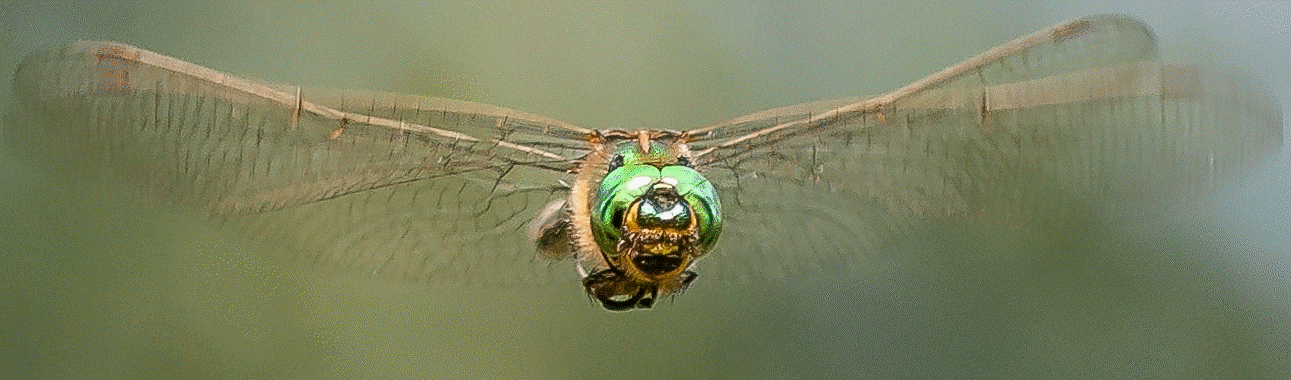
Brilliant Emerald
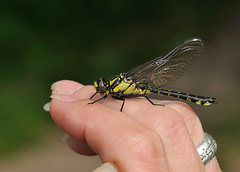
Common Clubtail
These insects are generally large and adept flyers, often observed far from water bodies. When resting, they extend their wings outwards from their bodies, frequently at right angles to them.
Dragonflies possess exceptionally large eyes and usually touch albeit at a minimum point.

Golden-ringed
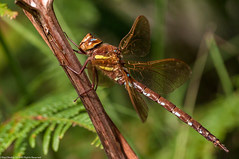
Brown Hawker
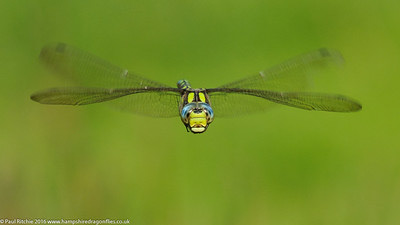
Southern Hawker
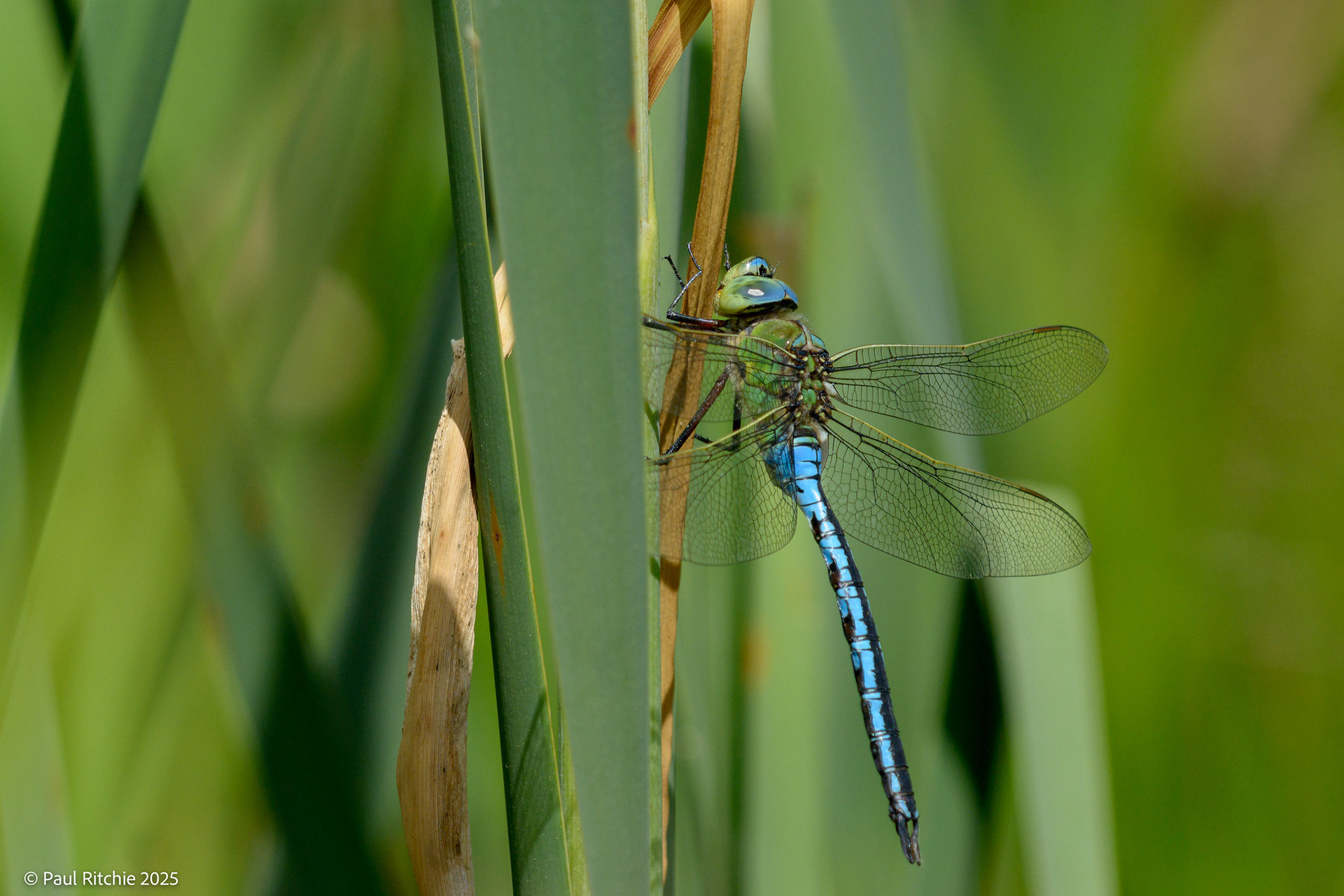
Emperor
Green-eyed Hawker

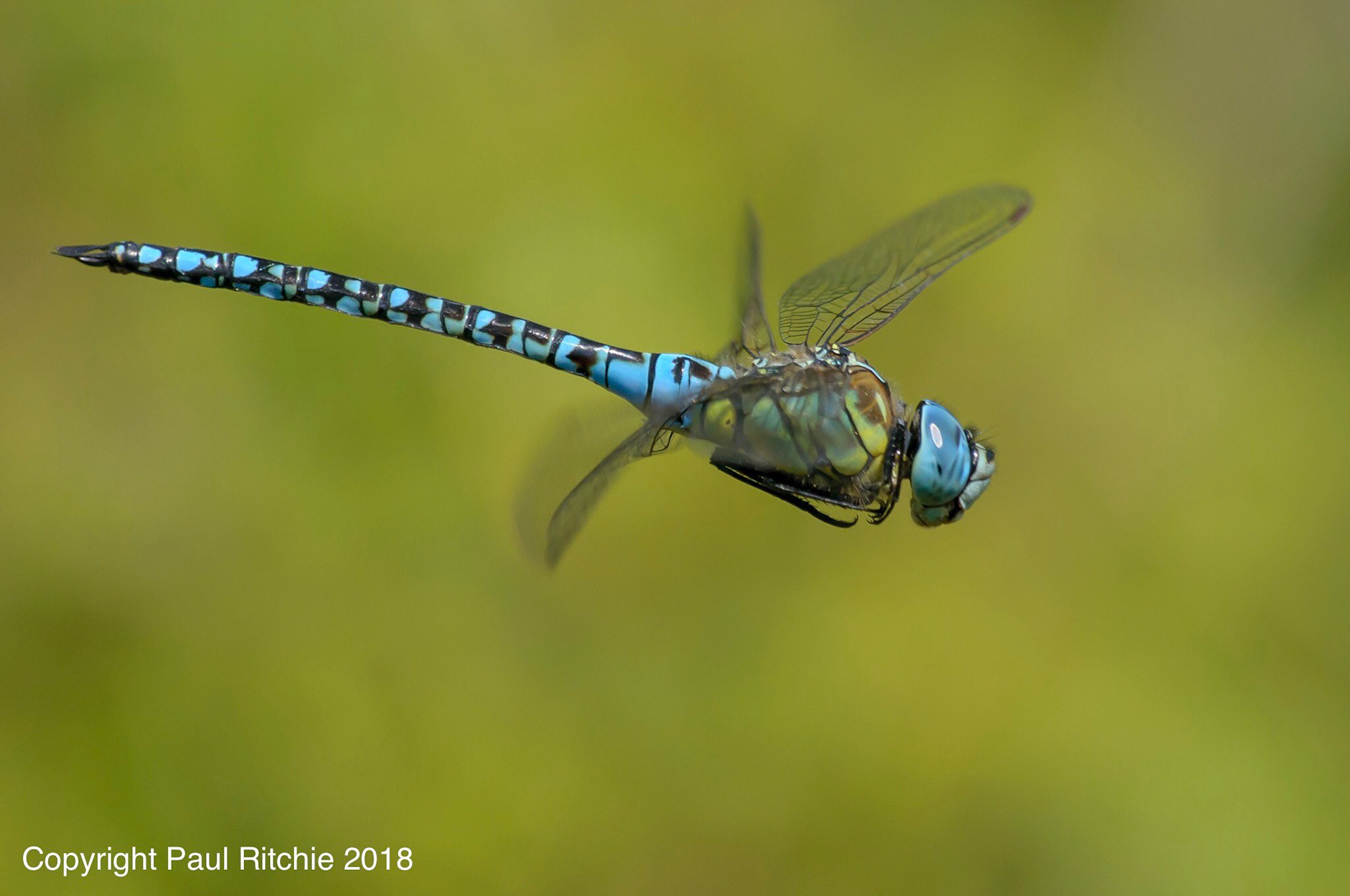
Blue-eyed Hawker (Aeshna affinis) - male
A medium-sized (57 - 66mm) colourful migratory hawker that prefers well-vegetated shallow still waters, which mostly dry out during summer. It has been a frequent visitor to the Thames basin in previous summers, but has dispersed further afield in subsequent seasons.

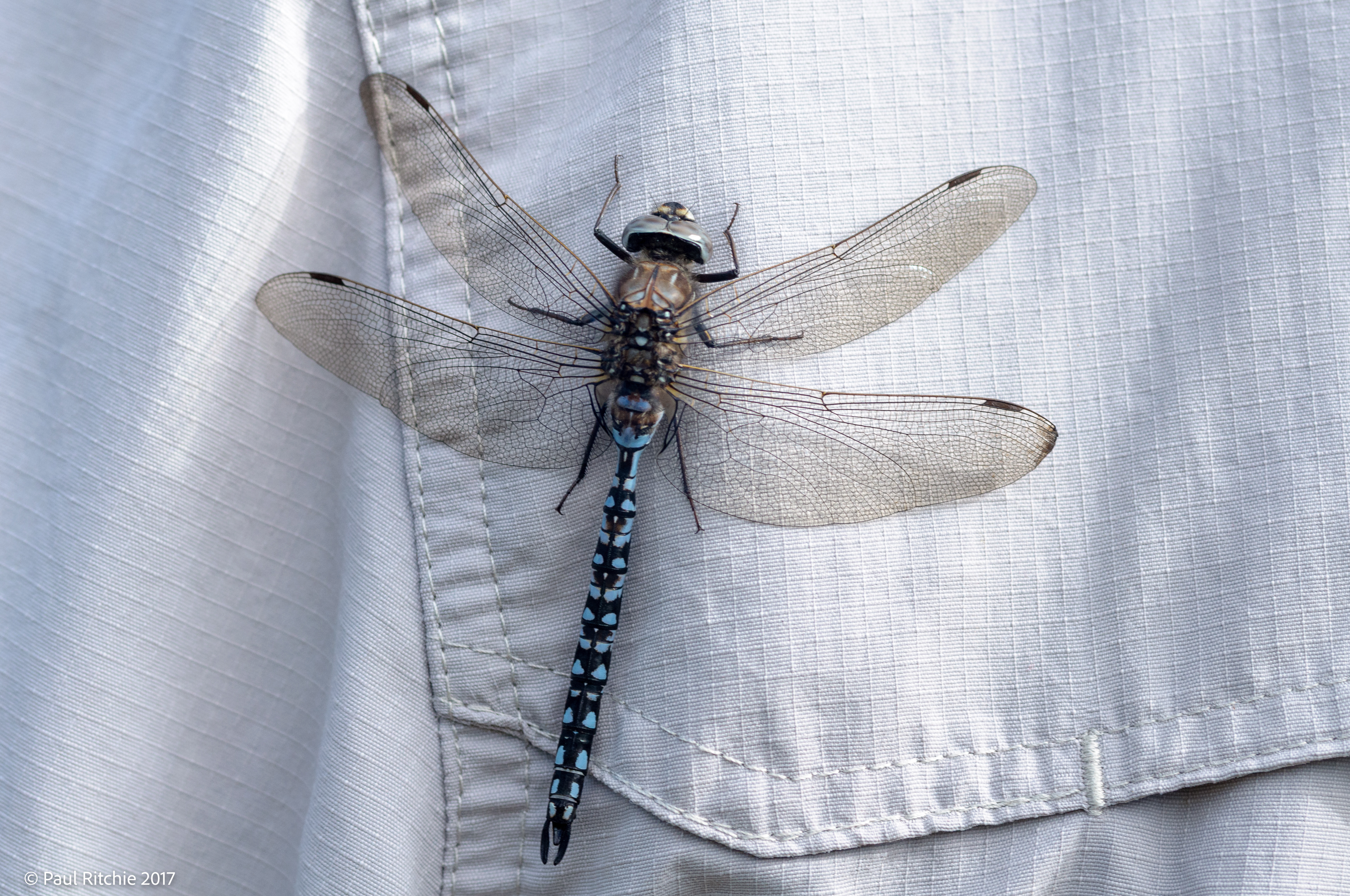
Both sexes readily settle on tree trunks and rocks in cool conditions and can approach people with the same gregarious curiosity as the Southern Hawker.

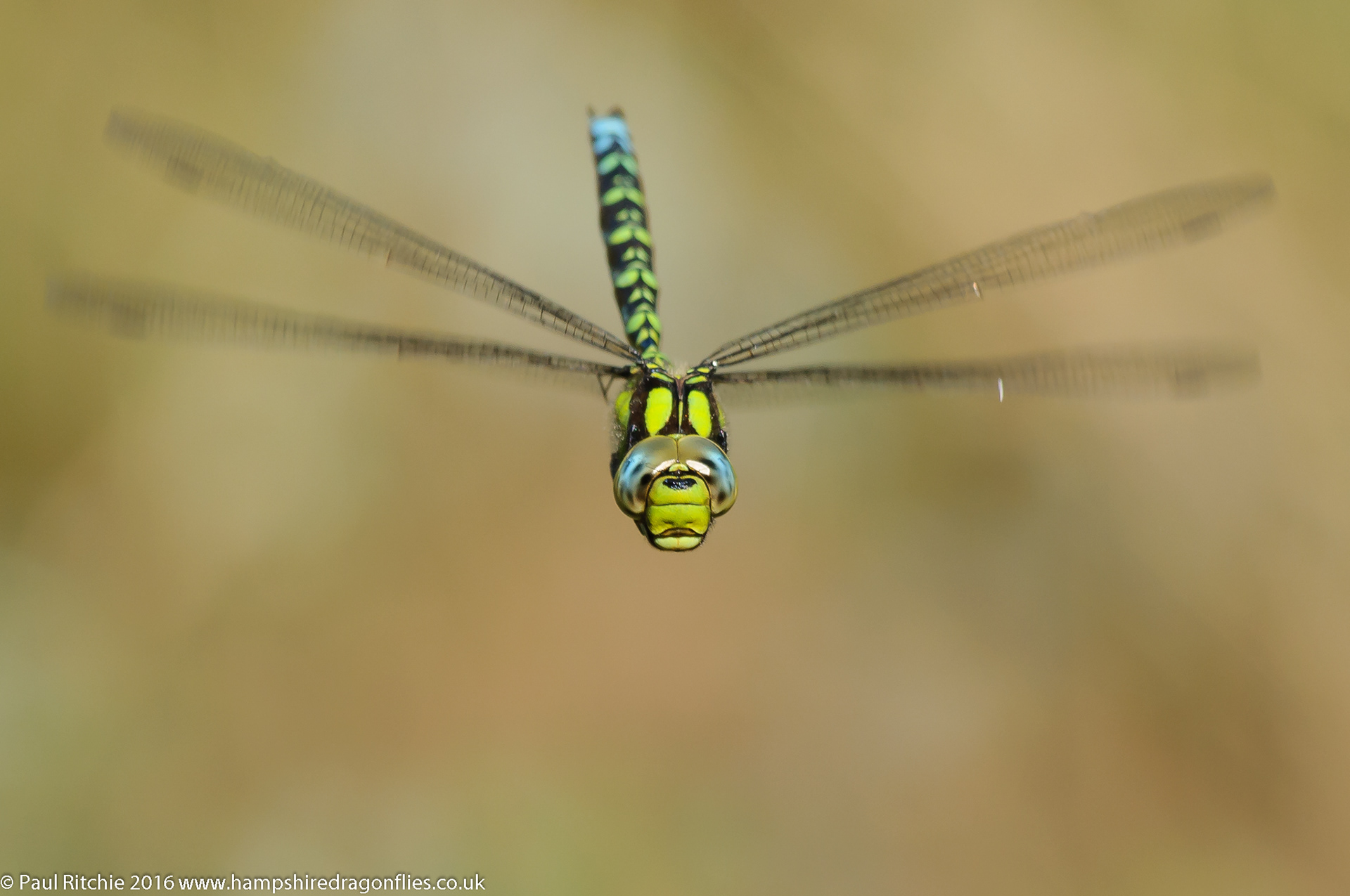
Southern Hawker (Aeshna cyanea) - male
A large (70mm) hawker, characterised by its vibrant colours and inquisitive nature, favours well-vegetated still waters. However, it is not uncommon to observe this species far from water bodies, inhabiting heathlands and forest paths.

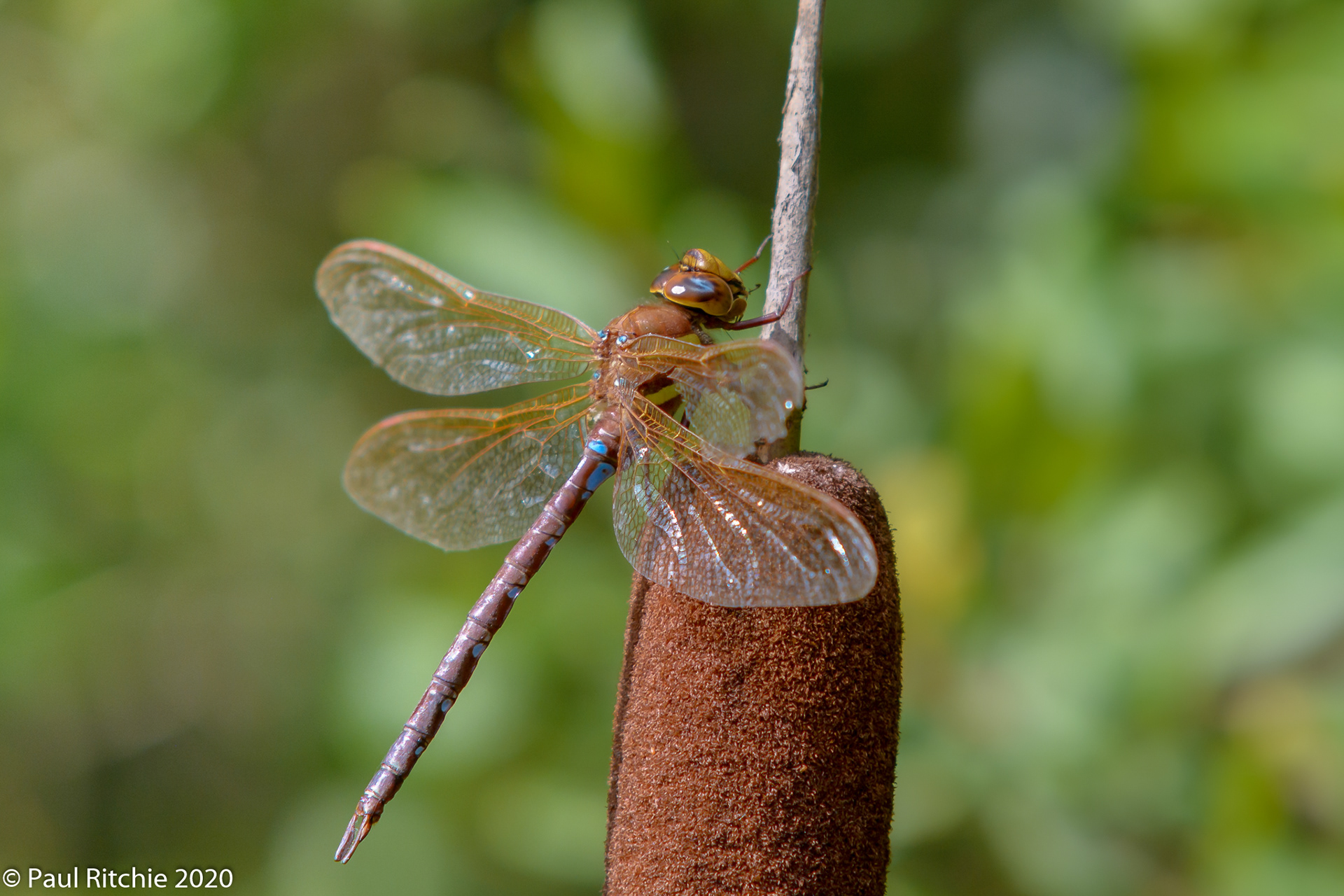
Brown Hawker (Aeshna grandis) - male
A large (73mm) hawker with obvious golden brown wings. It prefers slow-moving mud-based rivers but may be found patrolling nearby lakes, ponds, and streams.

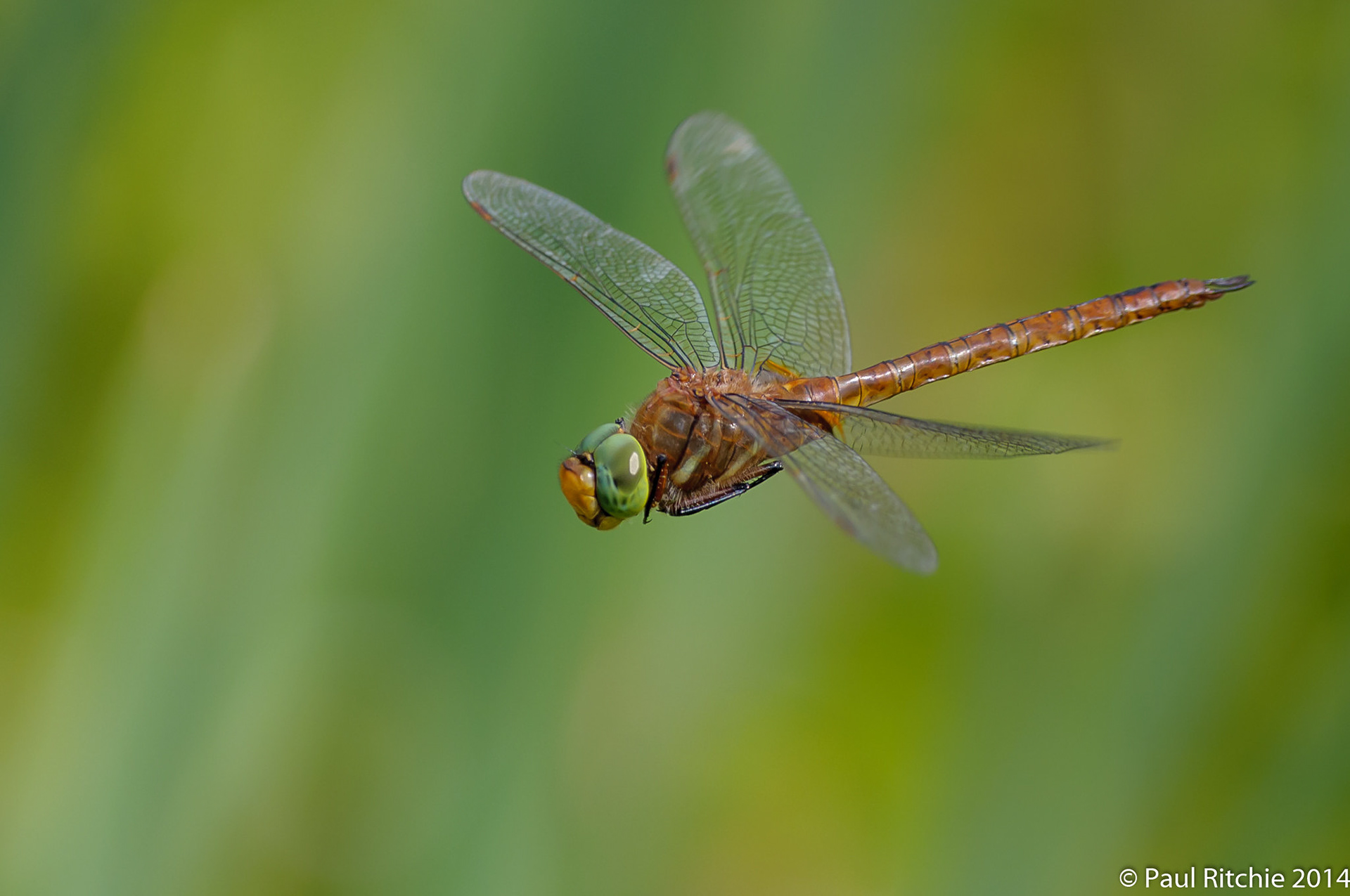
Green-eyed Hawker (Aeshna isosceles) - male
A substantial Hawker aircraft, measuring 63mm in length, bears a striking resemblance to the Brown Hawker, albeit with distinct clear wings and prominent green eyes. Historically confined to the low-lying grazing meadows and ditches of East Anglia and west Kent, this species has now dispersed extensively.


Moorland (Common) Hawker (Aeshna juncea) - male
A large (65-80mm) hawker, preferring moorland and mountain pools, is scarce in Hampshire but occasionally visits the New Forest, where it can be observed patrolling shallow acid ponds.

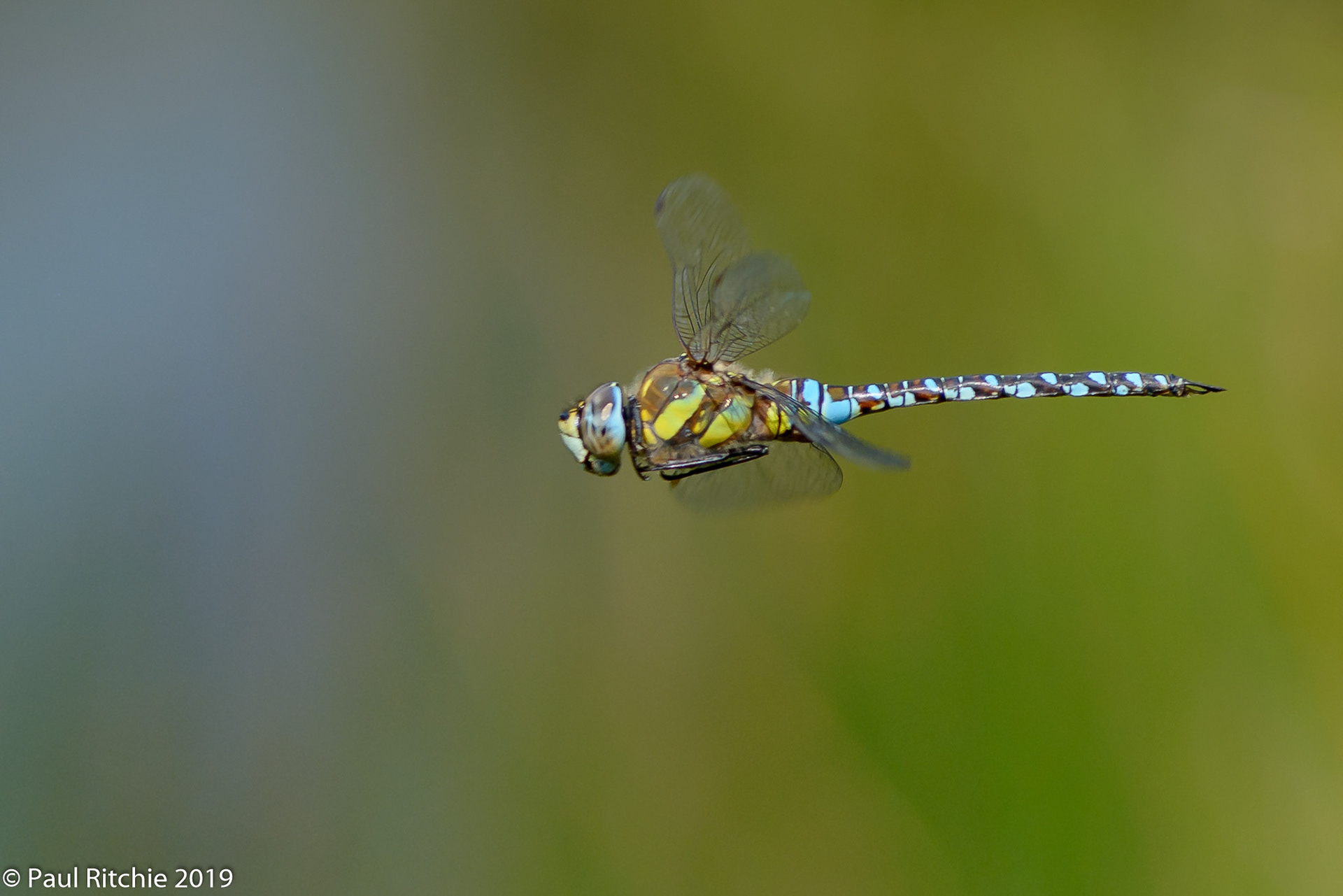
Migrant Hawker (Aeshna mixta) - male
A small (63mm) Hawker found in large numbers patrolling well-vegetated water bodies. Frequently seen in large swarms feeding and roosting in forest clearings.

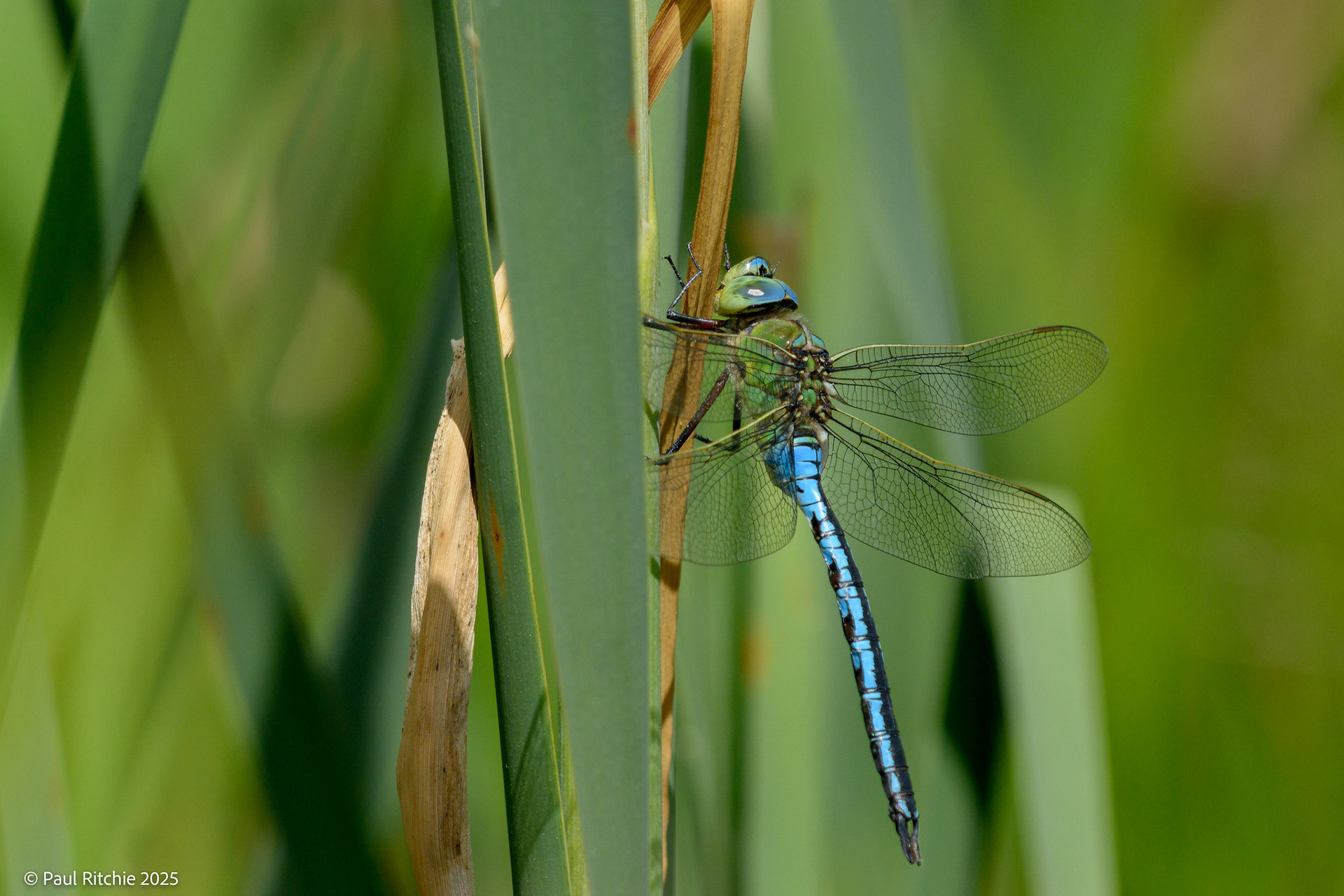
Blue Emperor (Anax imperator) - male
A substantial dragonfly, measuring 78mm in length, exhibiting active behaviour, favours well-vegetated standing water bodies. However, it can also be found in proximity to canals and rivers.

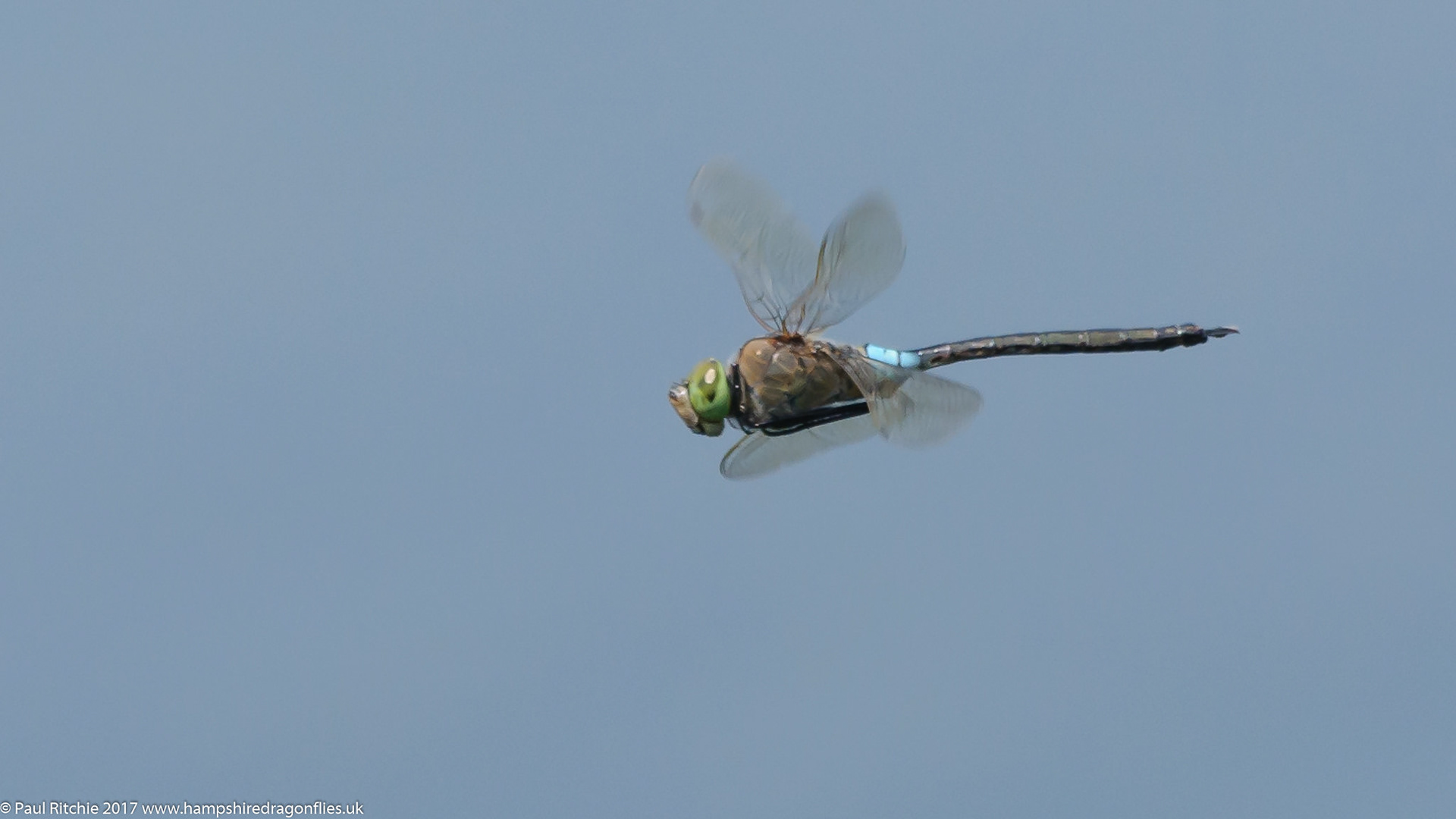
Lesser Emperor (Anax parthenope) - male
Similar to our native Blue Emperor, but smaller and less vibrant, this species features a striking bright blue "saddle” on its abdomen, which is particularly noticeable even during flight. The rest of its abdomen and thorax is brown, while its eyes are bright green.

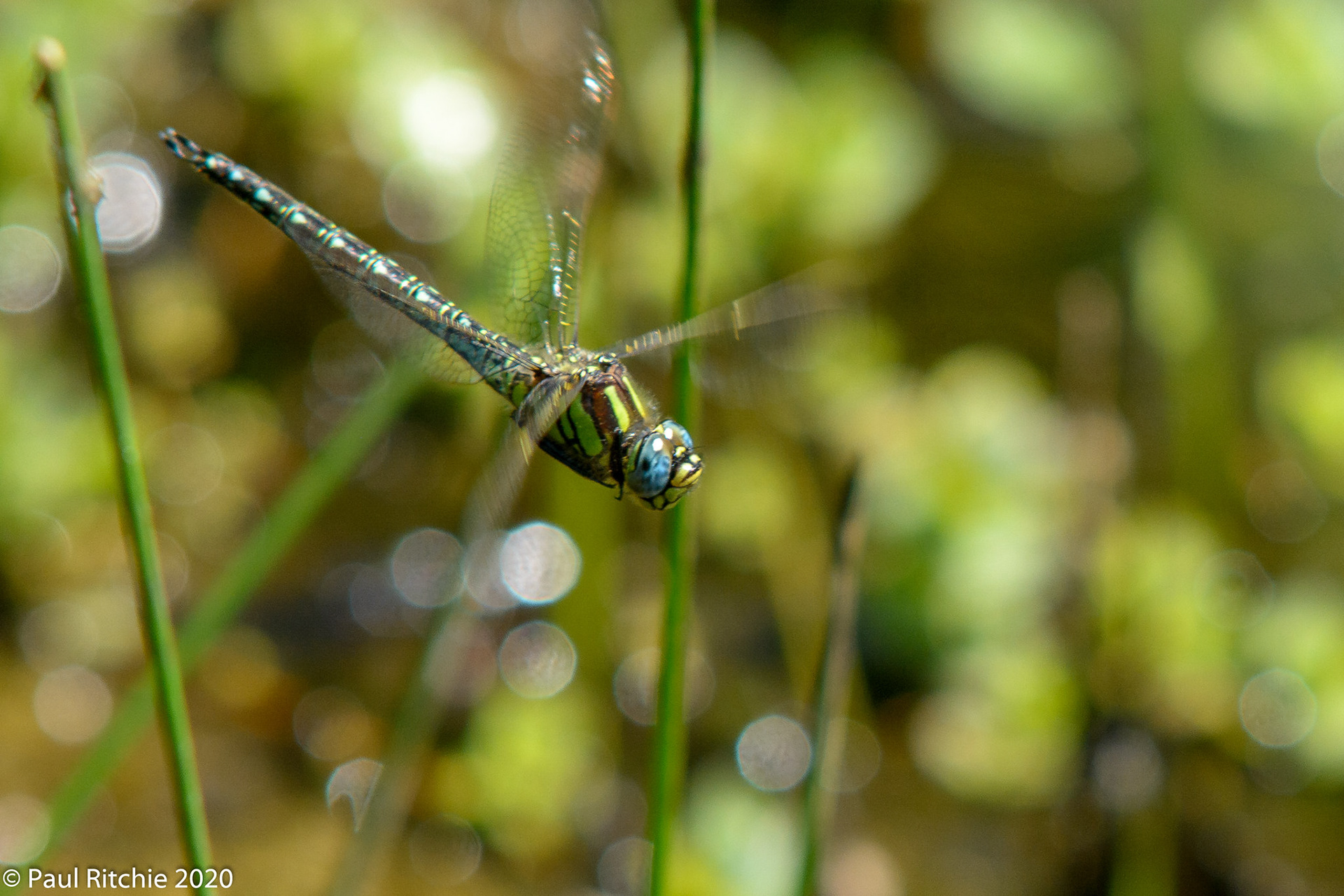
Hairy Dragonfly (Brachytron pratense) - male
A relatively small (55mm) hawker, the first hawker on the wing in Spring, prefers unpolluted, well-vegetated water bodies. Patrols are conducted at a low and slow pace between the reeds and roosts in groups for mutual safety.

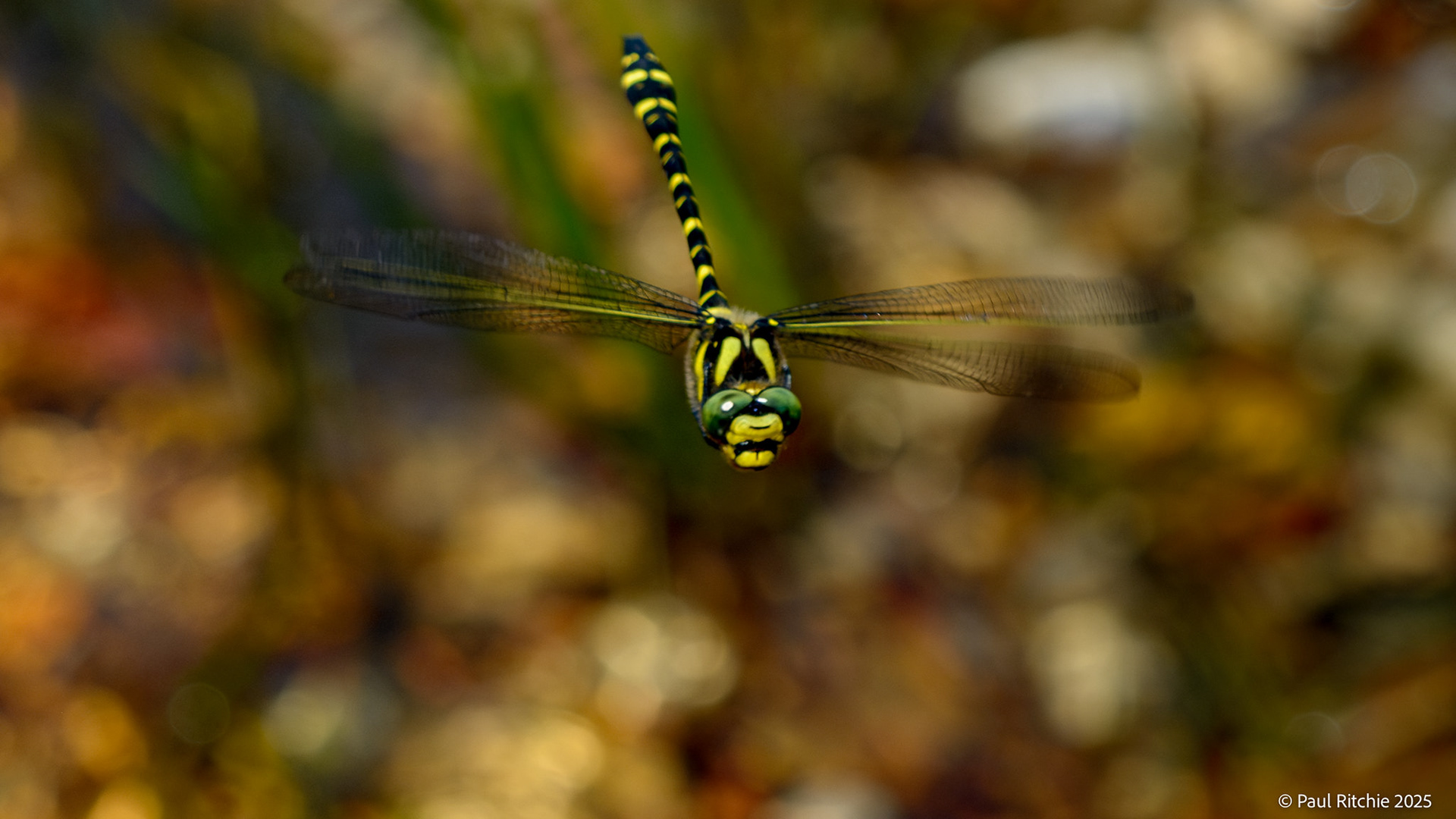
Golden Ringed Dragonfly (Cordulegaster boltonii) - male
A substantial dragonfly, with male specimens measuring 74mm and female specimens measuring 84mm, exhibits a preference for acidic rivers and streams of varying sizes.

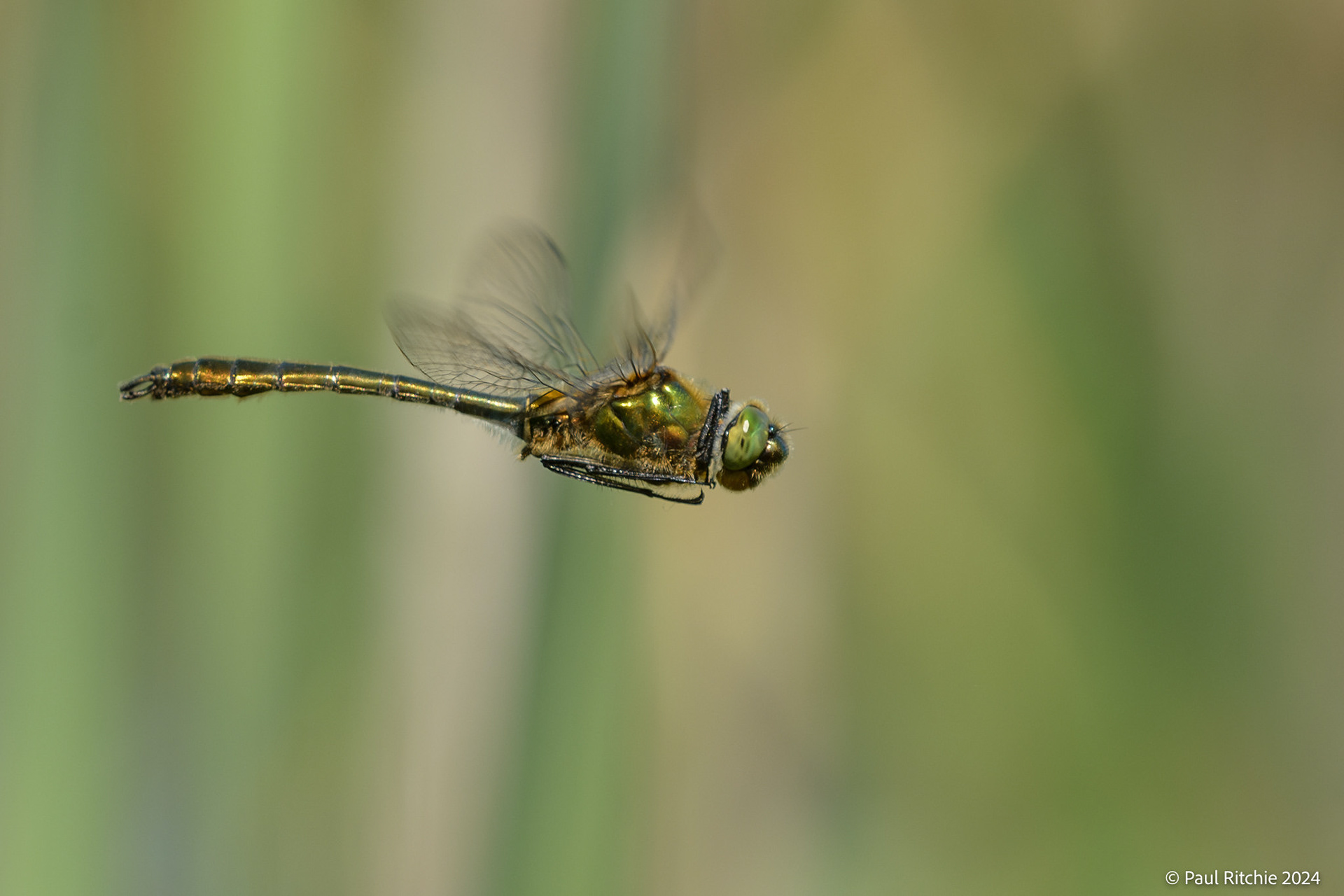
Downy Emerald (Cordulia aenea) - male
A medium-sized dragonfly, measuring approximately 48mm in length, exhibits a downy thorax and a metallic green body adorned with a copper sheen.

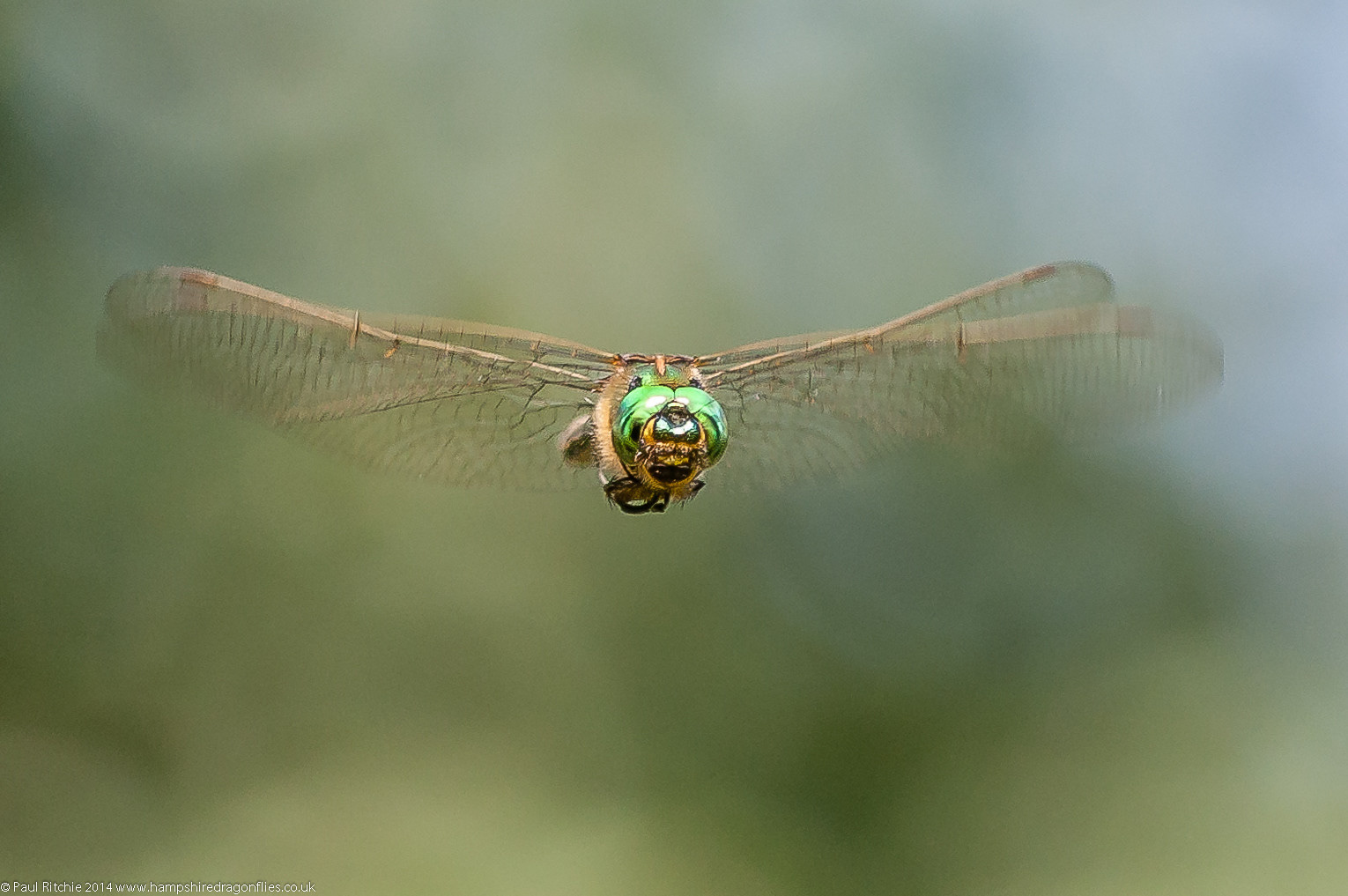
Brilliant Emerald (Somatochlora metallica) - male
A moderately sized dragonfly (48mm) superficially similar to the Downy Emerald, but with a more prominent metallic green body and apple green eyes.

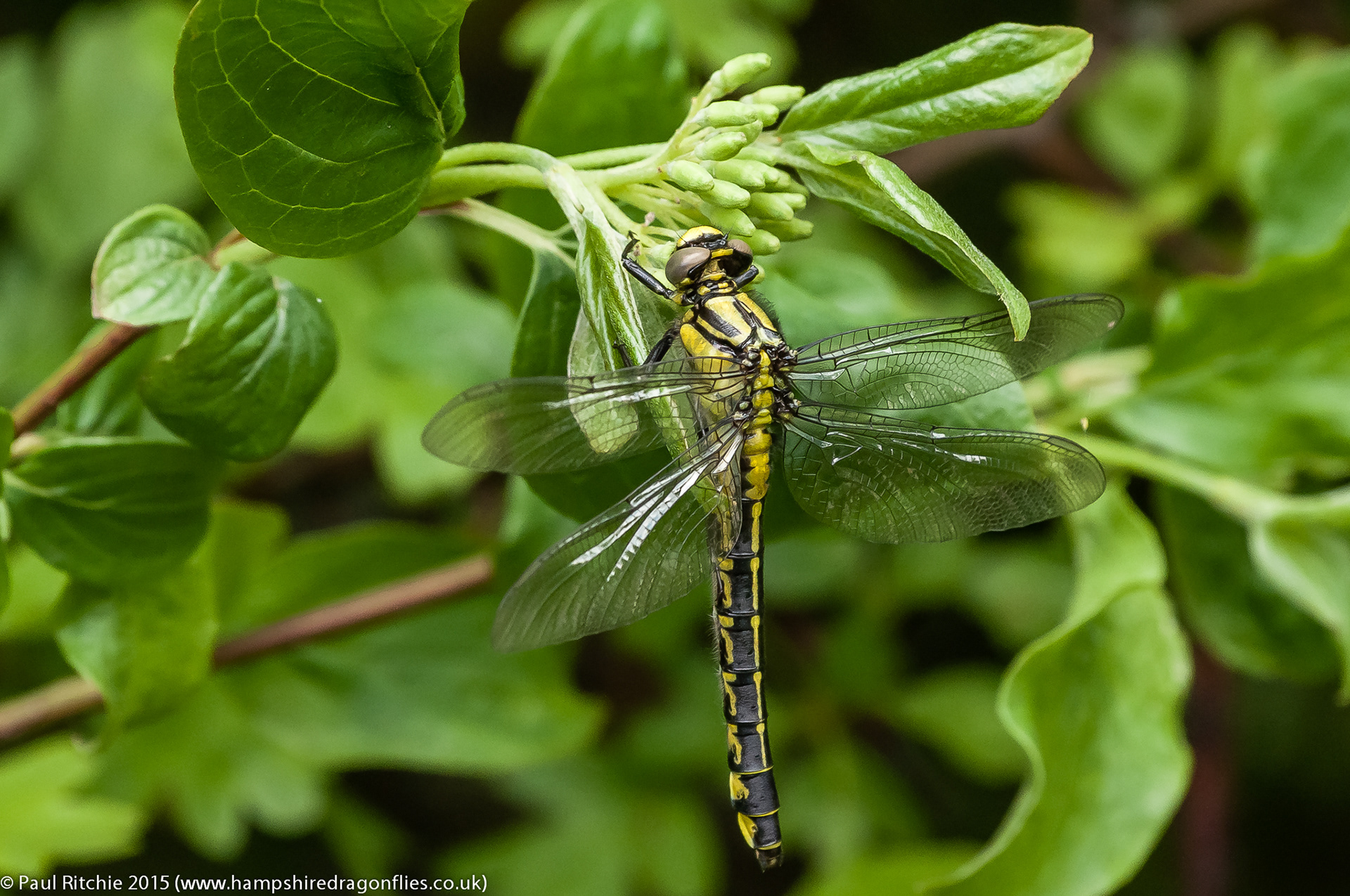
Common Club-tail (Gomphus vulgatissimus) - immature female
This medium-sized dragonfly (50mm) exhibits a distinctly clubbed tail in both sexes.
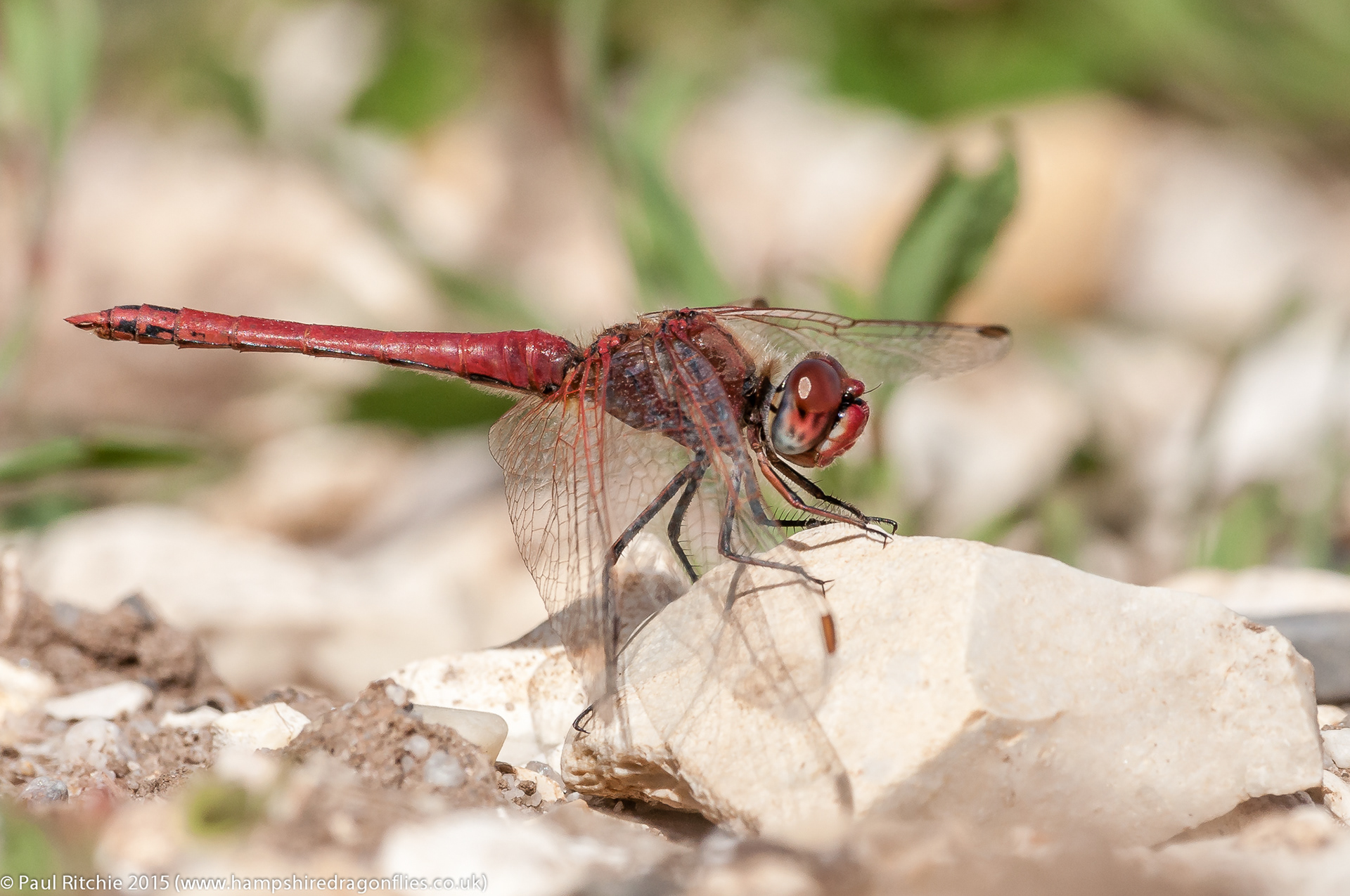
Usually perch low down and close to water
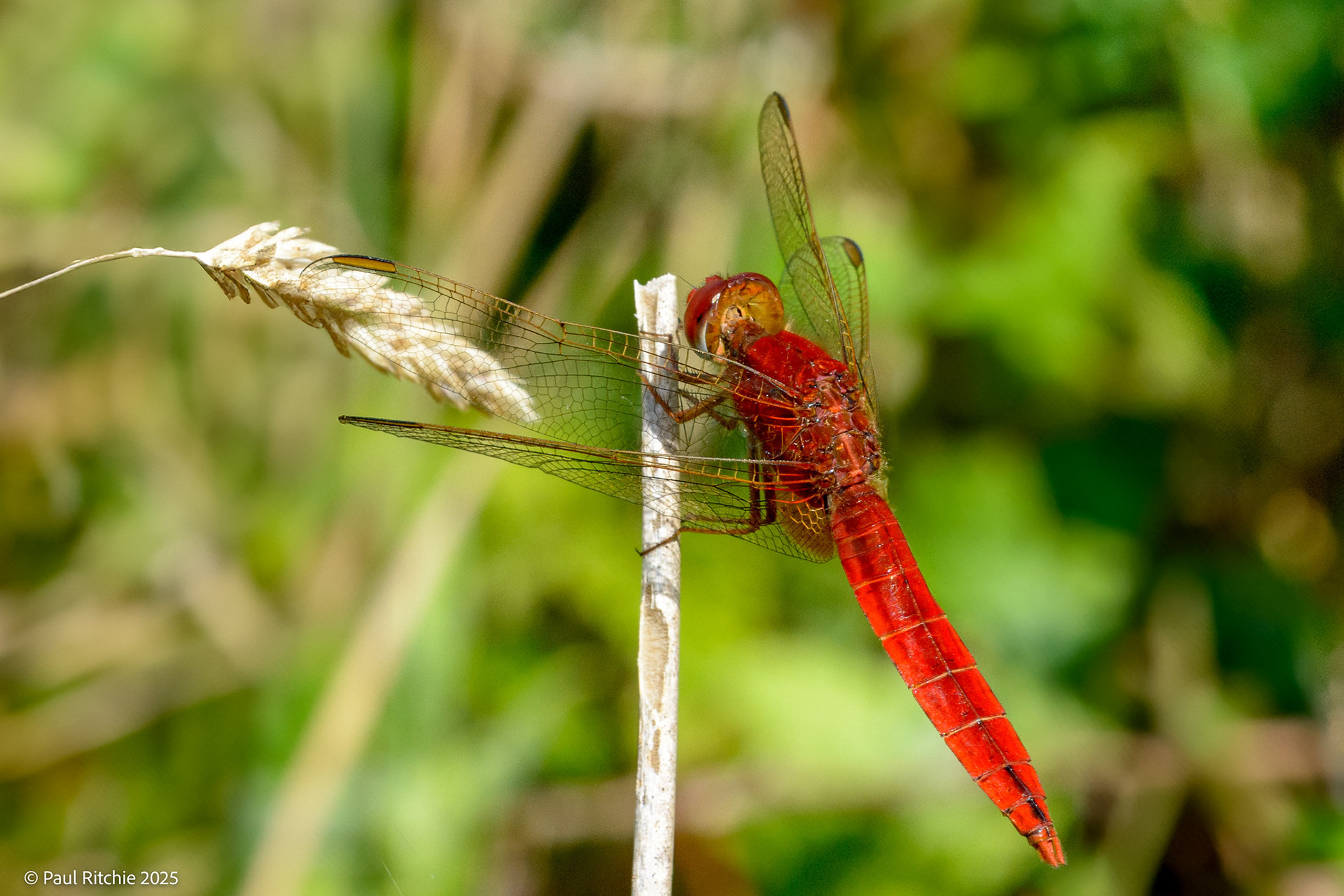
Broad Scarlet (Crocothemis erythraea) - male

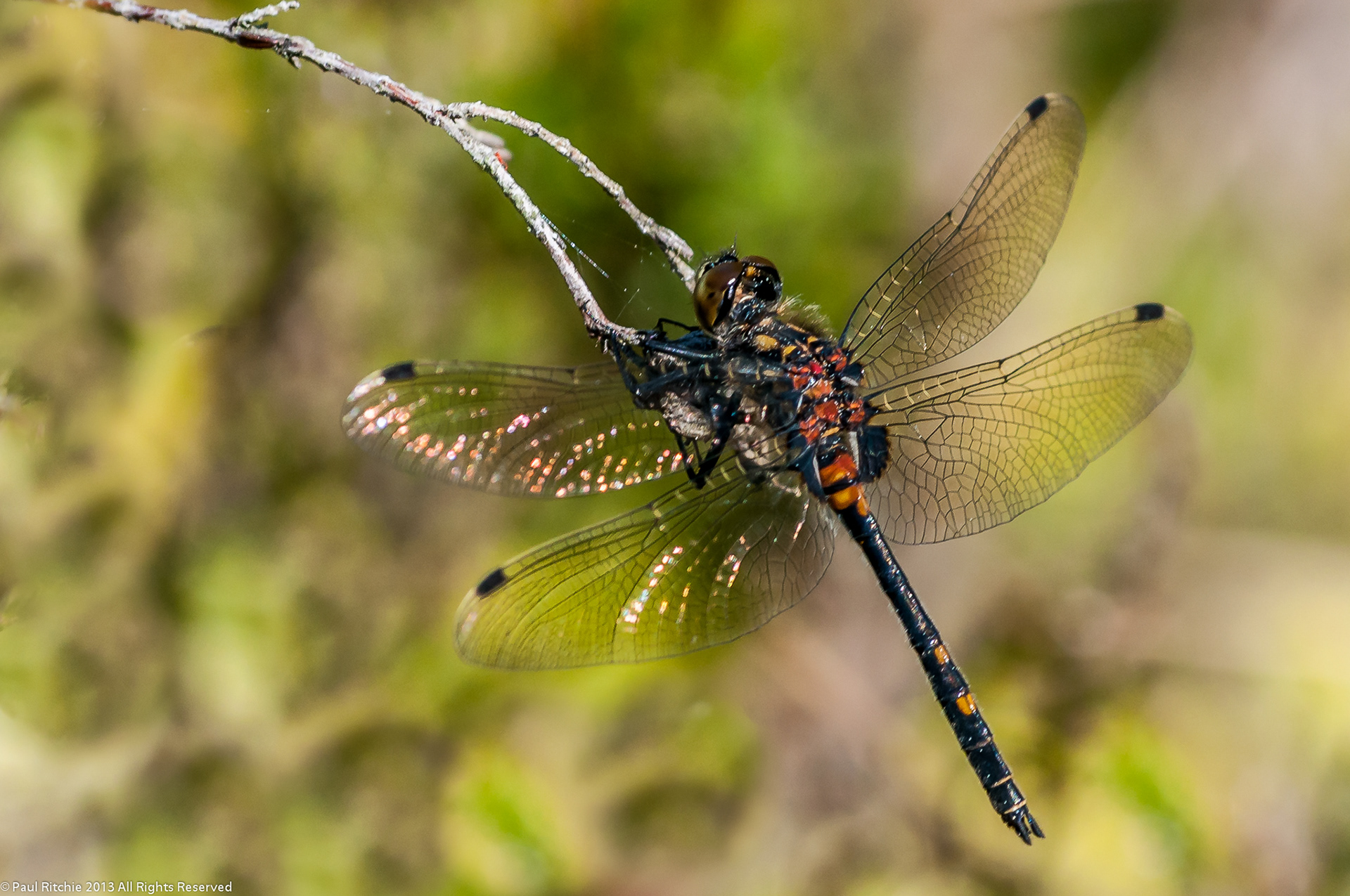
White-faced Darter (Leucorrhinia dubia) - male
The White-faced Darter, a diminutive dragonfly (length ranging from 33 to 37 millimetres), is characterised by its dark body and a distinctive pale creamy white frons. Limited to a few locations in the Midlands and Cumbria, with higher populations in the Scottish Highlands.

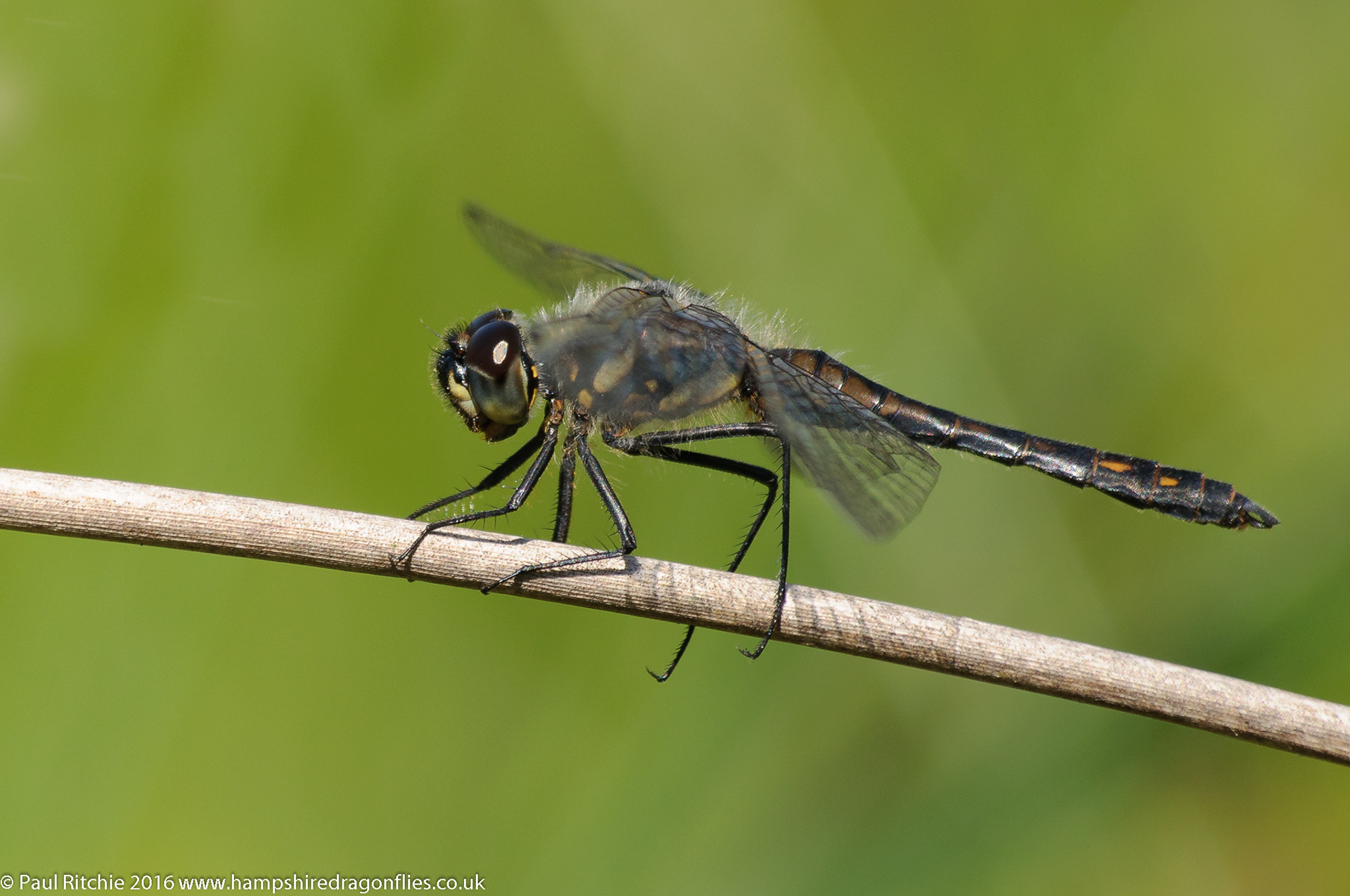
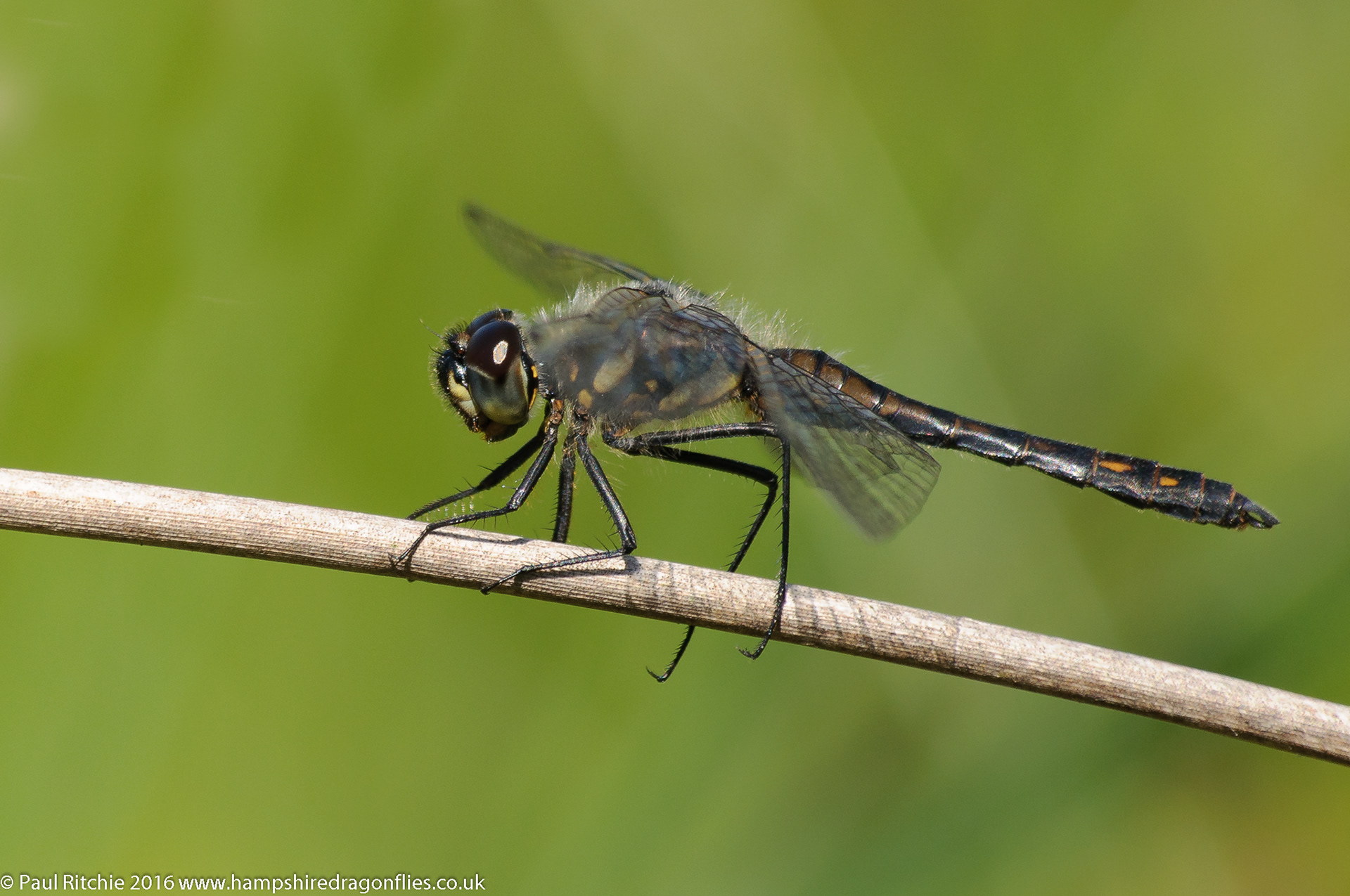
Black Darter (Sympetrum danae) - male
A relatively small dragonfly (29-34mm) inhabits peat moss and heathlands, breeding in ponds, bog pools, and drainage ditches. Found in high numbers locally

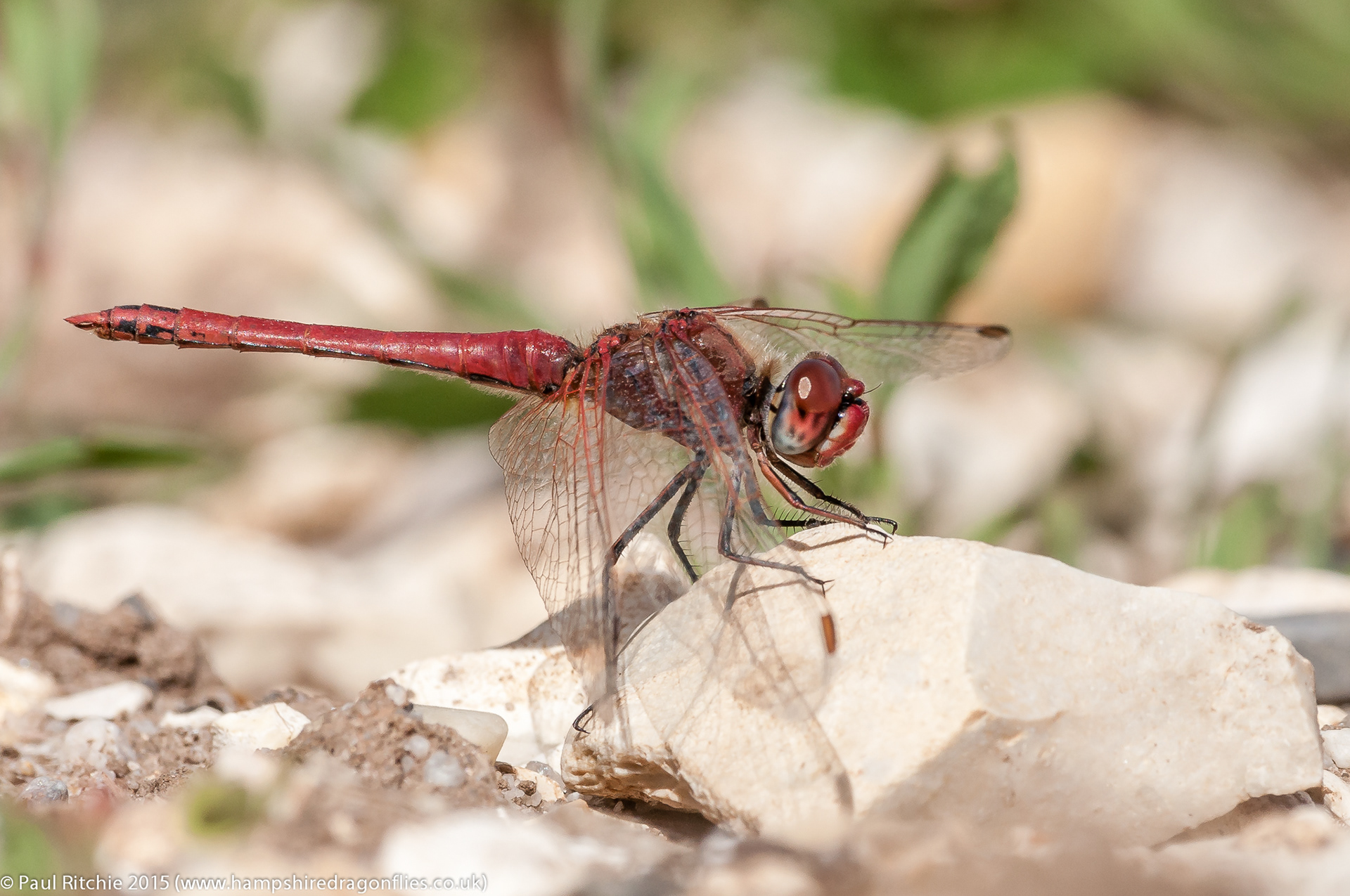
Red-veined Darter (Sympetrum fonscolombii) - male
This medium-sized (38-40mm) species is a relatively common migrant to the United Kingdom and can be observed in substantial numbers at suitable habitats along the southern coast.

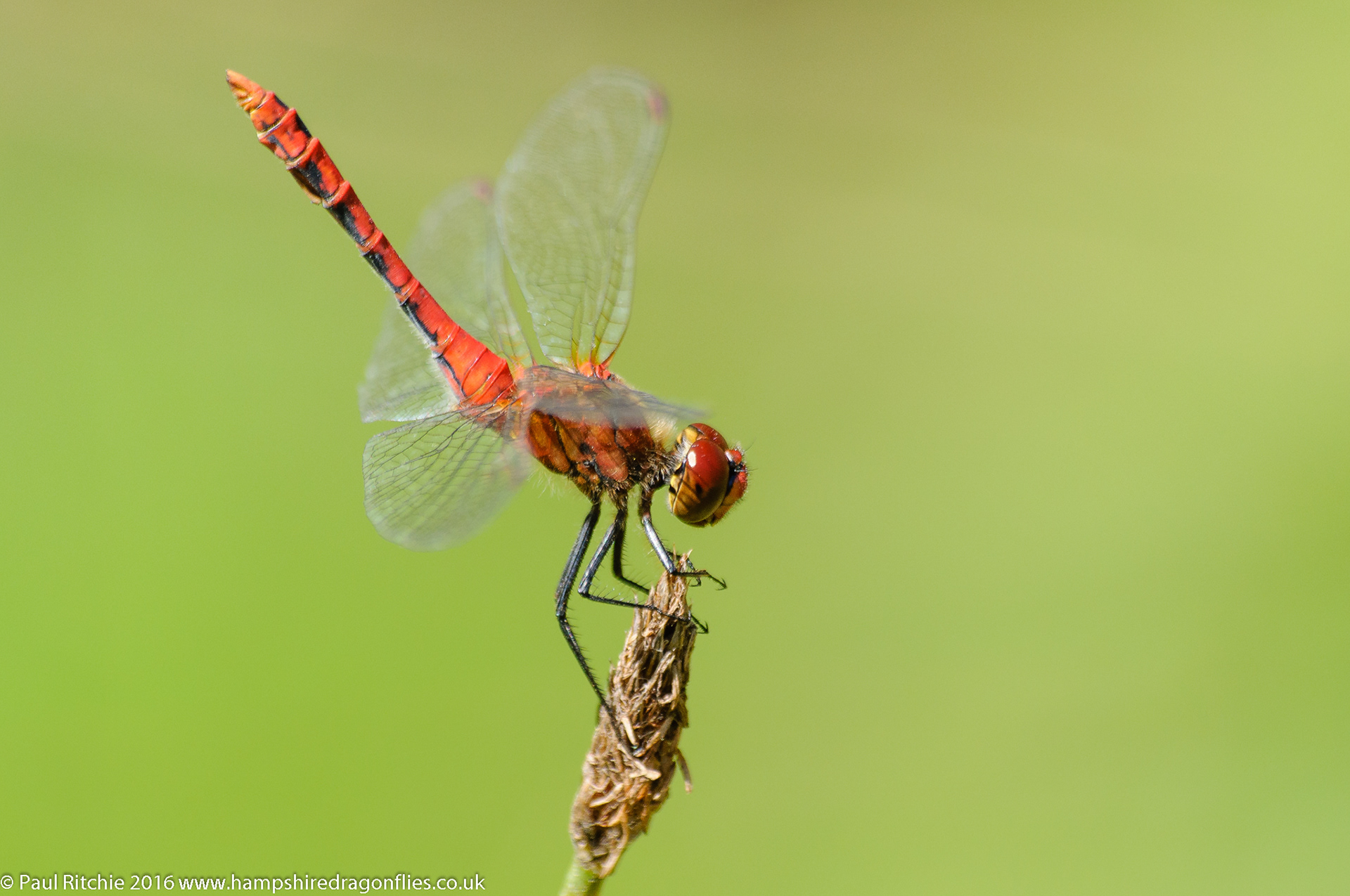
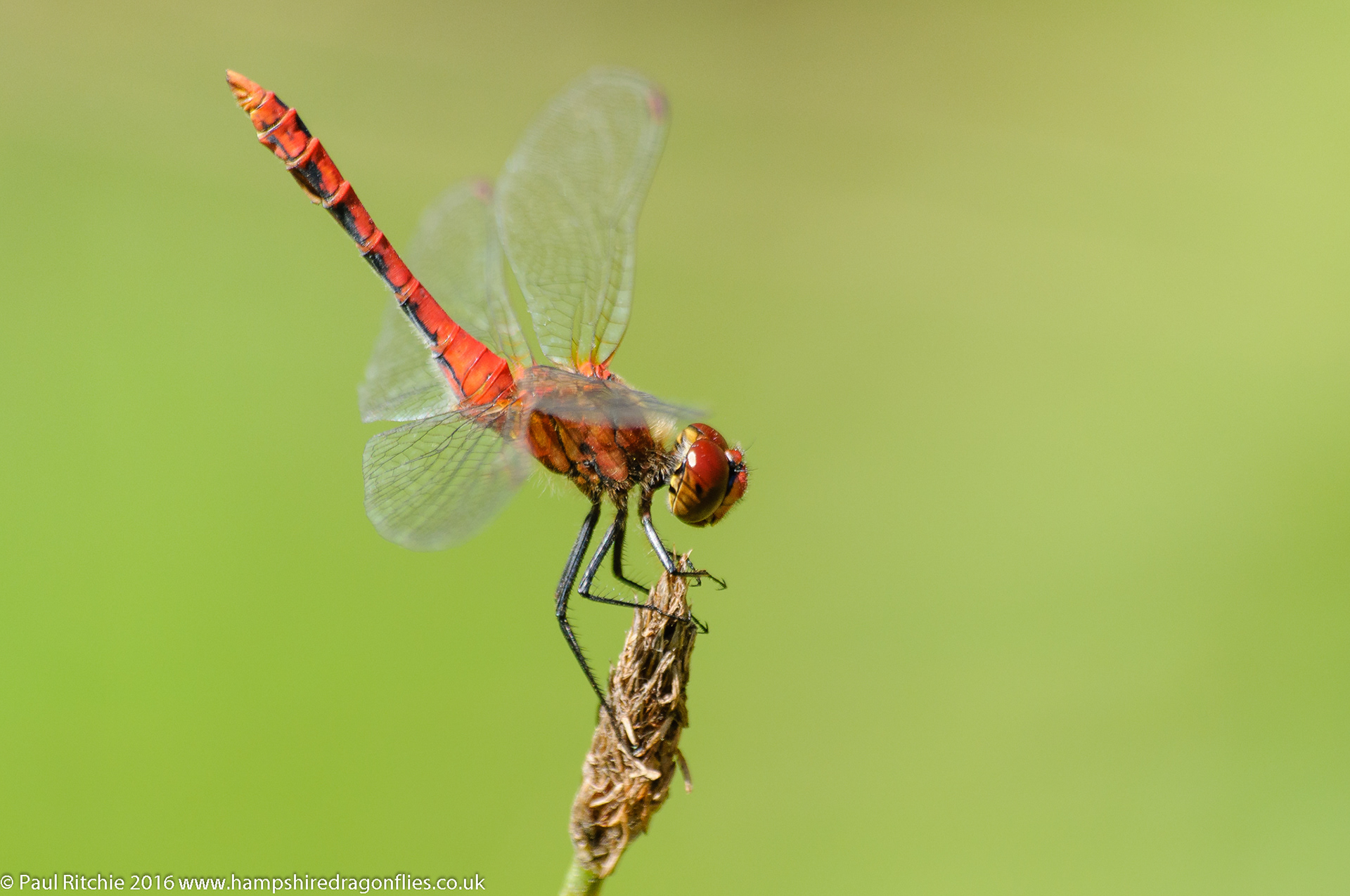
Ruddy Darter (Sympetrum sanguineum) - male
A highly localised medium-sized dragonfly (34-36mm) that superficially resembles the Common Darter. Can be found in large swarms along the Thames marshes.

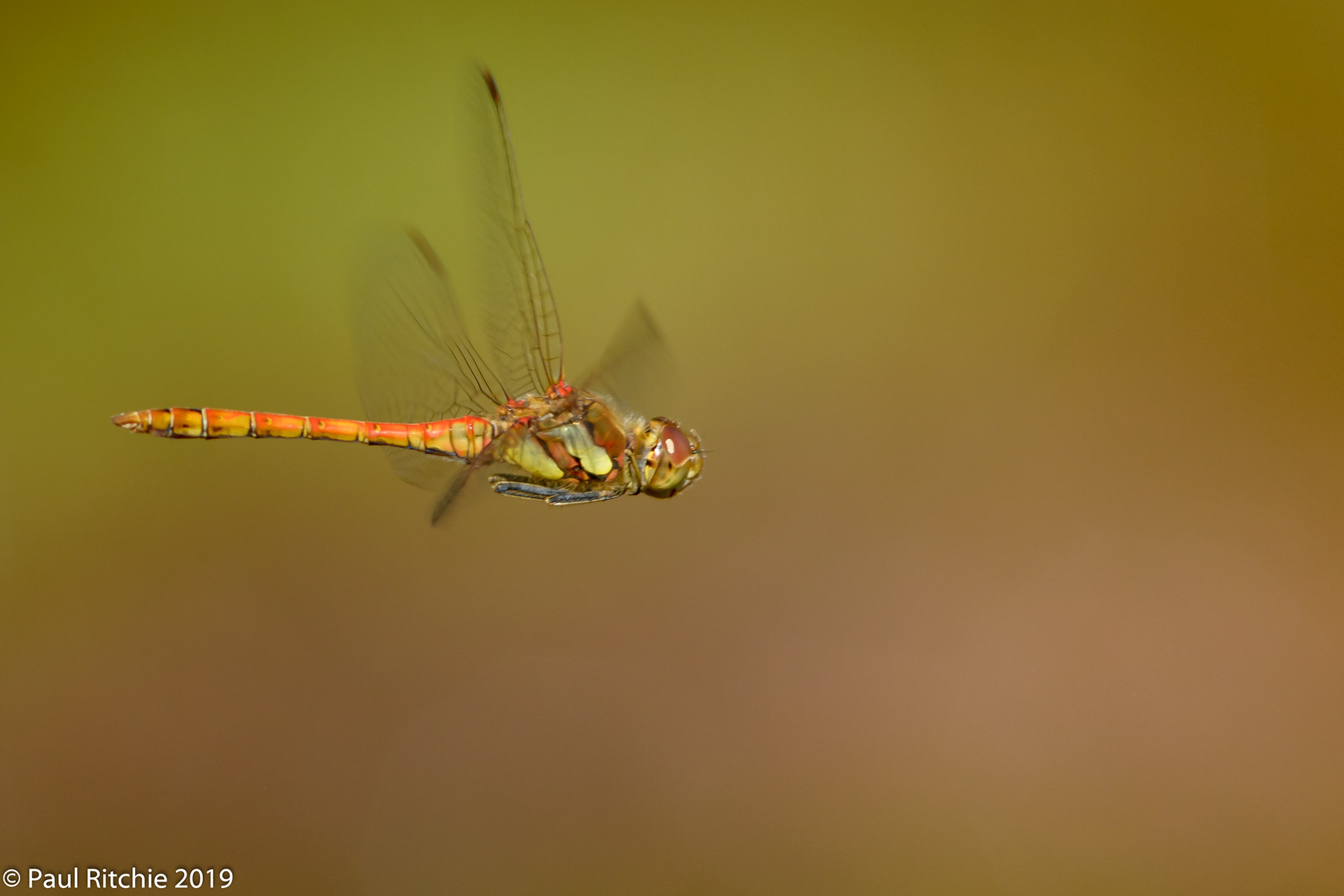
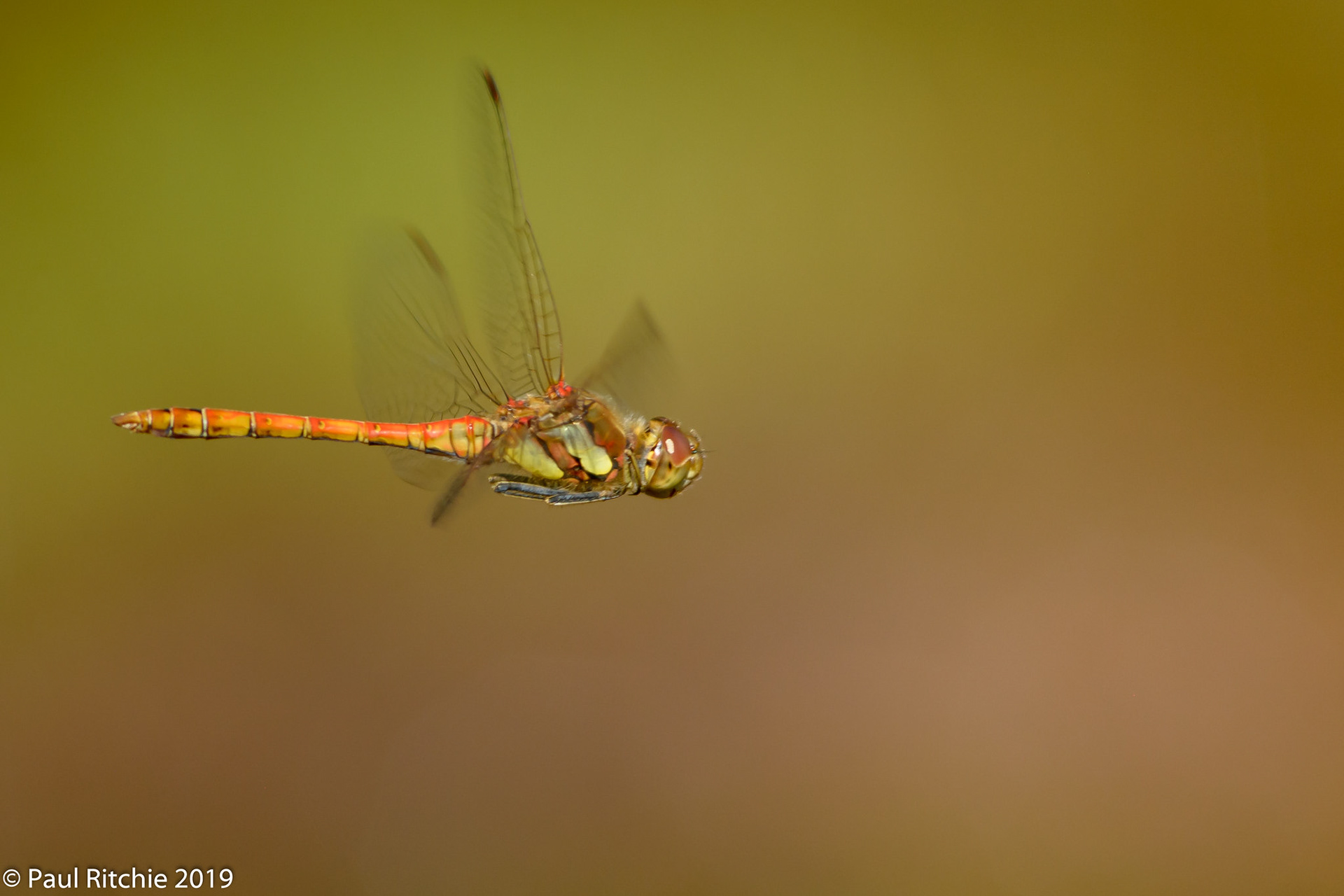
Common Darter (Sympetrum striolatum) - male
A widely distributed medium-sized dragonfly (34-36mm) commonly found in ponds, still waters, and brackish environments.

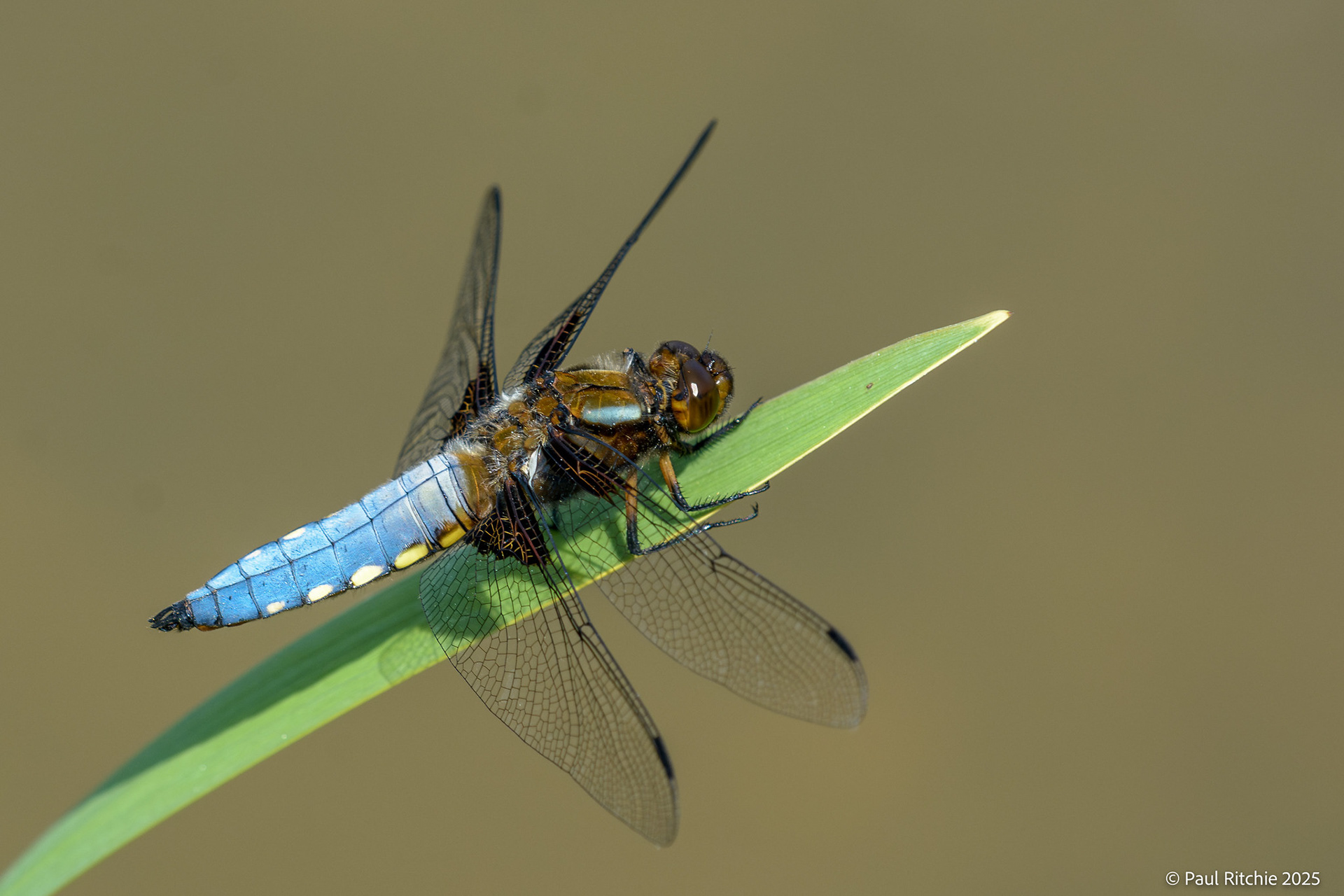
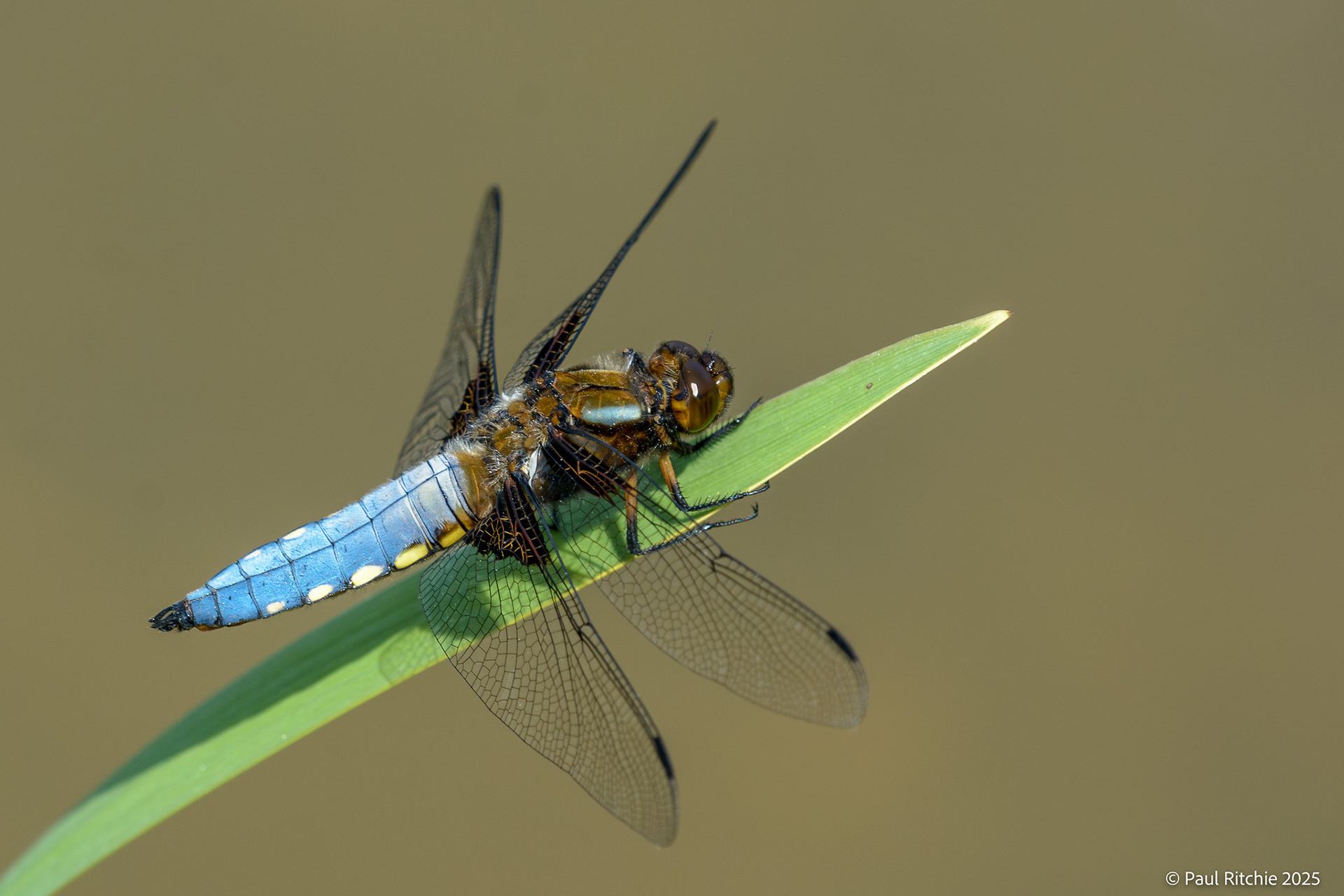
Broad-bodied Chaser (Libellula depressa) - immature male
A broad and robust dragonfly (with a body length ranging from 39 to 48 millimetres) is commonly observed in large numbers within ponds, often perched along the pond’s edge.

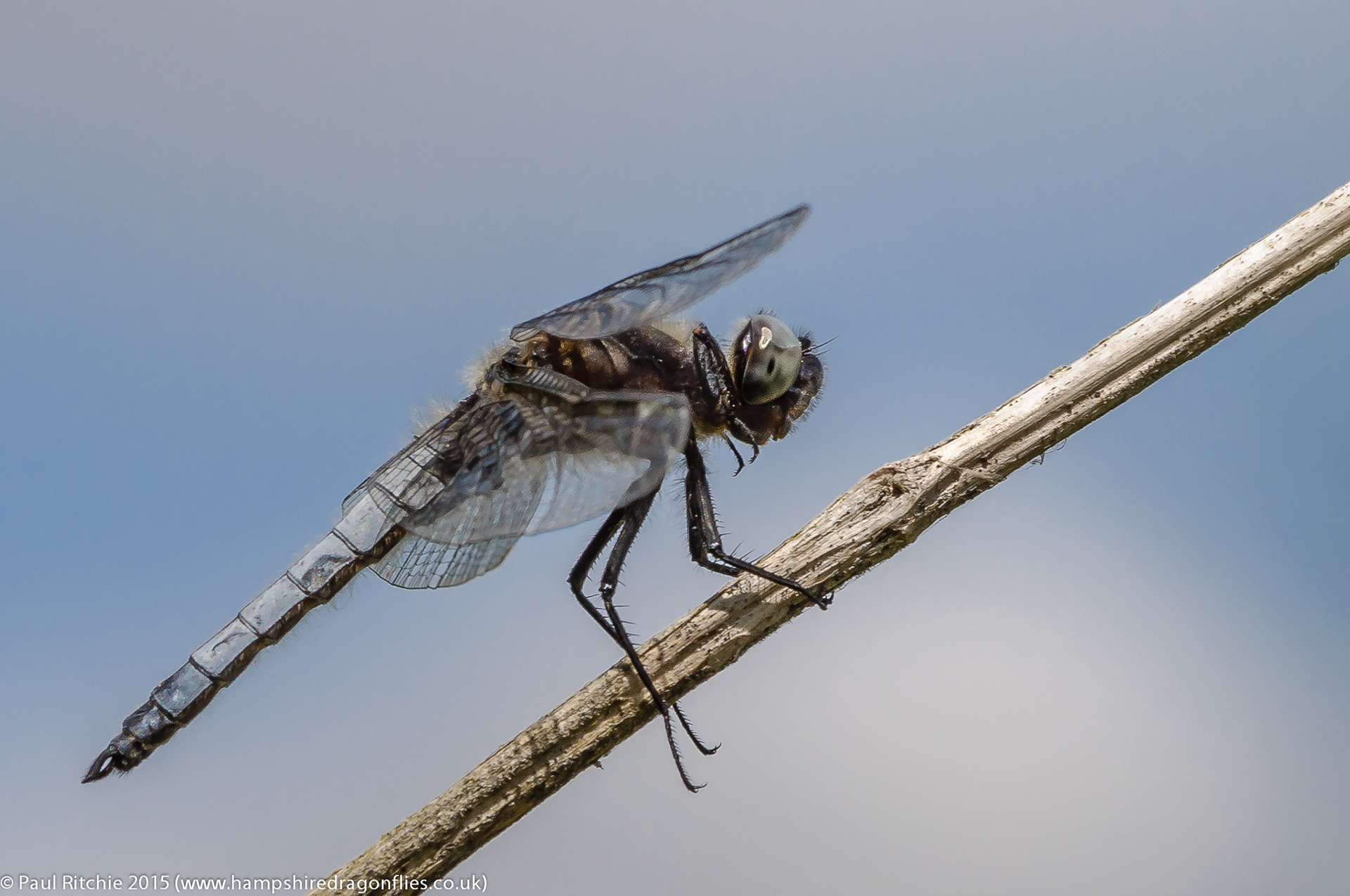
Scarce Chaser (Libellula fulva) - male
A medium-sized ( 40-49mm) dragonfly of lowland river floodplains. Can be found in very large populations in the Somerset Levels

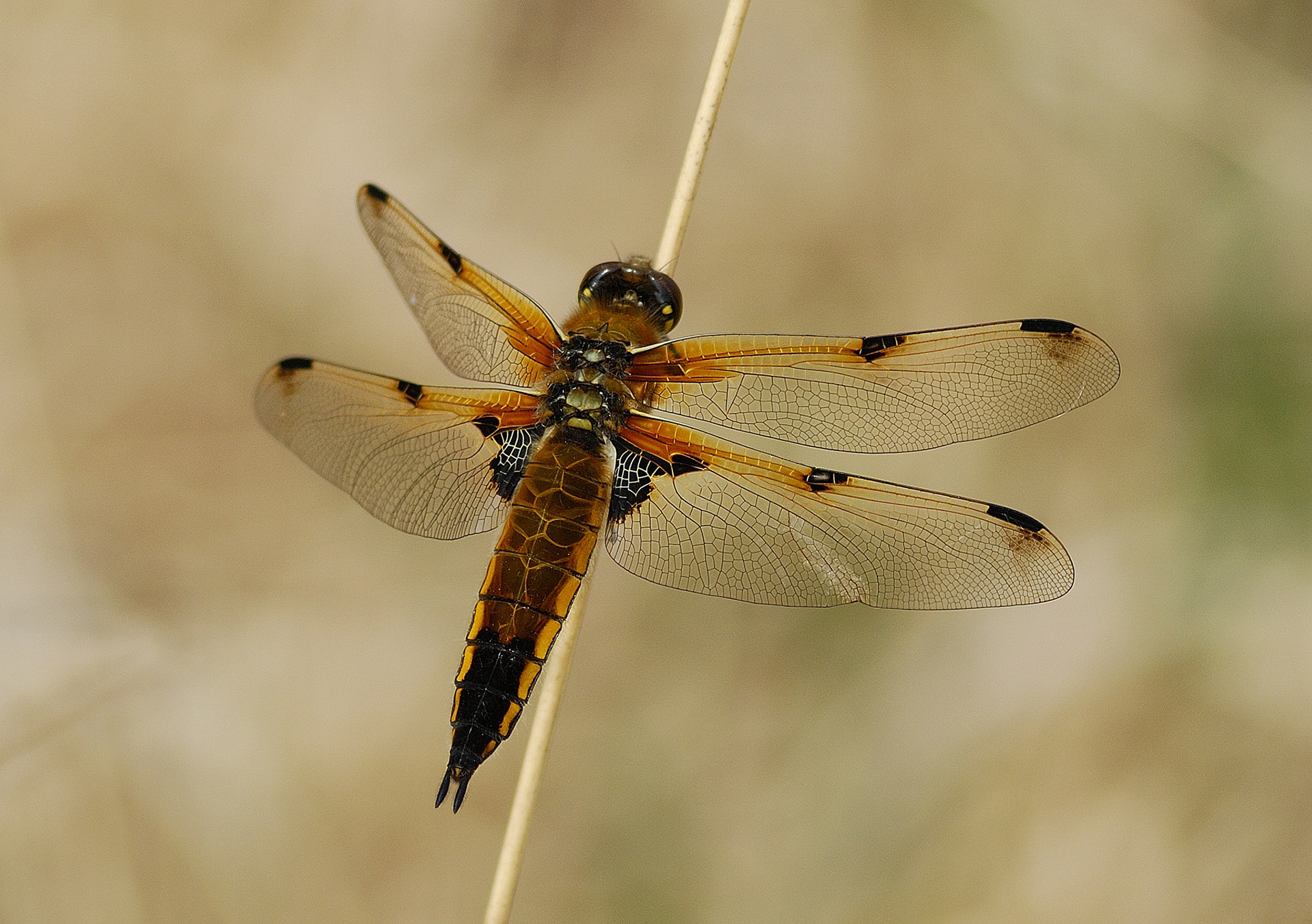
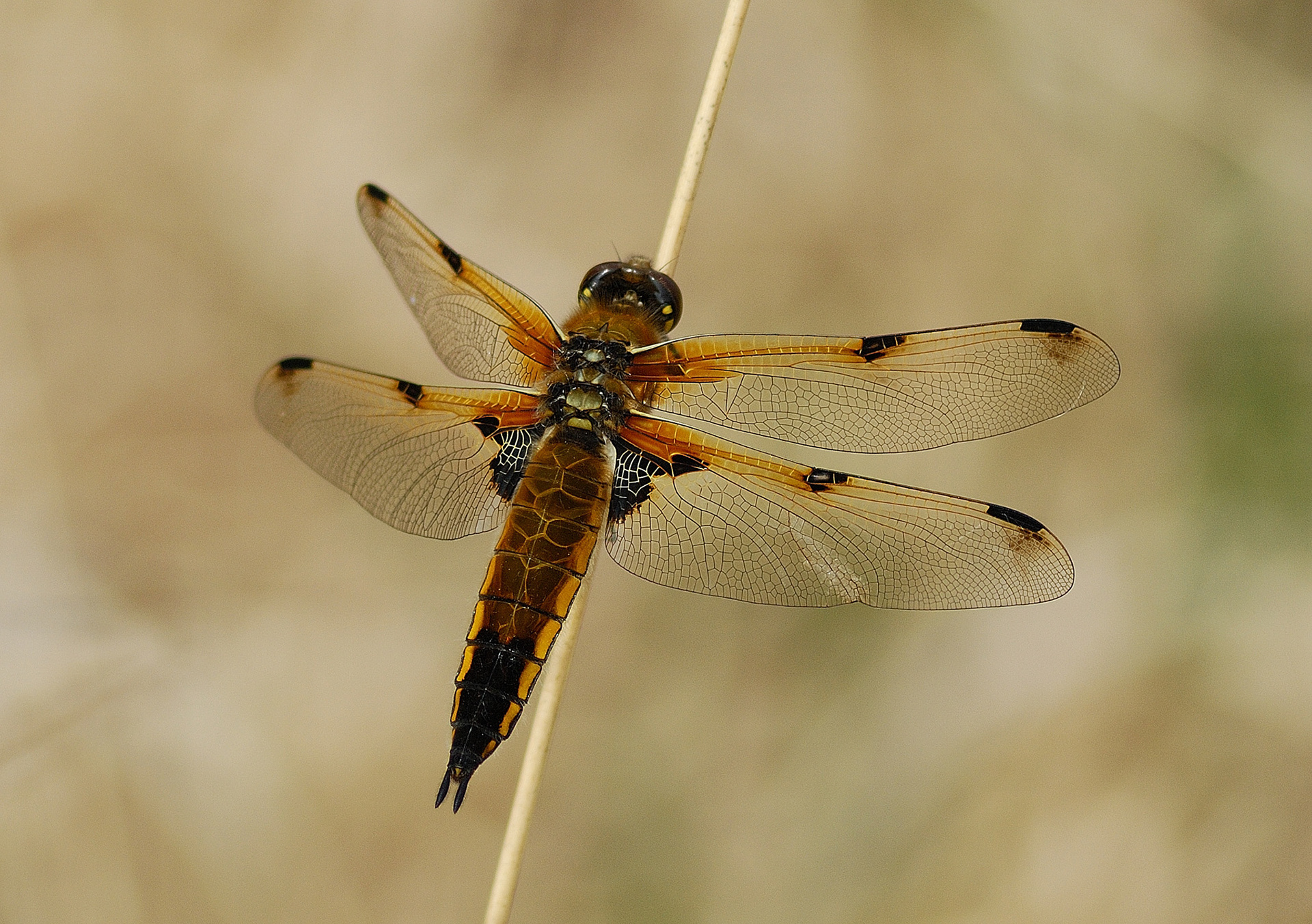
Four-spotted Chaser (Libellula quadrimaculata) - female
A robust medium-sized dragonfly (39-48mm) is commonly found in ponds and perched along their edges. Notably, substantial populations are also present in the Somerset Levels, where roosts of thousands can be frequently observed.

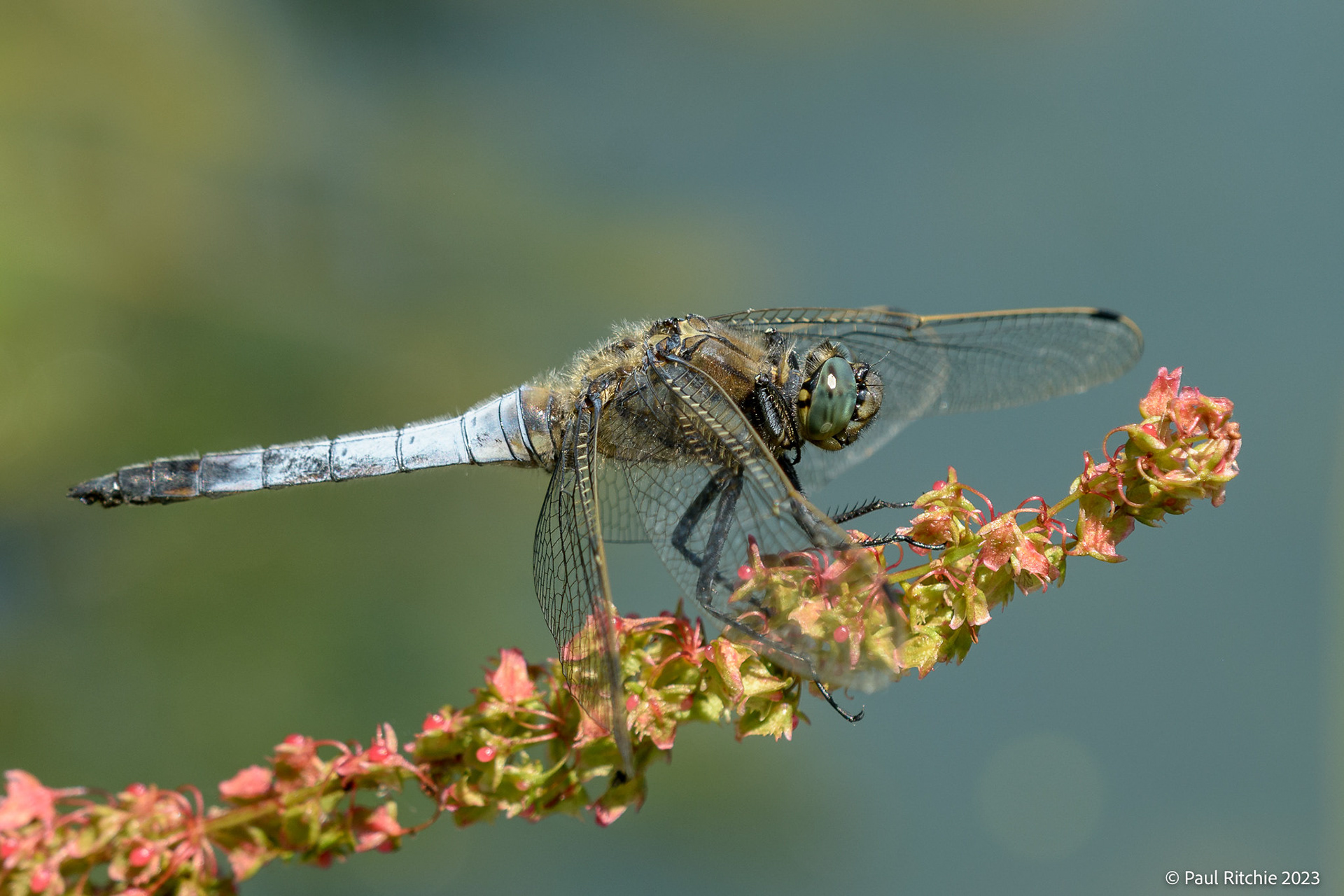
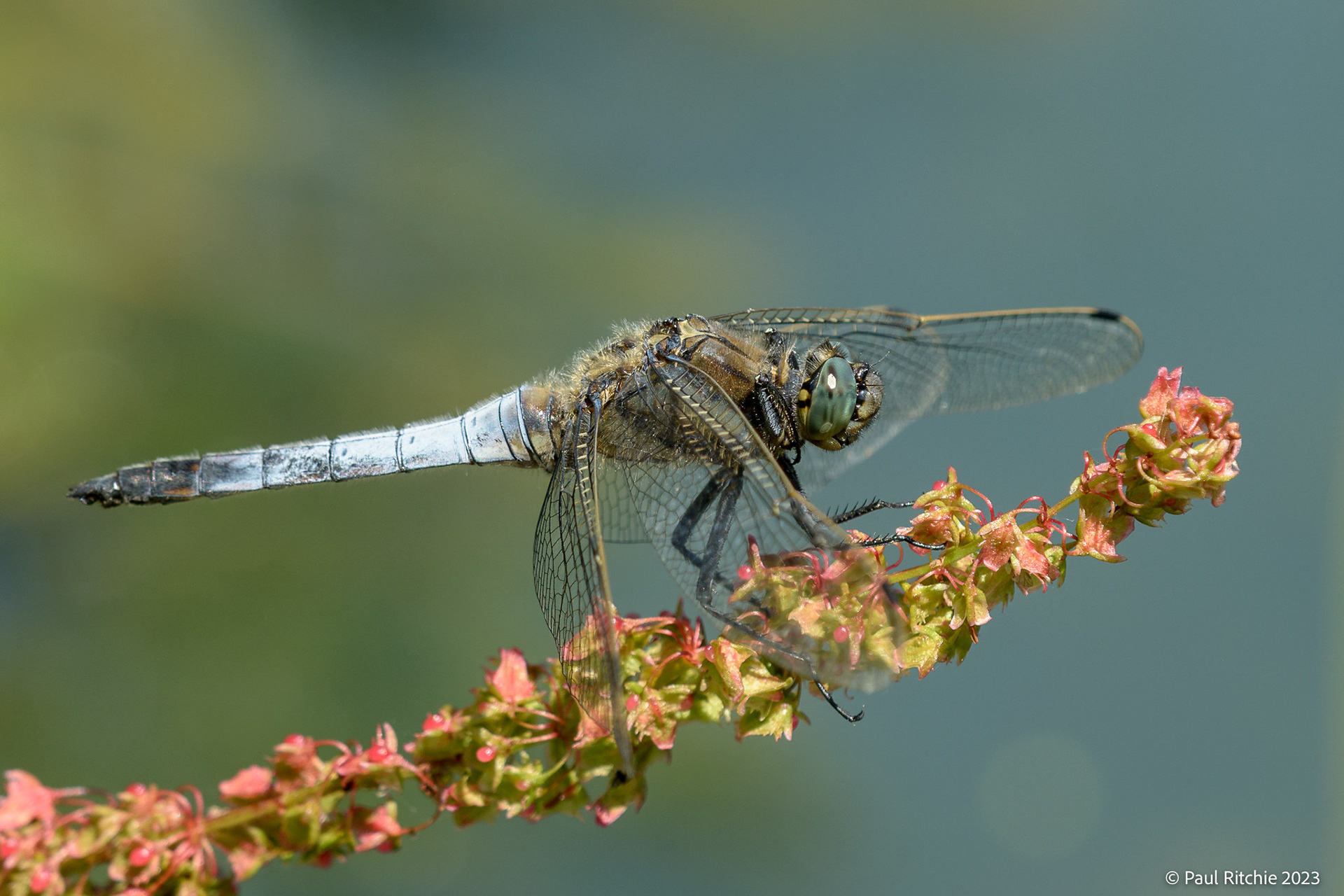
Black-tailed Skimmer (Orthetrum cancellatum) - male
A medium-sized (44-49mm) dragonfly found at many man-made open water such as gravel pits and old quarries.

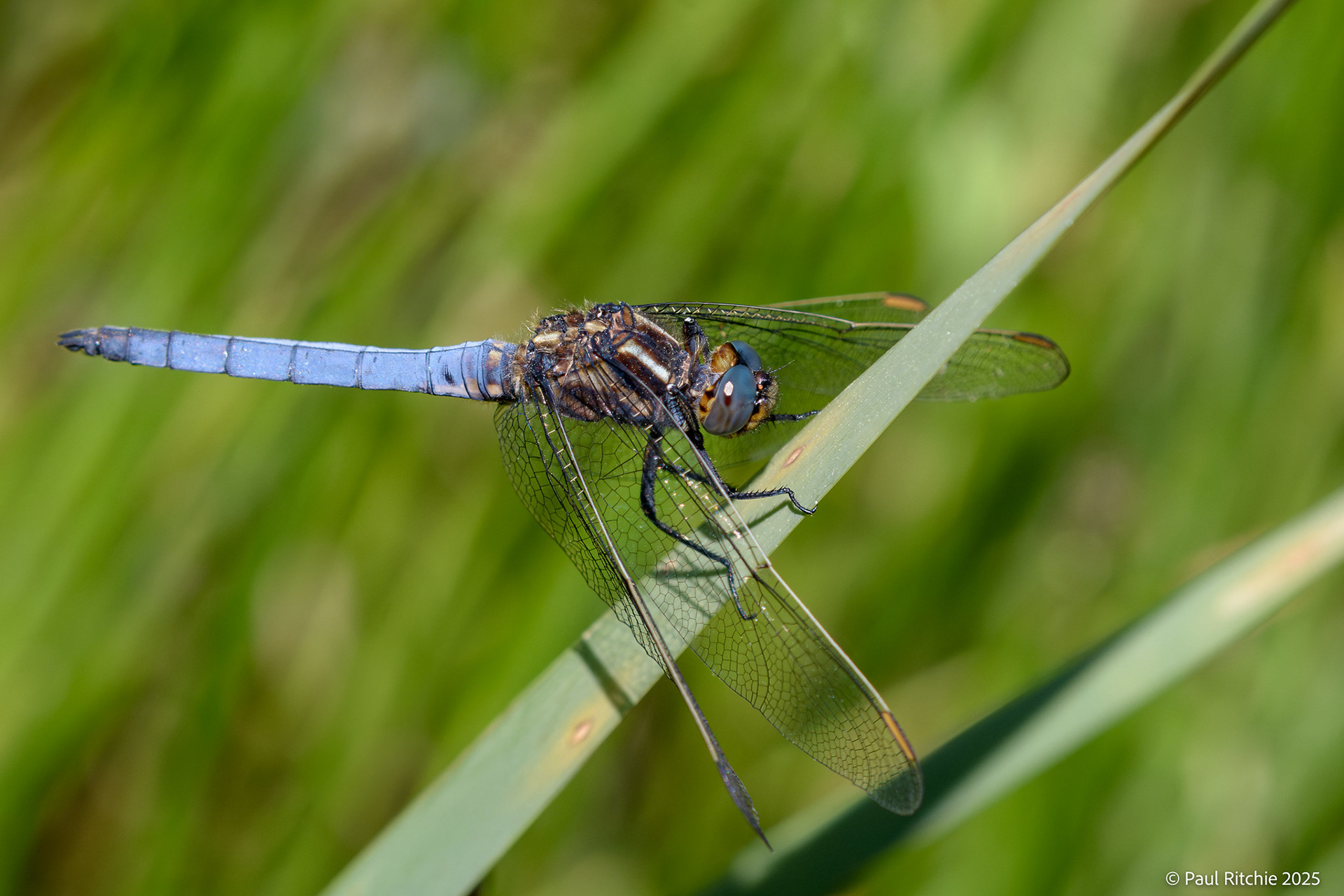
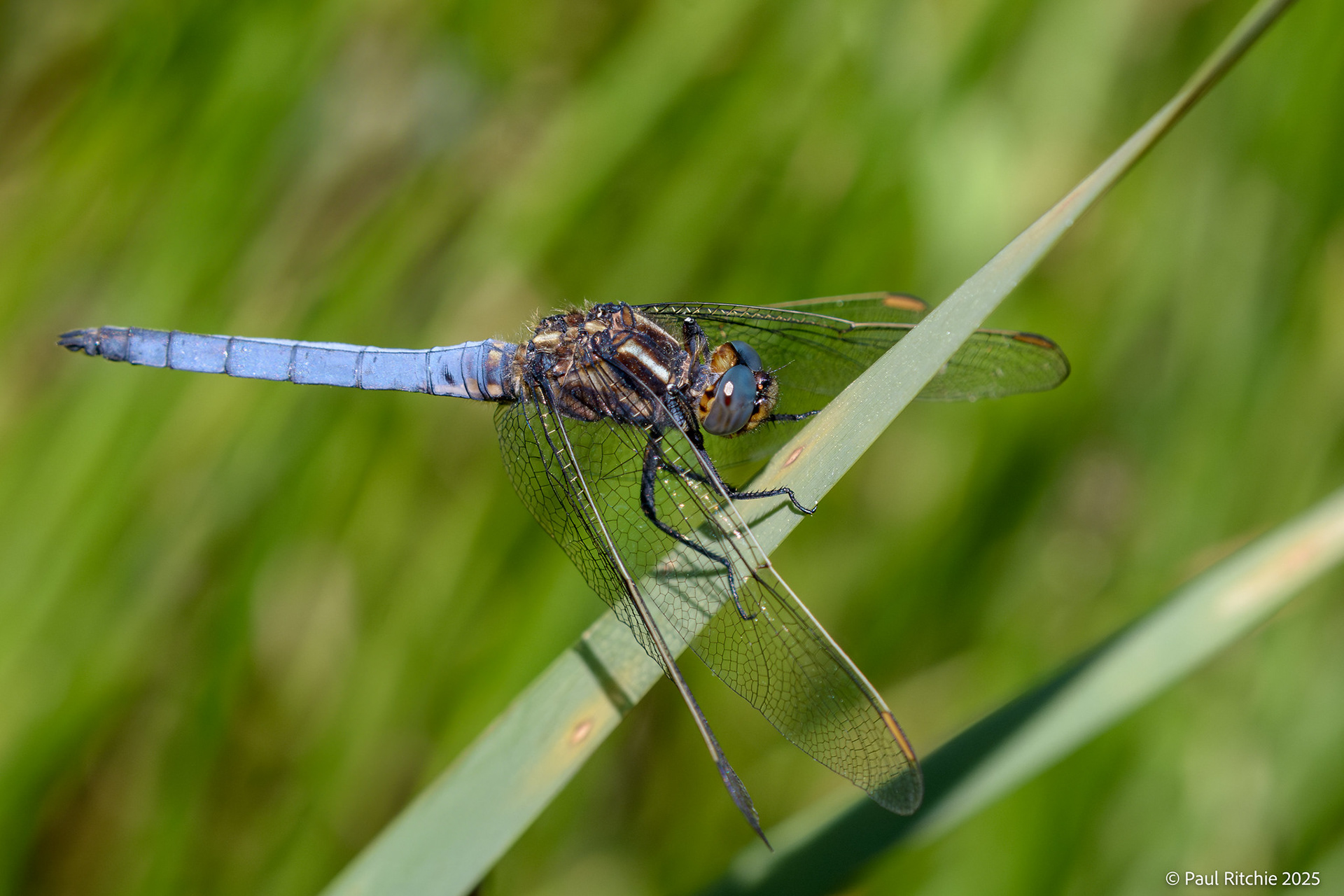
Keeled Skimmer (Orthetrum coerulescens) - male
A medium-sized (40-44mm) dragonfly found in heathland ponds and streams often perched among the heather.
Damselflies belong to the sub-order Zygoptera, characterised by their paired wings. All four wings are approximately equal in size and shape. These insects are typically small and have weak flight capabilities, preferring to remain close to water margins or surfaces. Upon resting, all species except the Emeralds hold their wings along the length of their abdomen. Notably, the eyes of damselflies are always separated, never touching.

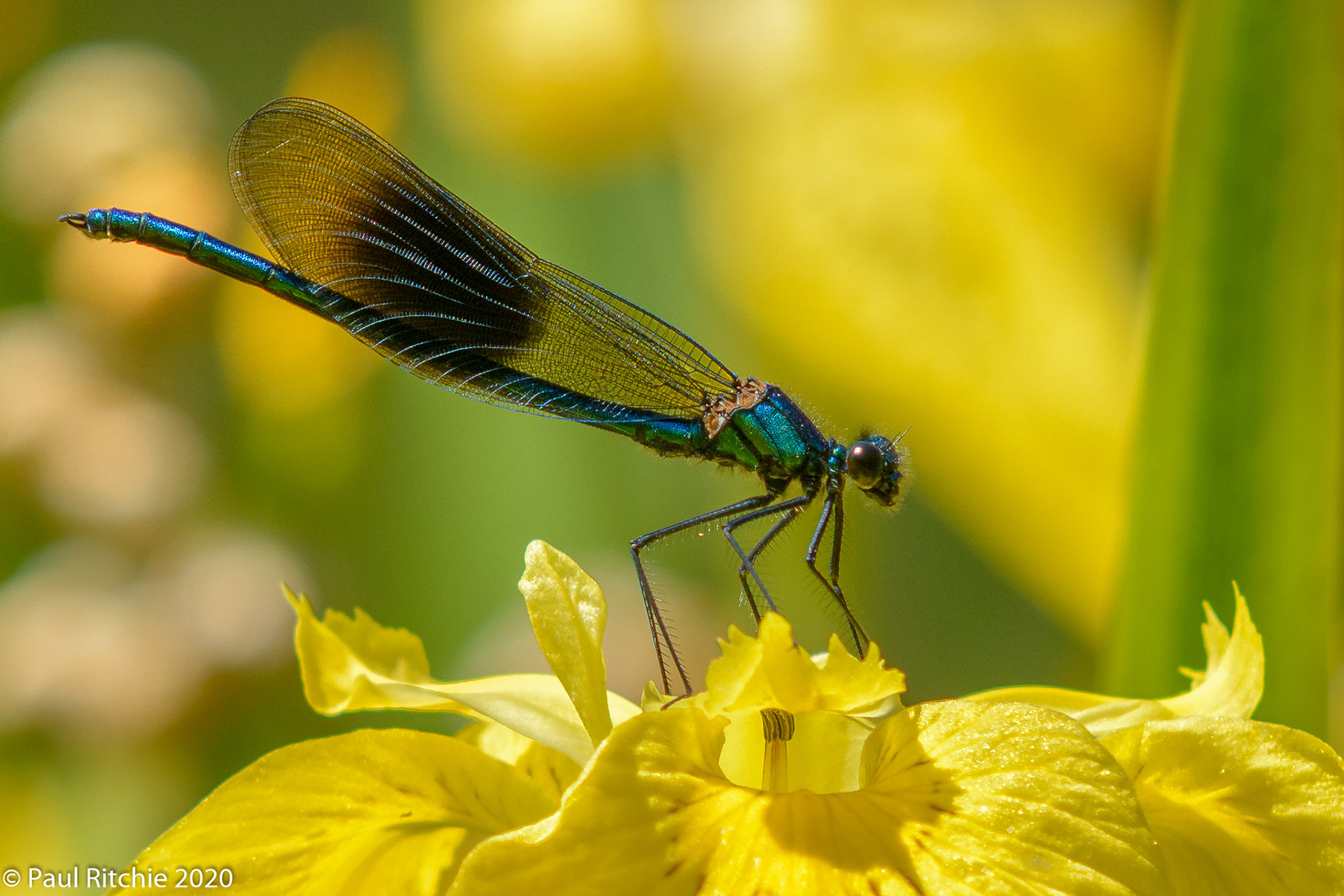
Banded Demoiseles (Calopteryx splendens) - male
A large damselfly (45mm) that favours slow-moving lowland streams and rivers. At optimal locations, their numbers can be exceptionally high.

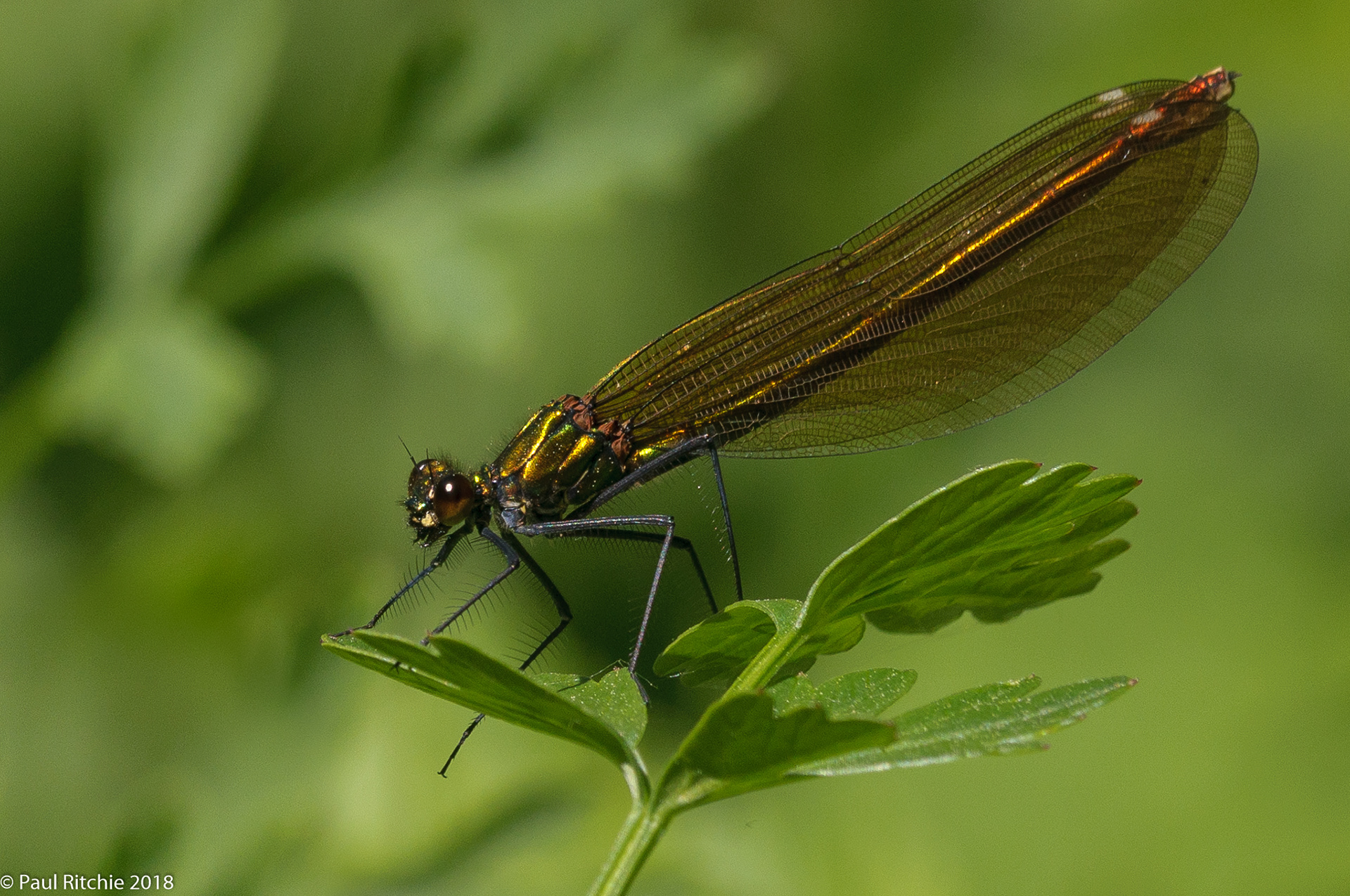
Beautiful Demoiselle (Calopteryx virgo) - female
The other species of large (45mm) damselfly in Britain to have obviously coloured wings. Preferring sandy bottomed streams and rivers.
Coenagrionidae - Red and Blue Damselflies

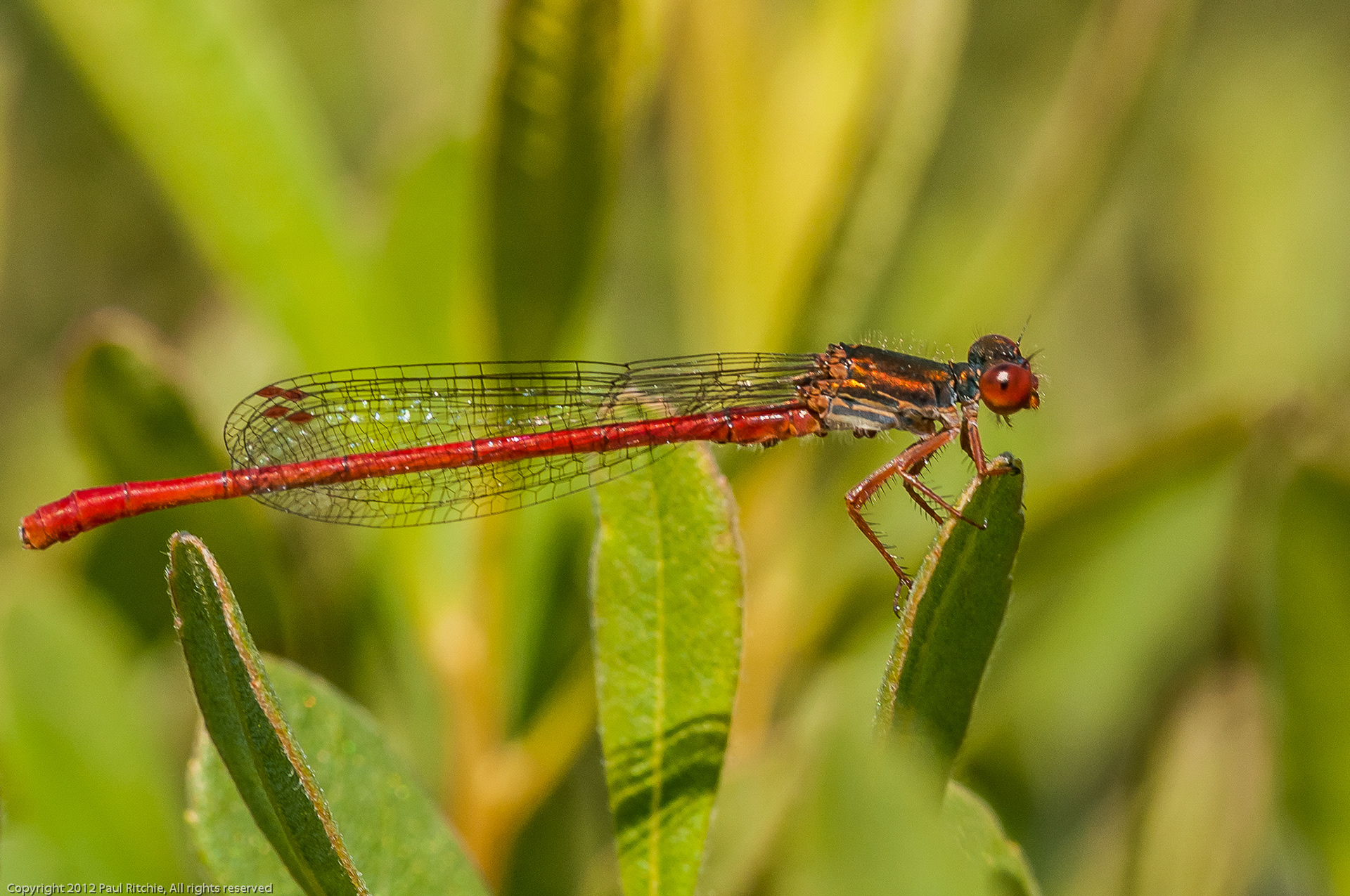
Small Red Damselfly (Ceriagrion tenellum) - male
One of our smallest damselflies, measuring 31mm, is found in shallow pools, seepages, and streams within heathland bog.

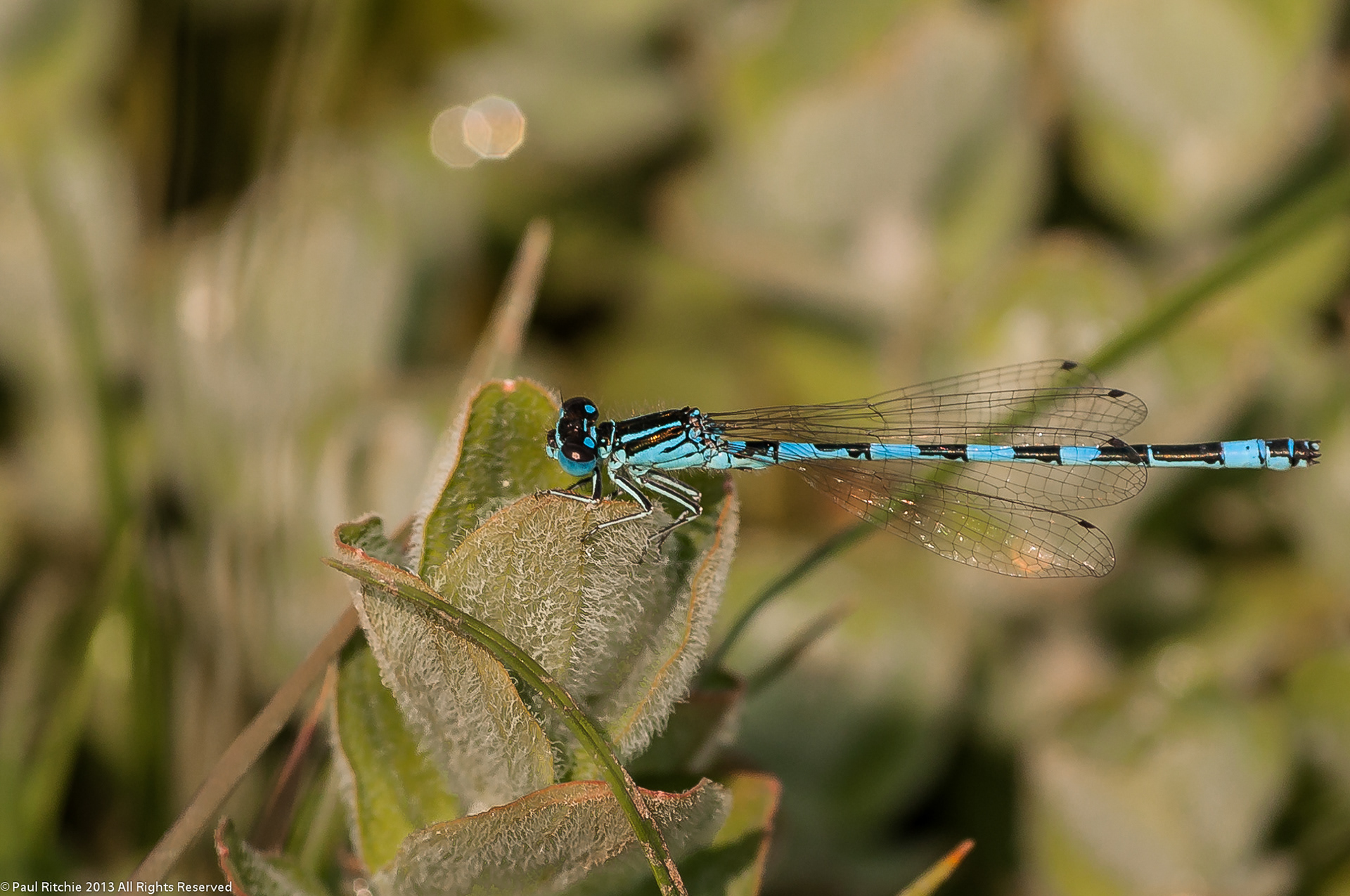
Southern Damselfly (Coenagrion mercuriale) - male
One of our rarer damselflies, typically found in base-rich runnels and streams, often within acid heathland and chalk stream water meadows.

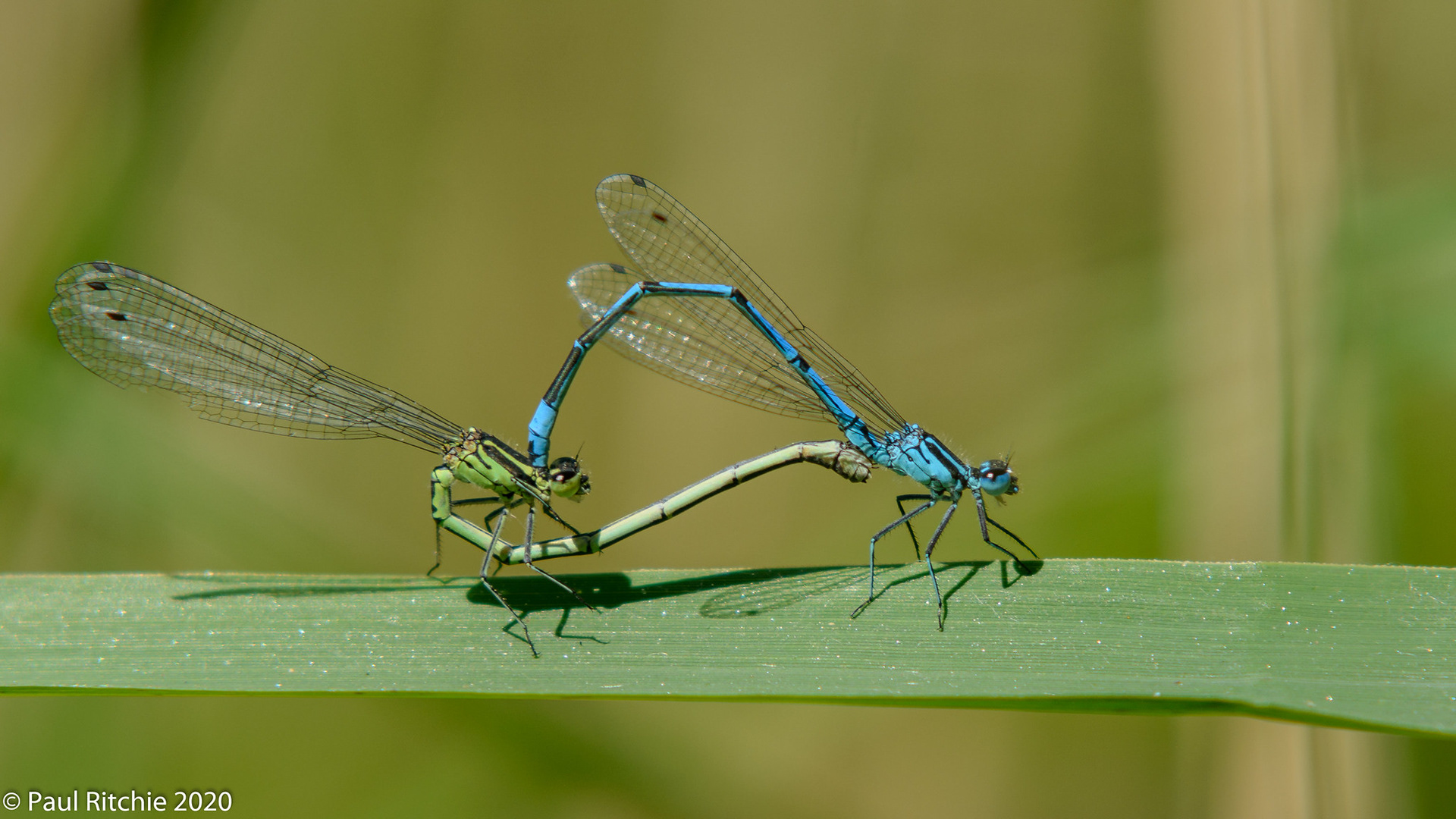
Azure Damselfly (Coenagrion puella) - pair in-cop
One of the larger (33mm) blue damselflies is a common sight in various habitats, including ponds, streams, and larger water bodies, where they are often found in swarms.

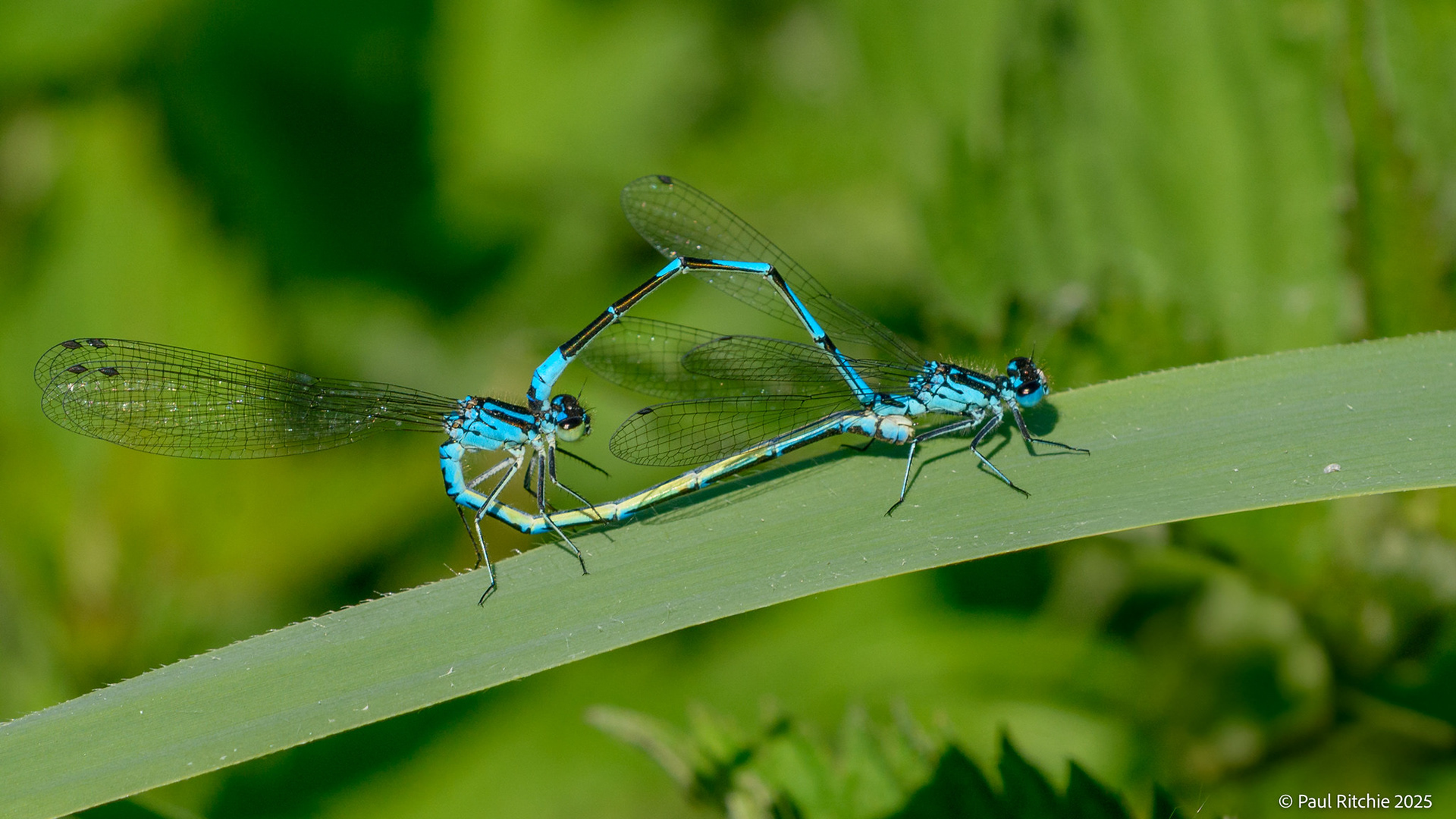
Variable Damselfly (Coenagrion pulchellum) - pair in-cop
Aa substantial species measuring approximately 33mm in length, exhibits superficial similarities to the Azure Damselfly. Notably, both species can be found in the same habitat.

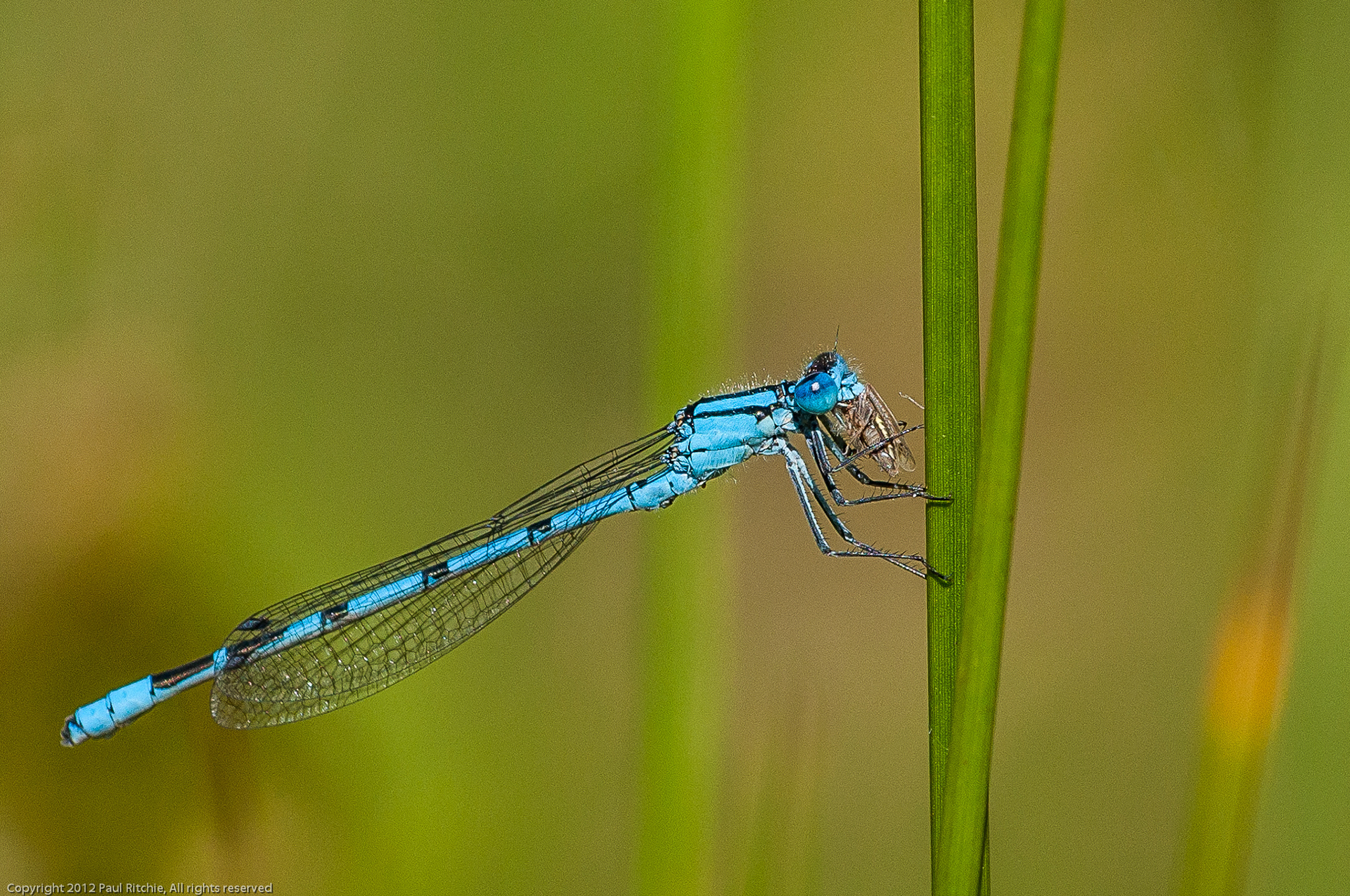
Common Blue (Enallagma cyathigerum) - male
Britain’s most widespread damselfly, found in most water bodies, surrounding heaths, meadows, and woodlands.

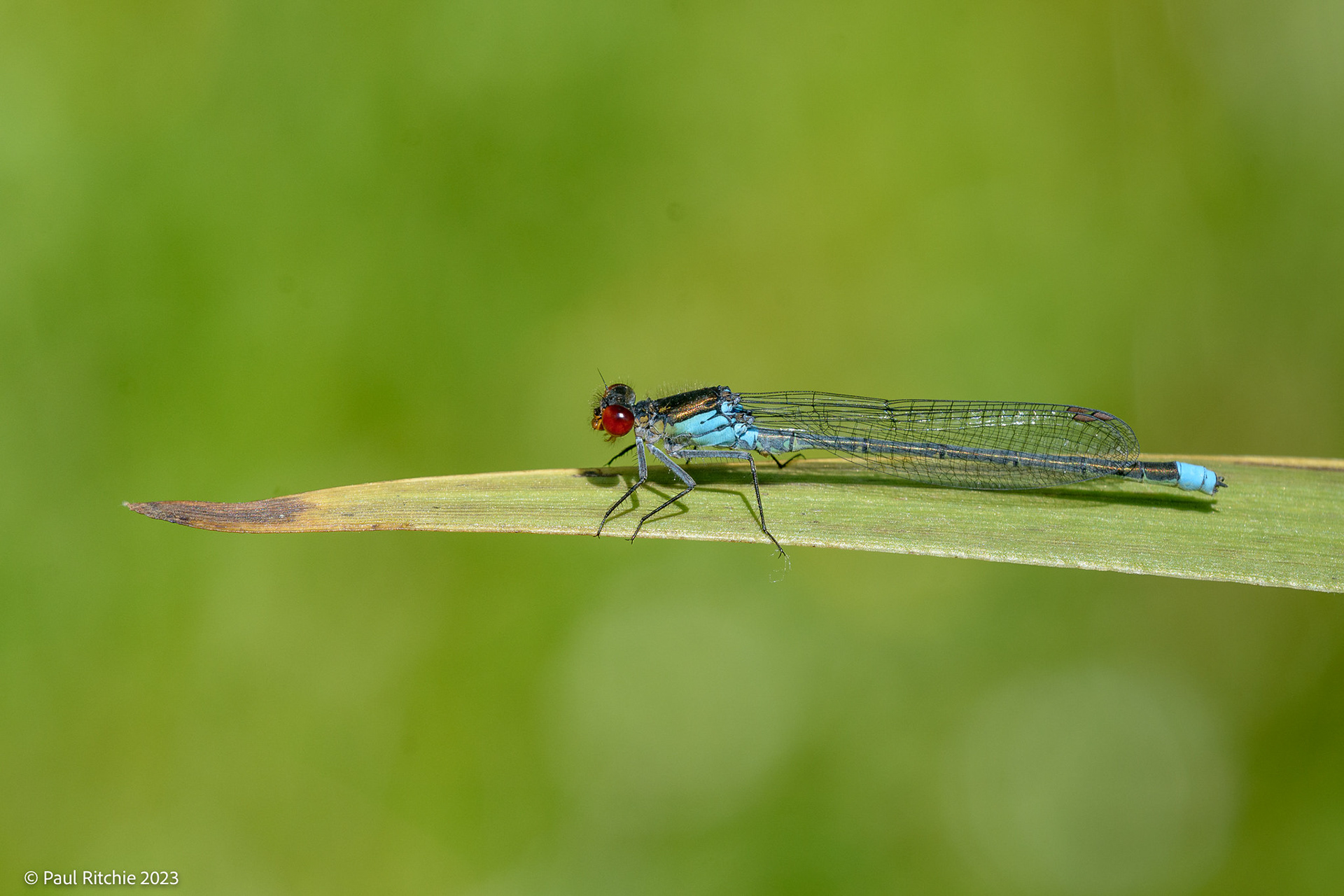
Red-eyed Damselfly (Erythromma najas) - male
A robust and conspicuous damselfly, commonly found in bodies of water such as lakes, gravel pits, canals, and slow-moving rivers, often perches on water lilies and other surface vegetation.

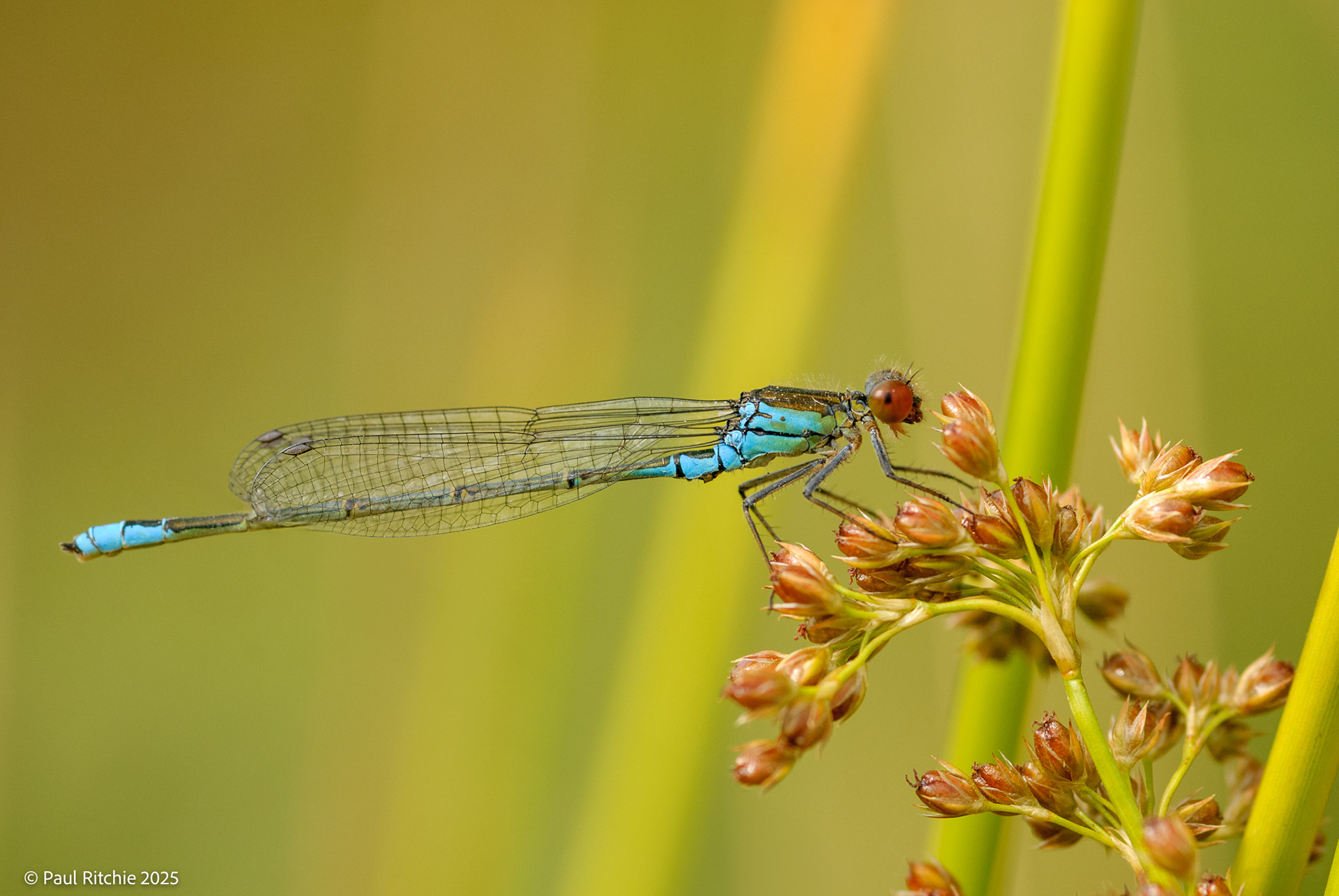
Small Red-eyed Damselfly (Erythromma viridulum) - male
Considerably smaller (29mm) than the larger Red-eyed and not as widespread. Often seen perched horizontally on pondweed.

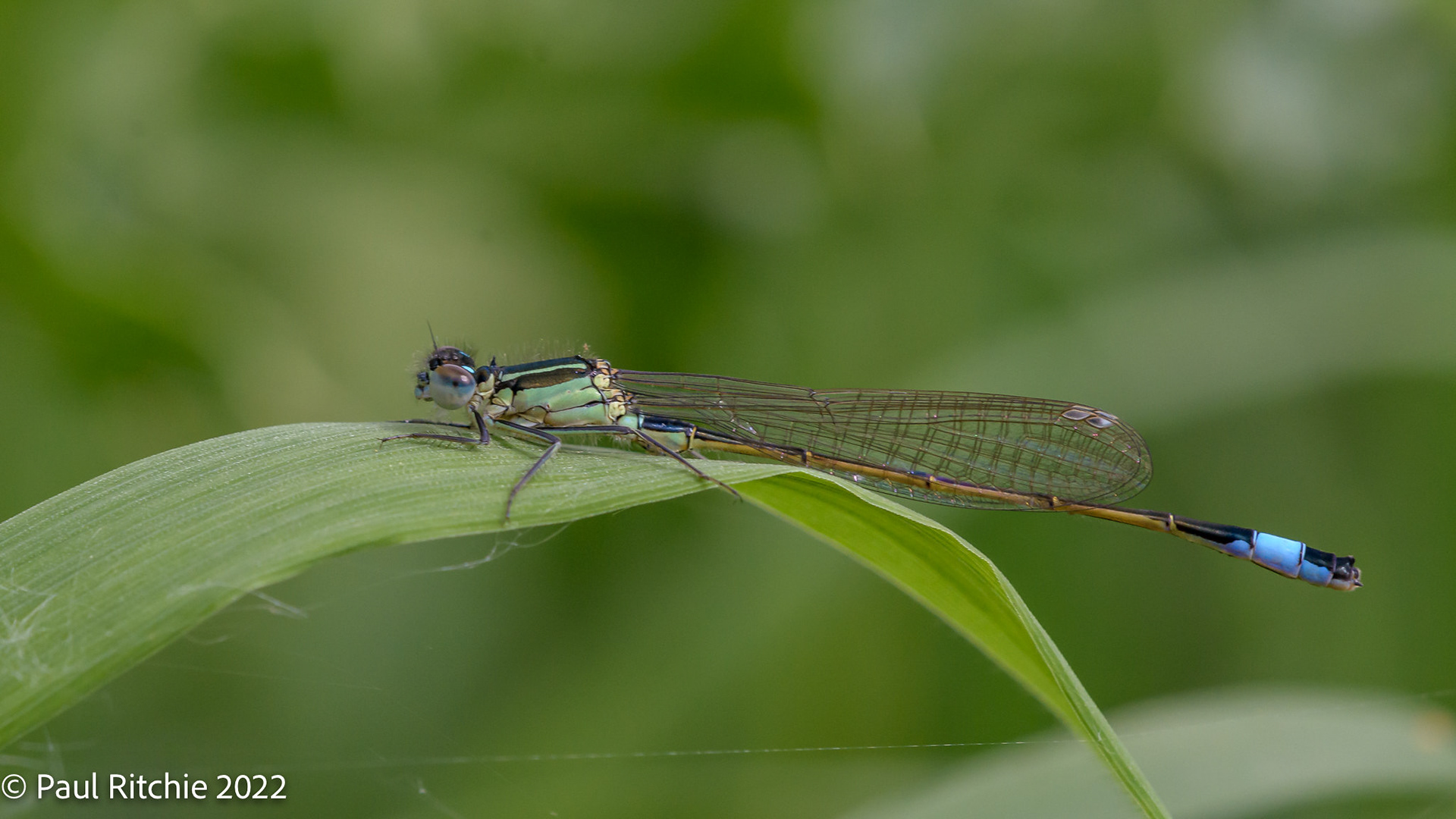
Blue-tailed Damselfly (Ischnura elegans) - male
A widespread and visually appealing damselfly species is found in a diverse range of lowland habitats, including brackish or polluted water bodies.

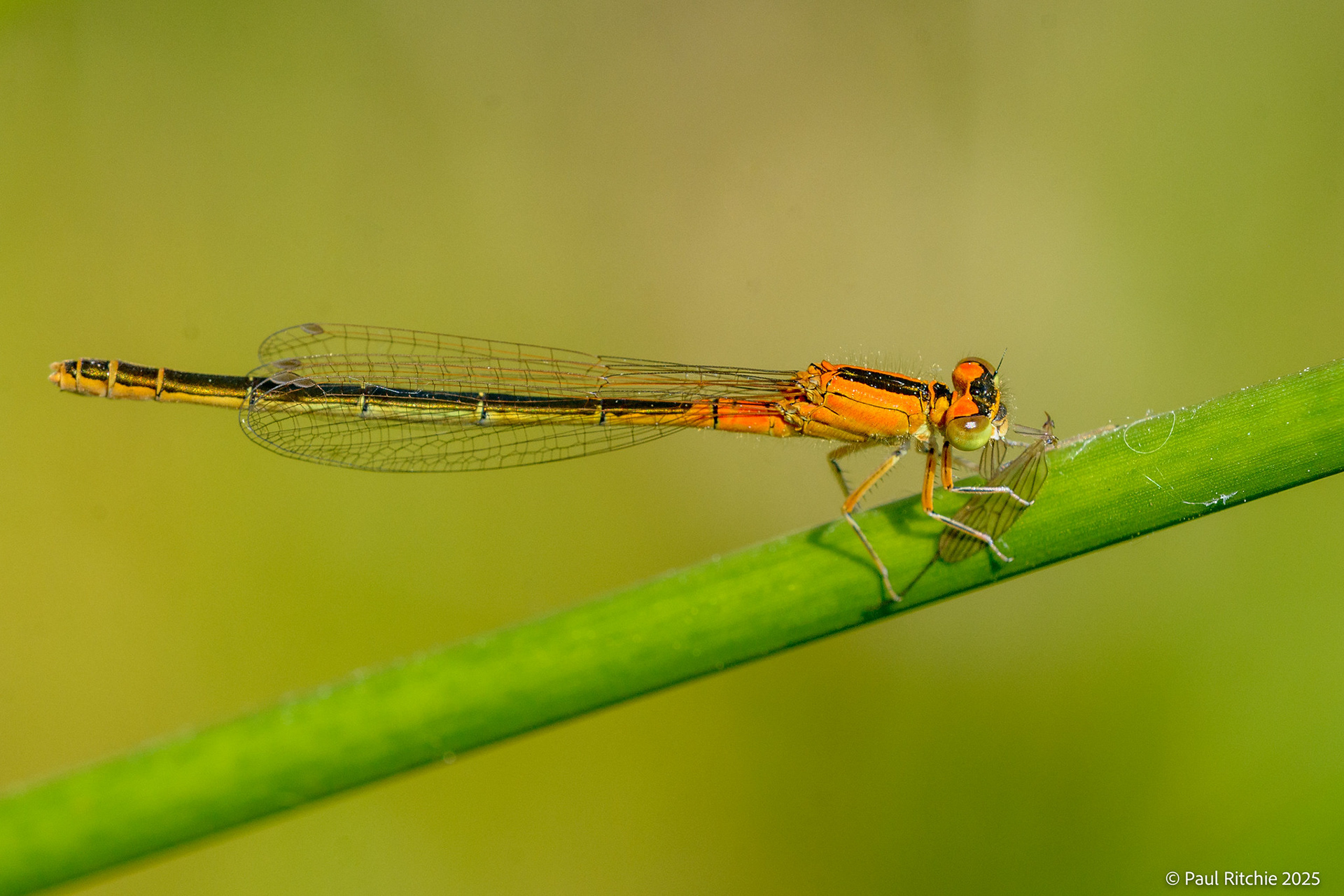
Scarce Blue-tailed Damselfly (Ischnura pumilio) - female aurantiaca phase
Considerably smaller (29mm) than the larger Blue-tailed and not as widespread. preferring warm, shallow pools with emergent vegetation.Frequently encountered in transient water bodies in rural and built-up areas.

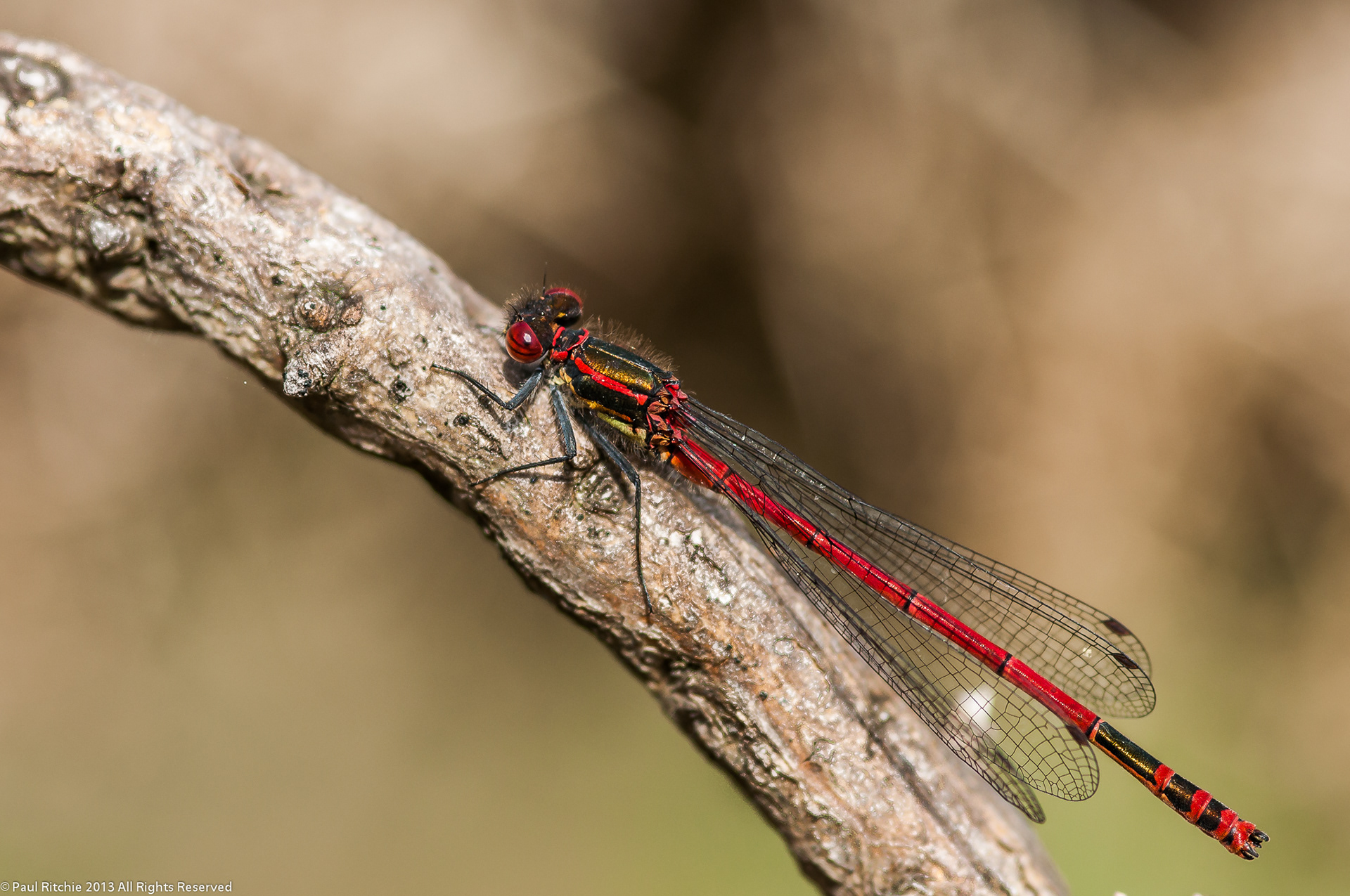
Large Red Damselfly (Pyrrhosoma nymphula) - male
A large (36mm) and active red damselfly with black legs and a bronze-black top to the thorax featuring broad red or yellow stripes. This species is the first damselfly to emerge in spring.
Lestidae - Emerald Damselflies

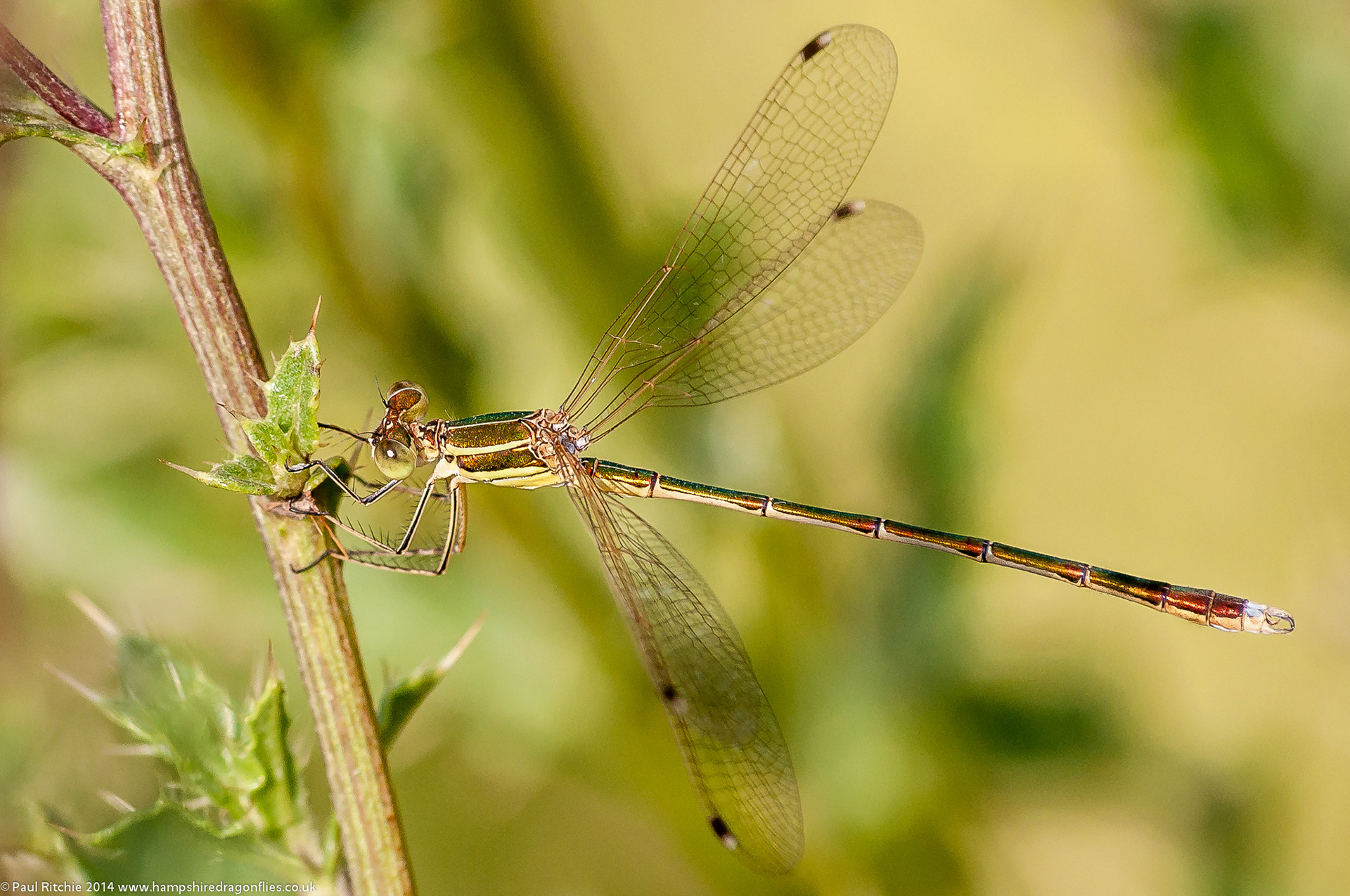
Southern Emerald (Lestes barbarus) - male
A slender, metallic green emerald that undergoes a transformation into bronze as it ages. Broad, pale ante-humeral stripes adorn the thorax, while the underside of the head is pale. The pterostigma exhibits a dual colouration. Male specimens develop a pruinescent appearance exclusively on abdominal segment S10.

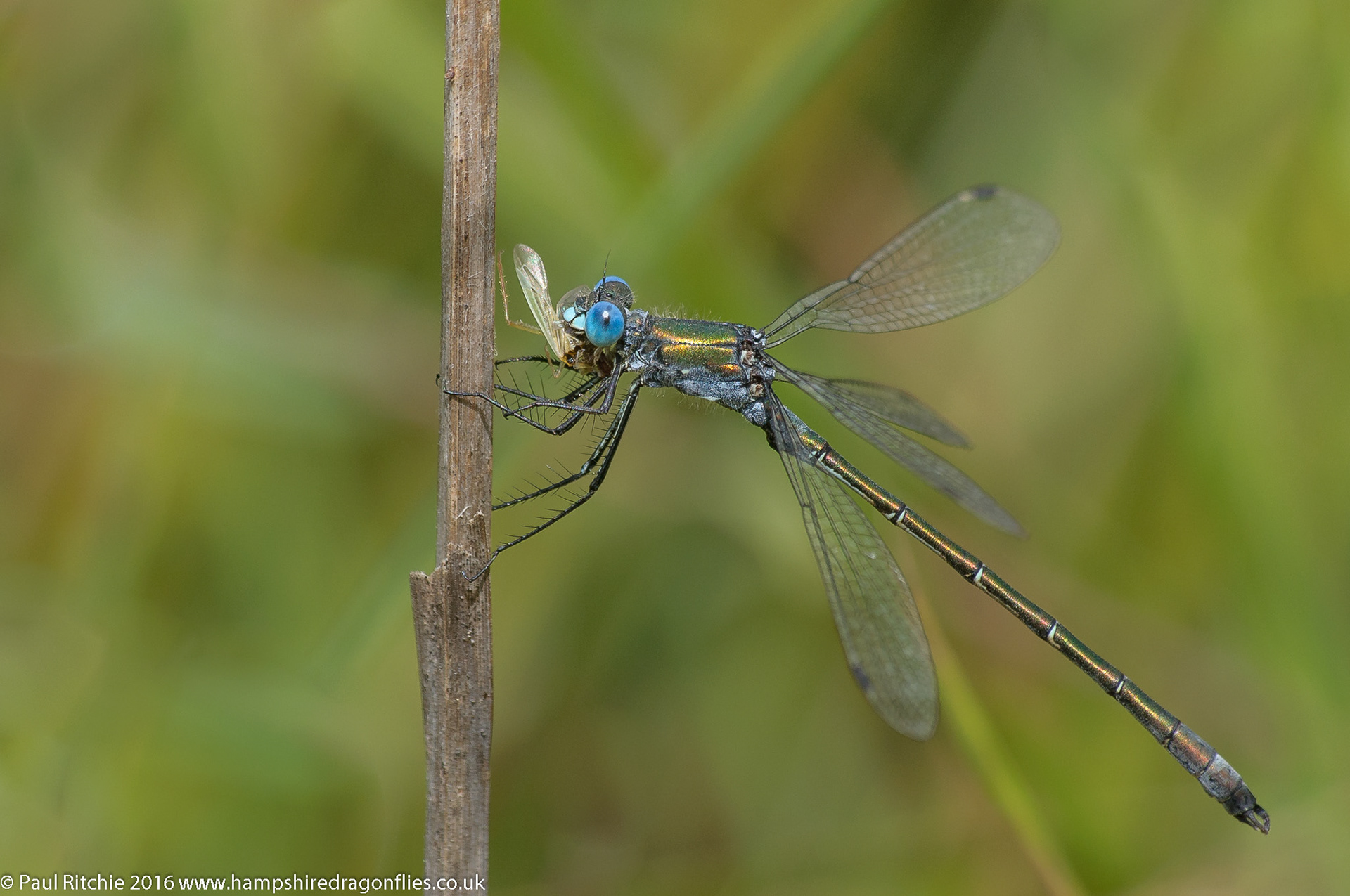
Scarce Emerald Damselfly (Lestes dryas) - male
A medium-sized emerald damselfly typically rests with its wings partially extended. Adult male damselflies possess blue eyes and powder blue pruinescence on the thorax, situated between the wings and on segments S2 and S8.

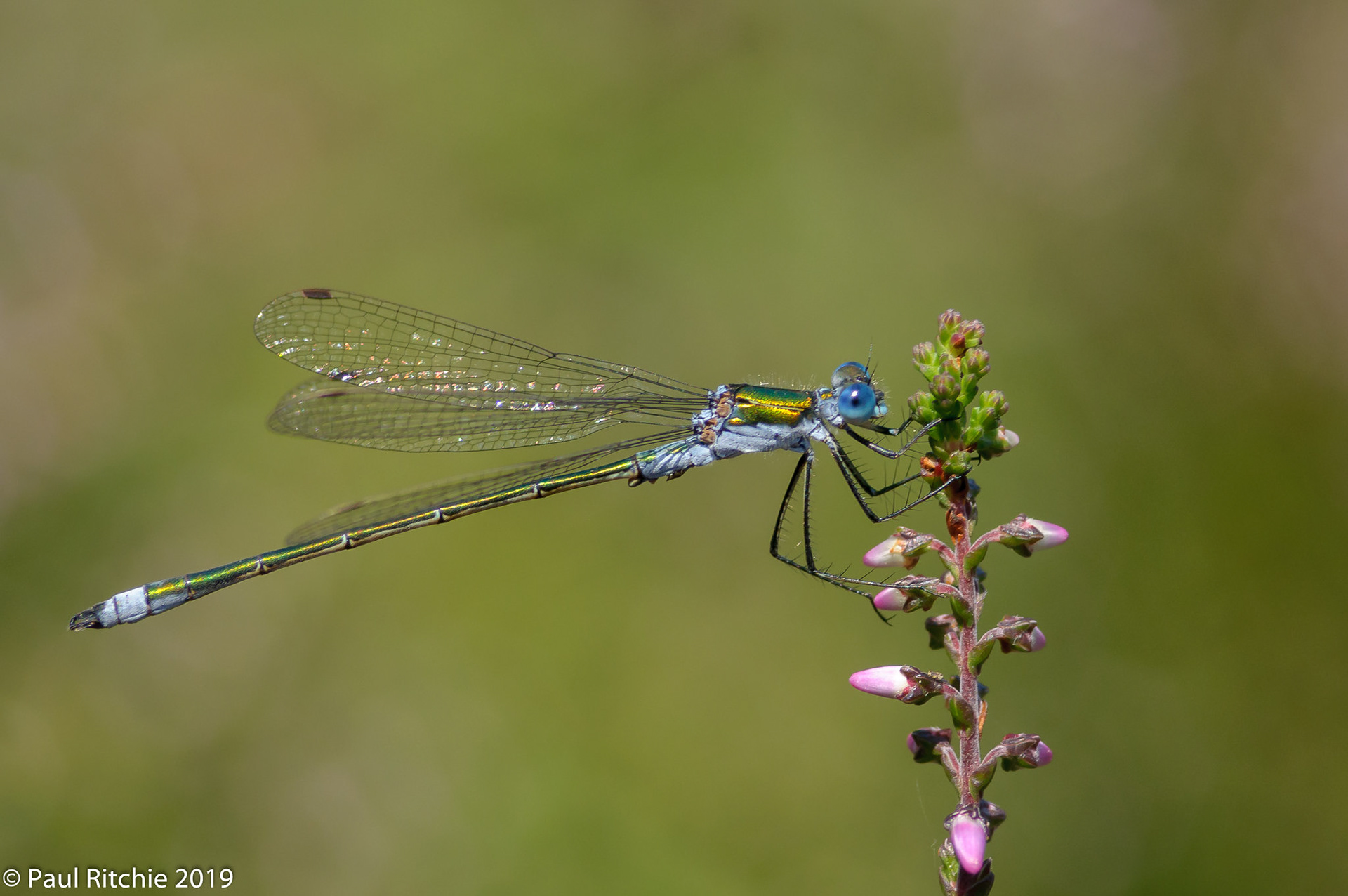
Common Emerald (Lestes sponsa) - male
A striking metallic green damselfly, measuring approximately 38mm in length, exhibits an unusual habit of perching with its wings partially extended.

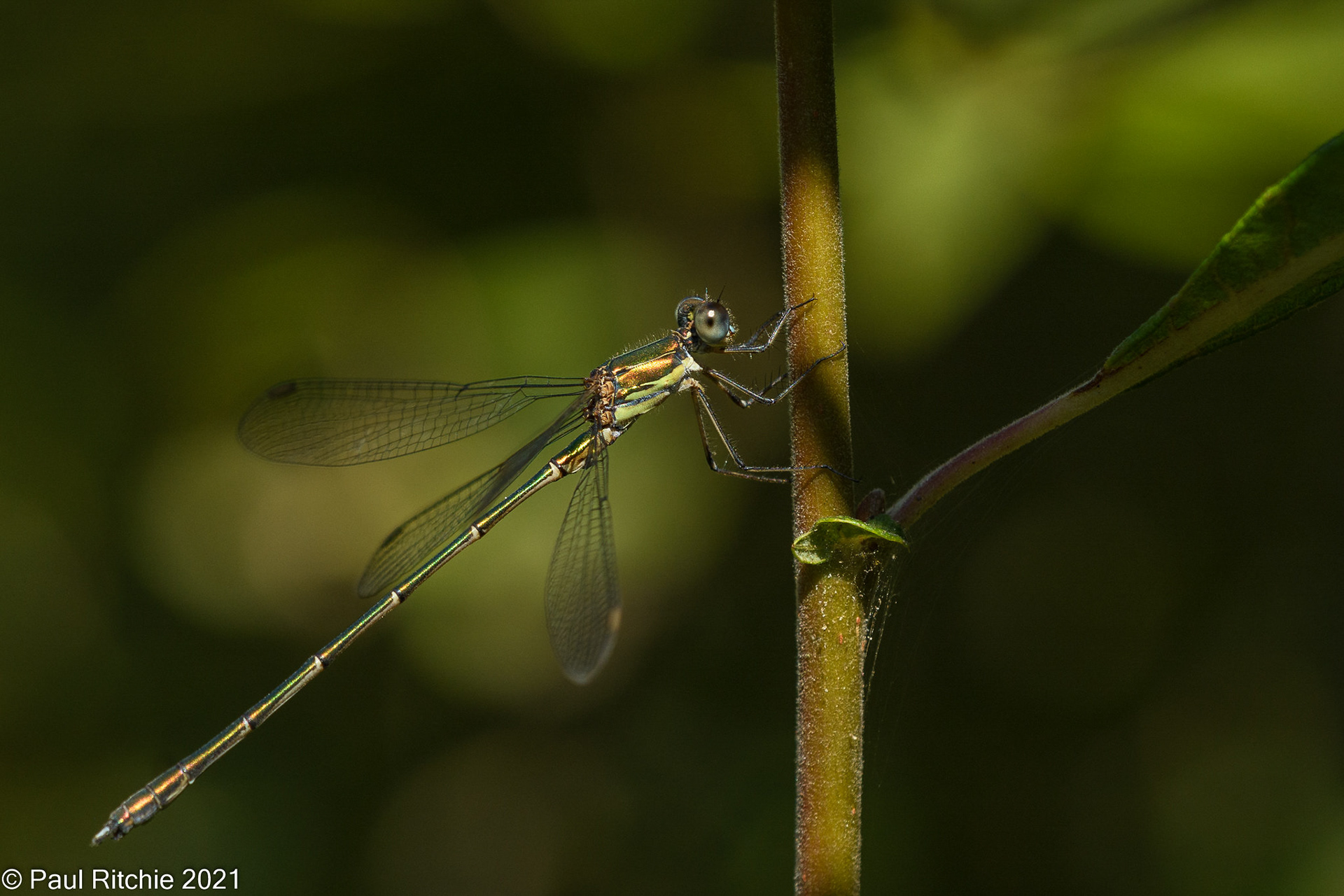
Willow Emerald (Chalcolestes viridis)
Larger and more robust than the Common Emerald, this species exhibits a metallic green colouration, devoid of blue pruinescence in the male. The pterostigma is pale brown, featuring a black border. Notably, the male upper appendages are distinctly pale, resembling the sides of the thorax, with dark tips.

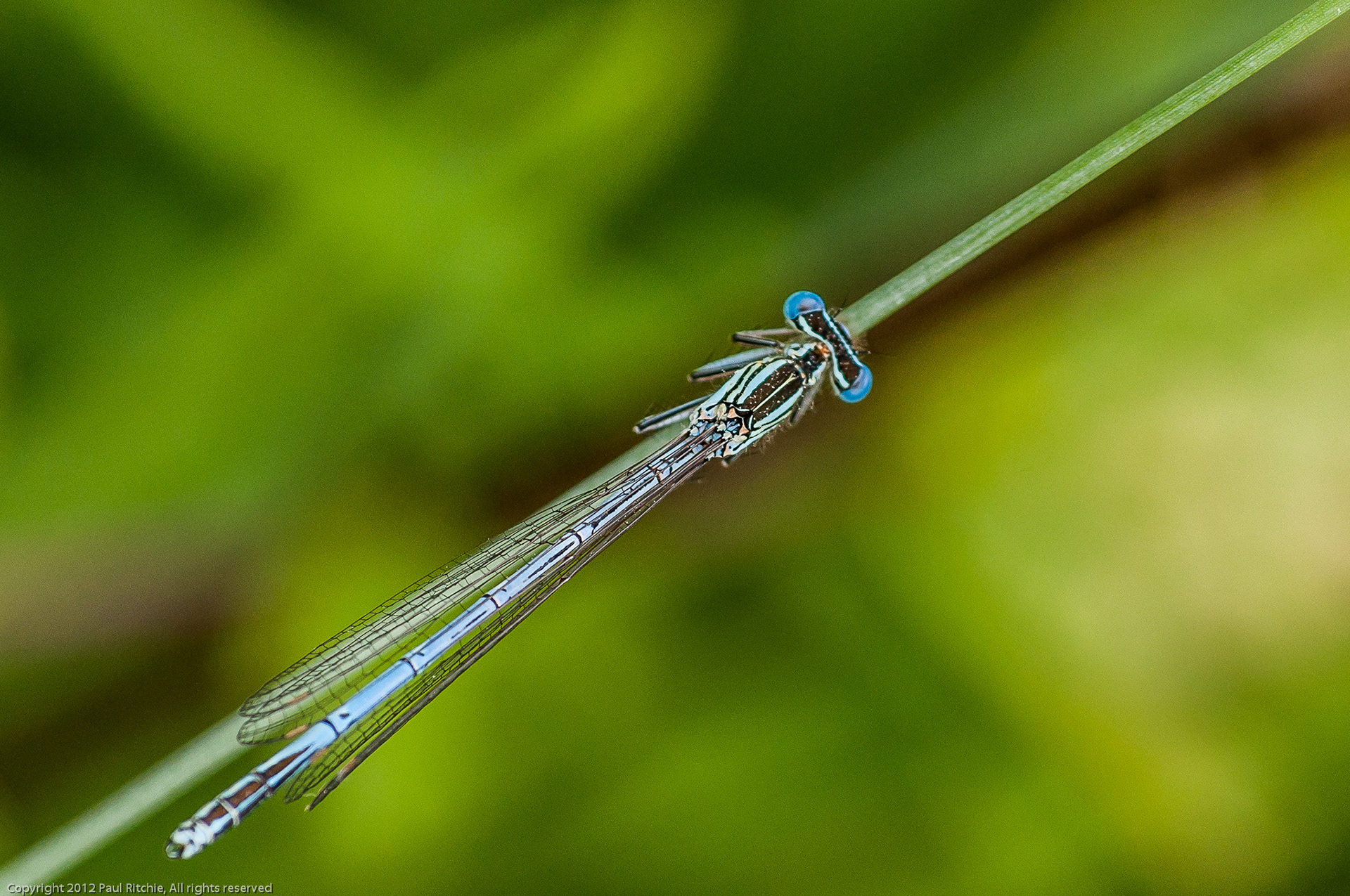
White-legged Damselfly (Platycnemis pennipes) - male
A medium-sized damselfly, measuring approximately 37mm in length, is characterised by its white legs and narrow head. These aquatic insects thrive in slow-moving rivers and streams, where they find ample shelter and sustenance in the abundance of bank-side foliage.