Hampshire
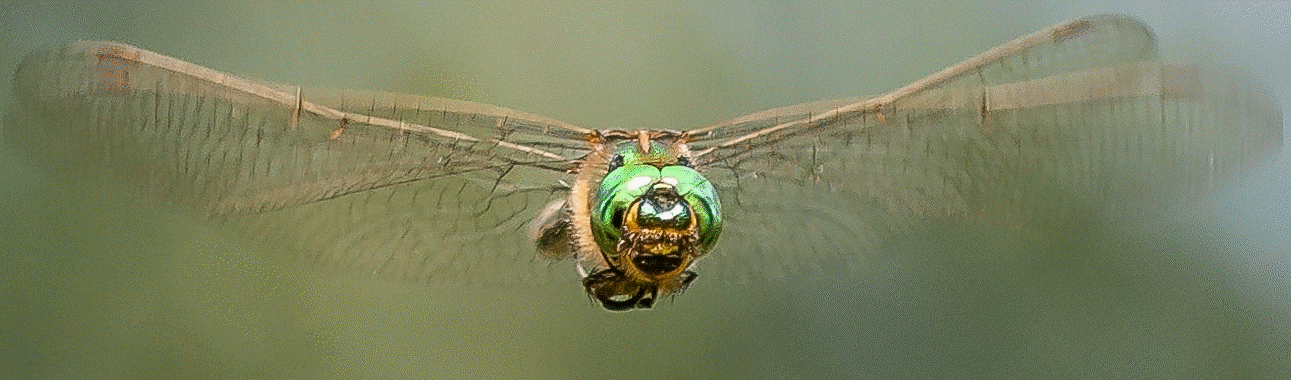
Hampshire is renowned for its pristine rivers, unpolluted coastal wetlands, and valuable lowland heath. A significant portion of these habitats and all county species, with the exception of one, are situated within the boundaries of the New Forest in the southern region. However, the nationally scarce Brilliant Emerald can only be found in the northern part of the county.
Bramshill Plantation
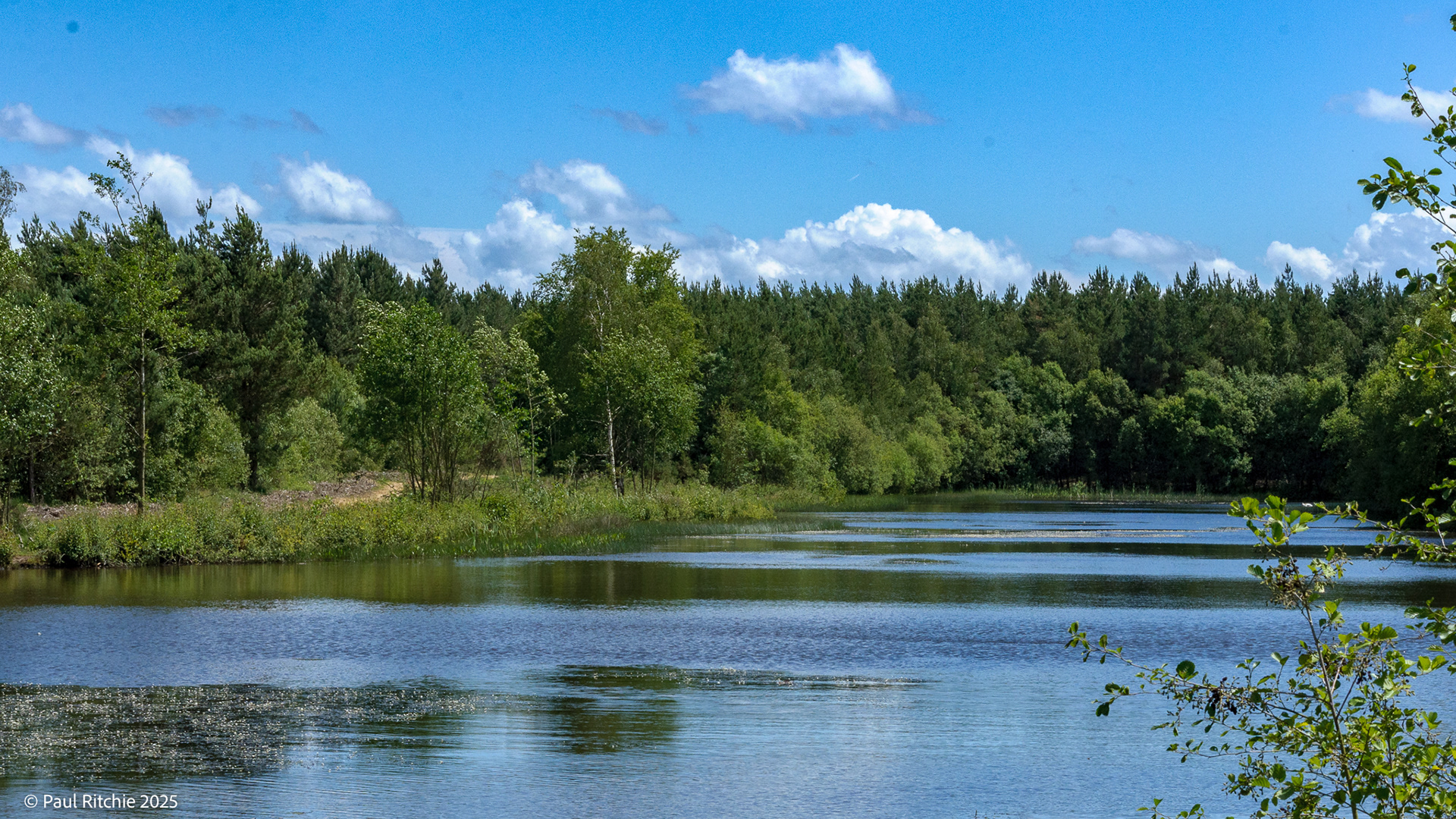
Bramshill Plantation, a substantial expanse of woodland, ponds, and heath, offers an abundance of habitats for dragonflies. On a favourable day, it is unparalleled, yet, like any desirable location, it can experience adverse weather conditions, and I have encountered both.
Warren Heath
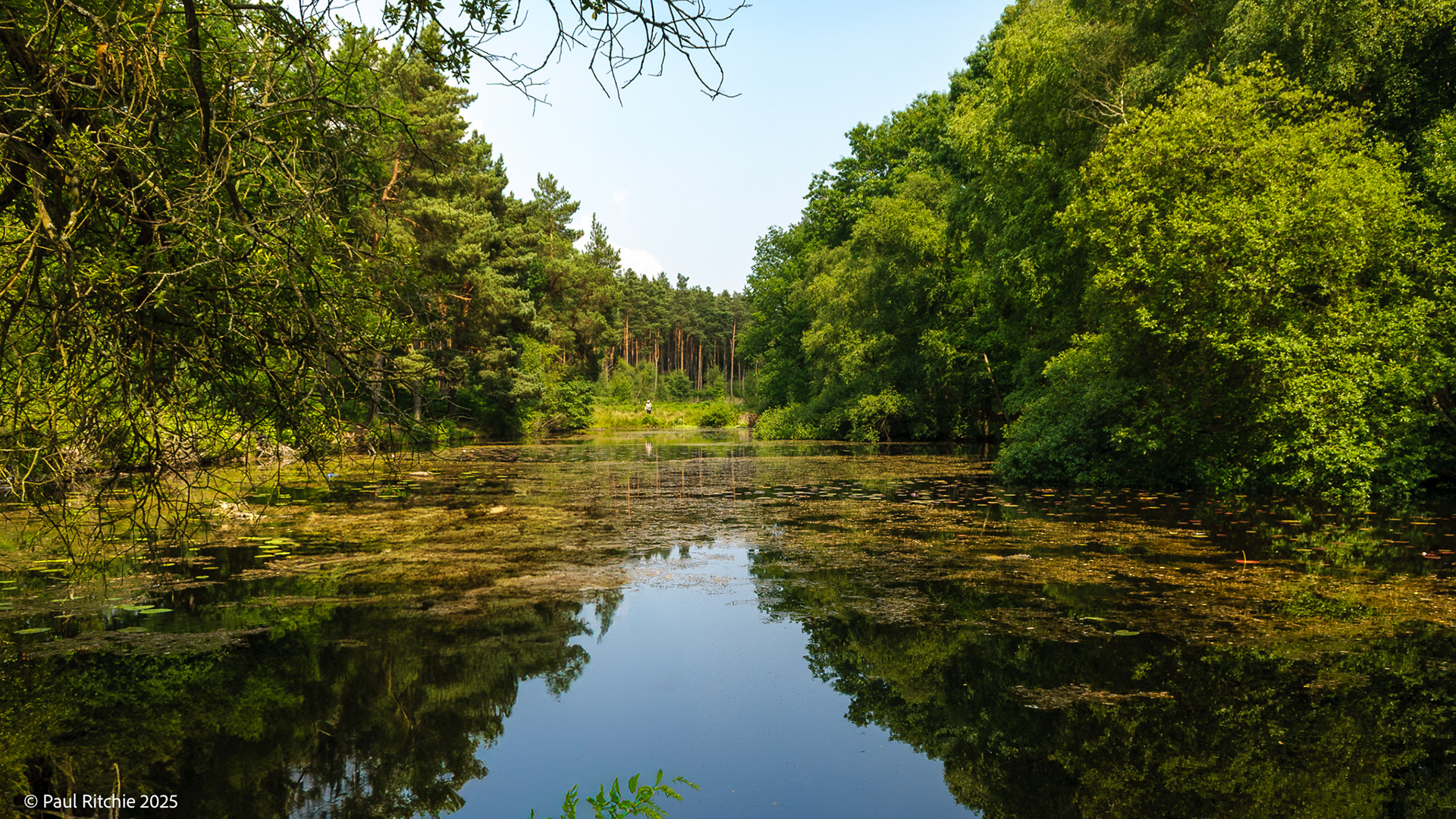
Warren Heath has long been celebrated as one of North Hampshire’s premier dragonfly habitats, yet there is a surprising dearth of information accessible through conventional channels. Either there were no firsthand accounts or those knowledgeable about its secrets chose to maintain their secrecy.
Determined to ascertain the truth for myself, I embarked on an expedition armed with a few grid references for supposedly pivotal areas. This investigation focuses on a valley in the southern portion of the reserve, where a stream flows from heathland boggy pools to a pair of small reservoirs.
The stream itself harbours an impressive abundance of Golden-ringed and Beautiful Demoiselles, while the heath ponds and scrapes support one of the highest populations of Keeled Skimmers I have encountered outside the New Forest. Other notable wetland heath species include Common Emerald and Small Red Damselflies.
The reservoir pools are home to Four-spotted and Broad-bodied Chasers, Emperor, Southern, Hairy, and Brown Hawkers, Downy, and Brilliant Emeralds, along with a diverse array of supporting damsels, with Red-eyed being particularly abundant.
The forest rides also provide optimal roosting and feeding opportunities, brimming with invertebrate life, including typical summer woodland butterflies such as Ringlets, Large, and Small Skippers, Silver-washed Fritillaries, and White Admirals.
During a single visit in mid-July, we observed an astonishing 22 species of dragonfly within a few hours. This remarkable count surpasses any other location and can therefore be considered one of the top dragonfly sites in England.
The sole reservations I have are the absence of footpaths and the challenging accessibility of certain prime areas. Seasoned dragonfly observers aware of the hazards posed by uneven ground, dense undergrowth, and occasionally treacherous shoreline should remain vigilant, as a misstep or fall can have catastrophic consequences.
Parking also presents a challenge, with limited access along the eastern fringes. However, it is feasible for the observant to secure parking. Thoroughly research your maps and obtain a printout and compass, unless you rely solely on memory and the sun’s position for navigation. The advantage of this approach is the absence of the general public.
Determined to ascertain the truth for myself, I embarked on an expedition armed with a few grid references for supposedly pivotal areas. This investigation focuses on a valley in the southern portion of the reserve, where a stream flows from heathland boggy pools to a pair of small reservoirs.
The stream itself harbours an impressive abundance of Golden-ringed and Beautiful Demoiselles, while the heath ponds and scrapes support one of the highest populations of Keeled Skimmers I have encountered outside the New Forest. Other notable wetland heath species include Common Emerald and Small Red Damselflies.
The reservoir pools are home to Four-spotted and Broad-bodied Chasers, Emperor, Southern, Hairy, and Brown Hawkers, Downy, and Brilliant Emeralds, along with a diverse array of supporting damsels, with Red-eyed being particularly abundant.
The forest rides also provide optimal roosting and feeding opportunities, brimming with invertebrate life, including typical summer woodland butterflies such as Ringlets, Large, and Small Skippers, Silver-washed Fritillaries, and White Admirals.
During a single visit in mid-July, we observed an astonishing 22 species of dragonfly within a few hours. This remarkable count surpasses any other location and can therefore be considered one of the top dragonfly sites in England.
The sole reservations I have are the absence of footpaths and the challenging accessibility of certain prime areas. Seasoned dragonfly observers aware of the hazards posed by uneven ground, dense undergrowth, and occasionally treacherous shoreline should remain vigilant, as a misstep or fall can have catastrophic consequences.
Parking also presents a challenge, with limited access along the eastern fringes. However, it is feasible for the observant to secure parking. Thoroughly research your maps and obtain a printout and compass, unless you rely solely on memory and the sun’s position for navigation. The advantage of this approach is the absence of the general public.
Basingstoke Canal
The Basingstoke Canal has long been regarded as a prime dragonfly habitat and holds significant importance as a hotspot for the Brilliant Emerald. However, identifying suitable viewing locations can be challenging. In summer 2011, a friend invited me to kayak down a section of the canal, which provided valuable insights as we navigated open stretches and reeded margins.
In 2012, I returned to the same spot after studying the map. Despite the overcast day, I managed to observe a few common dragonfly species. Further research led me to the western area bordering Farnborough Airfield. However, after several days of exploring, I have shifted my focus to more productive locations.
In 2012, I returned to the same spot after studying the map. Despite the overcast day, I managed to observe a few common dragonfly species. Further research led me to the western area bordering Farnborough Airfield. However, after several days of exploring, I have shifted my focus to more productive locations.
Alice Holt
Alice Holt is famous among butterfly enthusiasts for the Purple Emperor and other woodland butterflies, but the rides and clearings provide good hunting for dragonflies.
Park Here
Park Here
Testwood Lakes
Testwood Lakes, situated along the Blackwater River, is a renowned nature reserve renowned for its suitability as a breeding ground for the Scarce Chaser. The primary lake boasts substantial populations of Blue-tailed Damselflies and Black-tailed Skimmers, while the diminutive centre pond has witnessed the repeated establishment of Small Red-eyed Damselflies.
Itchen Valley Country Park
Itchen Valley Country Park, situated along the banks of the River Itchen, is a renowned nature reserve. Apart from being a prime habitat for Banded Demoiselles, the surrounding water meadows are also home to an isolated colony of the Southern Damselfly, situated outside the New Forest.
Similar to most ‘Country Parks’, visitors can expect their tranquility to be disrupted by the joyous sounds of children enjoying the ‘countryside’ without the need for extensive travel. Fortunately, once the river is crossed and the water meadows are entered, a sense of peace is restored. However, the persistent drone emanating from the airport and the nearby motorway serves as a constant reminder of one’s surroundings.
The meadows themselves and the ditches offer the most suitable opportunities for odo-activities.
Similar to most ‘Country Parks’, visitors can expect their tranquility to be disrupted by the joyous sounds of children enjoying the ‘countryside’ without the need for extensive travel. Fortunately, once the river is crossed and the water meadows are entered, a sense of peace is restored. However, the persistent drone emanating from the airport and the nearby motorway serves as a constant reminder of one’s surroundings.
The meadows themselves and the ditches offer the most suitable opportunities for odo-activities.
Titchfield Haven is a reserve situated on the coastal flood plains of the River Meon, equidistant between Southampton and Portsmouth. While there is an entry fee for non-members, parking along the sea wall is complimentary.
The reserve boasts a dedicated dragonfly pond, accessible via a moderate walk from the central hide. The walk offers a captivating experience, with several damsels occupying the grass and reed borders along the path. Sheltered sections provide optimal hunting grounds for larger dragonflies.
A notable attraction is one of the few reliable sites in Hampshire for the Hairy Dragonfly. Several males patrol the pond and nearby ditches, occasionally joining resting females in the surrounding reeds. The lush vegetation also harbours substantial populations of Blue-tailed Damselflies, offering a diverse array of colour forms within a short distance.
Optimal viewing conditions require a sunny and wind-free day. However, please note that the pond may occasionally be closed for maintenance work.
The reserve boasts a dedicated dragonfly pond, accessible via a moderate walk from the central hide. The walk offers a captivating experience, with several damsels occupying the grass and reed borders along the path. Sheltered sections provide optimal hunting grounds for larger dragonflies.
A notable attraction is one of the few reliable sites in Hampshire for the Hairy Dragonfly. Several males patrol the pond and nearby ditches, occasionally joining resting females in the surrounding reeds. The lush vegetation also harbours substantial populations of Blue-tailed Damselflies, offering a diverse array of colour forms within a short distance.
Optimal viewing conditions require a sunny and wind-free day. However, please note that the pond may occasionally be closed for maintenance work.