New Forest
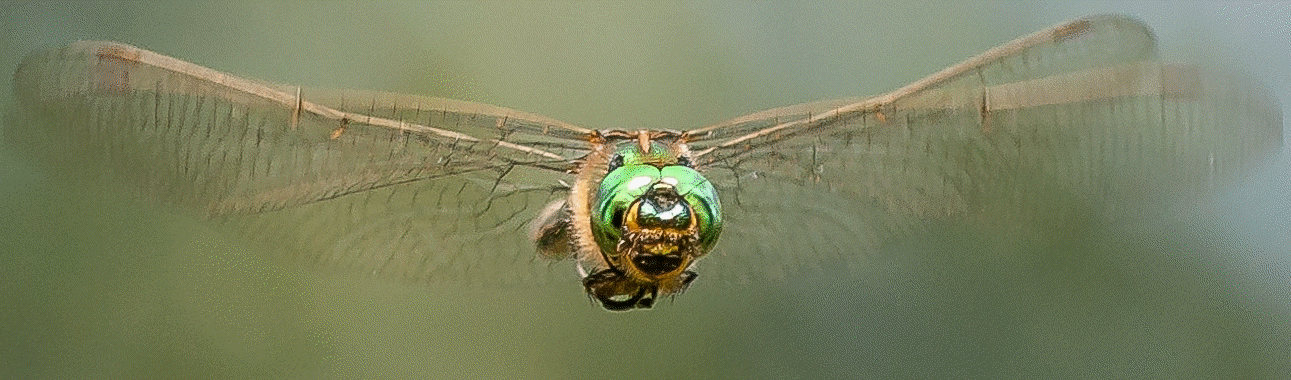
I am fortunate to have the New Forest on my doorstep and frequently explore its ponds, streams, and bogs during the season to observe one of the most diverse species to be found in the country. The forest is home to some of our rarer species, including the Southern, Scarce Blue-tailed, and Small Red Damselflies, the Golden-ringed, Keeled Skimmer, and Scarce Chaser Dragonflies.
The northern region is generally quieter, while the area south of the A31 tends to become overcrowded during peak season and on weekends. It is important to note that the terrain can be challenging, and a sturdy pair of waterproof walking boots is recommended, or ideally, a pair of wellies, particularly for the boggy areas.
The majority of the New Forest is open access, but it is imperative to adhere to the country code at all times. Please close gates, refrain from starting fires, and ensure that you take any litter home with you. Additionally, it is crucial to inform someone of your intended route, carry a mobile phone, and be aware that some of our bogs are capable of swallowing small cars. Therefore, tread carefully.
It is also worth mentioning that certain areas, such as Crockford Stream, are sensitive, and meticulous navigation should be employed to avoid disturbing the delicate habitat, particularly regarding rare fauna and flora. Crockford Stream, along with several other sites, is also home to ground-nesting birds during the spring.
The northern region is generally quieter, while the area south of the A31 tends to become overcrowded during peak season and on weekends. It is important to note that the terrain can be challenging, and a sturdy pair of waterproof walking boots is recommended, or ideally, a pair of wellies, particularly for the boggy areas.
The majority of the New Forest is open access, but it is imperative to adhere to the country code at all times. Please close gates, refrain from starting fires, and ensure that you take any litter home with you. Additionally, it is crucial to inform someone of your intended route, carry a mobile phone, and be aware that some of our bogs are capable of swallowing small cars. Therefore, tread carefully.
It is also worth mentioning that certain areas, such as Crockford Stream, are sensitive, and meticulous navigation should be employed to avoid disturbing the delicate habitat, particularly regarding rare fauna and flora. Crockford Stream, along with several other sites, is also home to ground-nesting birds during the spring.
Important Parking Information
As of April 2026 the Forestry Commission (in their infinite wisdom) have decided to introduce parking charges to all their 129 car parks. This is a very unpopular and controversial decision with which I and the majority of visitors strongly disagre.
As a result of this the Highways Commission have instigated a parking prohibition order (cash-grab) affecting all roads as listed here.
As a result of this the Highways Commission have instigated a parking prohibition order (cash-grab) affecting all roads as listed here.
Cadnam Common
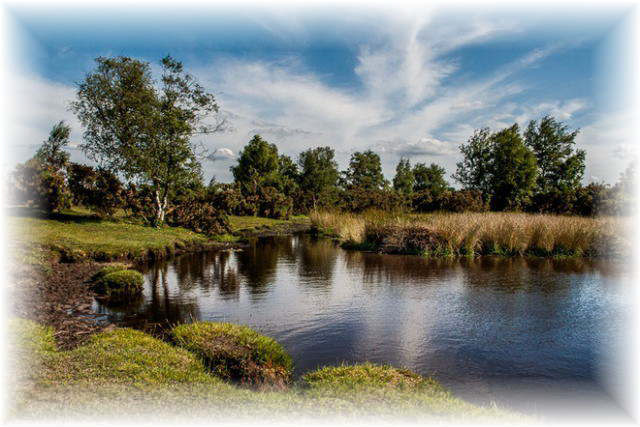
Cadnam Common, part of the ‘Bramshaw Commons’ managed by The National Trust, boasts an unparalleled diversity of habitats within a single pond, offering a miniature glimpse of the New Forest. The pond’s relatively shallow depth and accessibility make it an ideal breeding ground for the remarkable 20 species of dragonflies.
Stagbury Pond stands out as an exceptional destination for dragonfly enthusiasts, renowned for its exceptional dragonfly activity, even during extended periods of drought. In May, the pond erupts in vibrant activity as Downy Emeralds compete for attention alongside the numerous Broad-bodied and Four-spotted Chasers.
Stagbury Pond stands out as an exceptional destination for dragonfly enthusiasts, renowned for its exceptional dragonfly activity, even during extended periods of drought. In May, the pond erupts in vibrant activity as Downy Emeralds compete for attention alongside the numerous Broad-bodied and Four-spotted Chasers.
As the season progresses, the rare Small Red-eyed and Scarce Blue-tailed damselflies grace the water’s surface, while in late summer, hawkers patrol the pond’s edges, including the locally-rare Moorland Hawker.
The south bank boasts an extensive thicket of gorse, which is always worth exploring, particularly for photographers seeking perched opportunities. However, the pond itself is one of the most photographer-friendly ponds in the area.
A short walk to the south leads to a bridge over a more extensive boggy area, which is fed by seepages and home to a small population of Scarce Blue-tailed damselflies.
There are no dedicated car parks, but roadside parking is available along the Furzey to Newbridge road. To avoid damaging the soft verges and potential collisions with passing tractors, park away from the main carriageway. A short walk west brings you to the pond.
A short walk to the south leads to a bridge over a more extensive boggy area, which is fed by seepages and home to a small population of Scarce Blue-tailed damselflies.
There are no dedicated car parks, but roadside parking is available along the Furzey to Newbridge road. To avoid damaging the soft verges and potential collisions with passing tractors, park away from the main carriageway. A short walk west brings you to the pond.
Crockford Stream
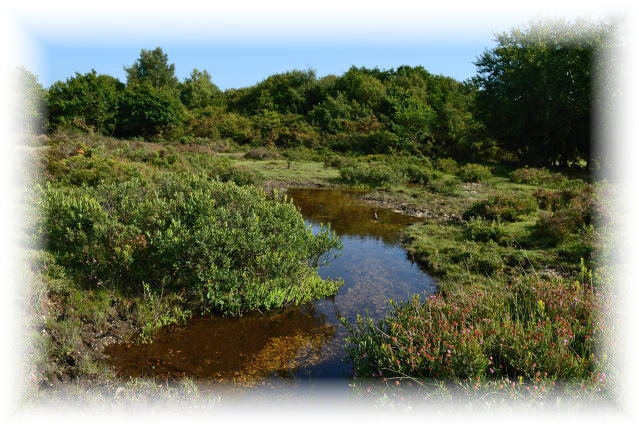
Crockford is renowned as one of the premier dragonfly observatories in the United Kingdom. This tranquil gravel-based stream is sourced from the boggies of Beaulieu Common. The area boasts four seasonal ponds and several boggy areas upstream. Crockford is particularly suitable for observing the spectacular Golden-ringed Dragonfly and the rare Southern Damselfly, alongside the Beautiful Demoiselle among its 28 recorded species. The proximity to the coast facilitates the occasional visitation of the Hairy Dragonfly.
The primary area of activity lies within the clearing. The open stream is typically patrolled by Golden-ringed Dragonflies during the breeding season, accompanied by other species such as Beautiful Demoiselles and Keeled Skimmers. The banks of the stream are lined with numerous Bog Myrtle bushes, which serve as the preferred habitat for Southern and Small Red Damselflies. It is advisable to explore every nook and cranny of the gorse thicket to the south of the stream in search of perched dragonflies.
It is possible to roughly follow the main stream northwestward to Two Bridges Bottom, where there is a large pond that is worth exploring. However, I find the open pools surrounding the ford and the stream leading down from Deep Moor superior. Additionally, the entire stream from the ford to Upper Crockford Bottom is equally impressive. It is also worthwhile dedicating some time to exploring the lower reaches of the stream for a more tranquil observation experience.
Update 2016
During my visit this spring, I was deeply disappointed to discover that extensive clearing has been undertaken. The view above is no longer a faithful representation of the original habitat. The trees in the background have been removed, along with the surrounding scrub. I have inquired about the extent of the work carried out and have been informed that it is intended to benefit the Southern Damselfly.
Time will reveal the outcome, and it will be intriguing to observe whether the same abundance of odonata populations persists after their safe refuges and feeding grounds have been cleared. I have personally observed an increase in the number of Southern and Small Red damselflies feeding and resting among the now-razed heather stands.
Please note:
The area is host to ground-nesting birds in spring and early summer.
For early season park at Norley Inclosure or Beaulieu Heath
The primary area of activity lies within the clearing. The open stream is typically patrolled by Golden-ringed Dragonflies during the breeding season, accompanied by other species such as Beautiful Demoiselles and Keeled Skimmers. The banks of the stream are lined with numerous Bog Myrtle bushes, which serve as the preferred habitat for Southern and Small Red Damselflies. It is advisable to explore every nook and cranny of the gorse thicket to the south of the stream in search of perched dragonflies.
It is possible to roughly follow the main stream northwestward to Two Bridges Bottom, where there is a large pond that is worth exploring. However, I find the open pools surrounding the ford and the stream leading down from Deep Moor superior. Additionally, the entire stream from the ford to Upper Crockford Bottom is equally impressive. It is also worthwhile dedicating some time to exploring the lower reaches of the stream for a more tranquil observation experience.
Update 2016
During my visit this spring, I was deeply disappointed to discover that extensive clearing has been undertaken. The view above is no longer a faithful representation of the original habitat. The trees in the background have been removed, along with the surrounding scrub. I have inquired about the extent of the work carried out and have been informed that it is intended to benefit the Southern Damselfly.
Time will reveal the outcome, and it will be intriguing to observe whether the same abundance of odonata populations persists after their safe refuges and feeding grounds have been cleared. I have personally observed an increase in the number of Southern and Small Red damselflies feeding and resting among the now-razed heather stands.
Please note:
The area is host to ground-nesting birds in spring and early summer.
For early season park at Norley Inclosure or Beaulieu Heath
Ober Water
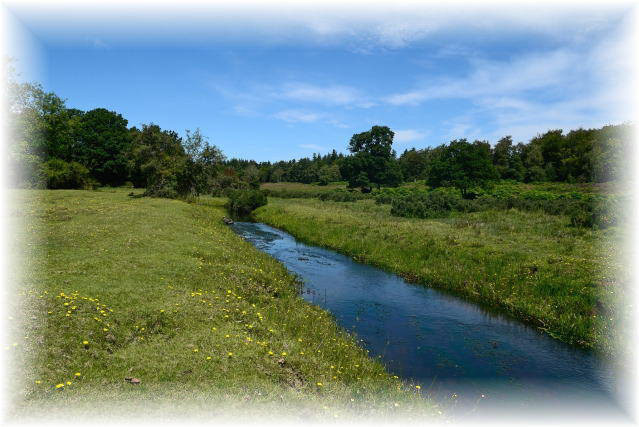
Ober Water is a gravel-bedded stream that flows eastward from near Burley, traversing open heath and woodland before joining Blackwater to form the Lymington River. This is the sole location in the New Forest where White-legged Damselflies can be observed. Other notable species include the Golden-ringed Dragonfly, Southern Damselfly, Small Red Damselfly, and the rare Scarce Blue-tailed Damselfly.
The surrounding heathland serves as an ideal habitat for Keeled Skimmers, where they can be found in large numbers around the numerous feeder streams and boggy pools to the south. Additionally, in their juvenile stage, they can be spotted anywhere among the heather. To the south, there are Duckhole Bog and Holmhill Bog, the latter of which feeds the Silver Stream, another prime location for the Southern Damselfly, Beautiful Demoiselle, and Golden-ringed Dragonfly.
There are several approaches to Ober Water. At the western end, park at Mill Lawn and proceed eastward towards Markway Bridge. Along this stretch, you will encounter, depending on the time of year, Golden-ringed, Black-tailed Skimmers, Beautiful Demoiselle, and Small Red Damselflies. In the feeder streams and pools to the south, Keeled Skimmers, Broad-bodied, and Four-spotted Chasers can be observed. It is also worthwhile to explore the side channels in search of Scarce Blue-tailed Damselflies.
For the eastern end, park at Puttles Bridge and proceed westward towards Markway Bridge.
Puttles Bridge also offers the most convenient approach to the Silver Stream.
For Duckhole and Holmhill bogs, the most suitable approach is from Wilverley Post.
The surrounding heathland serves as an ideal habitat for Keeled Skimmers, where they can be found in large numbers around the numerous feeder streams and boggy pools to the south. Additionally, in their juvenile stage, they can be spotted anywhere among the heather. To the south, there are Duckhole Bog and Holmhill Bog, the latter of which feeds the Silver Stream, another prime location for the Southern Damselfly, Beautiful Demoiselle, and Golden-ringed Dragonfly.
There are several approaches to Ober Water. At the western end, park at Mill Lawn and proceed eastward towards Markway Bridge. Along this stretch, you will encounter, depending on the time of year, Golden-ringed, Black-tailed Skimmers, Beautiful Demoiselle, and Small Red Damselflies. In the feeder streams and pools to the south, Keeled Skimmers, Broad-bodied, and Four-spotted Chasers can be observed. It is also worthwhile to explore the side channels in search of Scarce Blue-tailed Damselflies.
For the eastern end, park at Puttles Bridge and proceed westward towards Markway Bridge.
Puttles Bridge also offers the most convenient approach to the Silver Stream.
For Duckhole and Holmhill bogs, the most suitable approach is from Wilverley Post.
Latchmore Brook
Latchmore Brook, a tributary of the River Avon, flows through Fritham, a village nestled within the heart of the forest. The most convenient approach to the stream is via the Ogdens Car Park.
During the peak season, Latchmore Brook attracts numerous dog walkers and picnickers. However, there are ample opportunities to avoid the crowds by venturing into the feeder streams located north of the main flow. These streams are particularly renowned for harbouring a diverse array of dragonfly species, including the magnificent Beautiful Demoiselle and the striking Golden-ringed dragonfly.
In contrast, the peat bogs and streams to the north of the main flow provide a haven for Keeled Skimmers, Small Red dragonflies, Southern dragonflies, and the rare Scarce Blue-tailed Damselfly.
During the peak season, Latchmore Brook attracts numerous dog walkers and picnickers. However, there are ample opportunities to avoid the crowds by venturing into the feeder streams located north of the main flow. These streams are particularly renowned for harbouring a diverse array of dragonfly species, including the magnificent Beautiful Demoiselle and the striking Golden-ringed dragonfly.
In contrast, the peat bogs and streams to the north of the main flow provide a haven for Keeled Skimmers, Small Red dragonflies, Southern dragonflies, and the rare Scarce Blue-tailed Damselfly.
Hatchet Pond
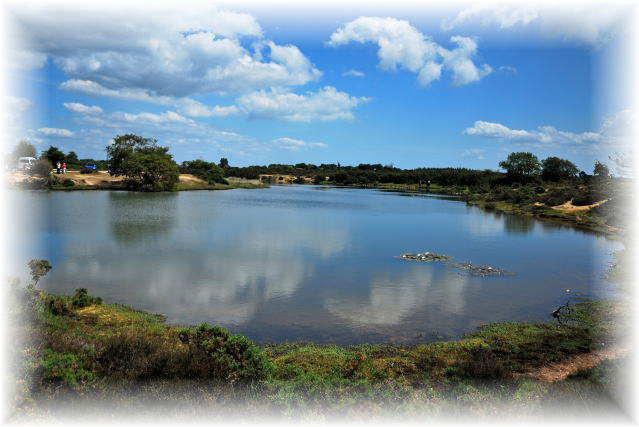
Hatchet Pond, a renowned tourist and picnic destination in the New Forest, offers an exceptional platform for dragonfly enthusiasts. However, the diminutive pond situated within the Hatchet Moor car park stands as the preeminent location for such enthusiasts.
This prime habitat, surrounded by heather and gorse, provides an unparalleled opportunity to observe Downy Emeralds and Black-tailed Skimmers. The heath to the west boasts numerous feeder channels and boggy areas, making it an exploration worthy of consideration.
This prime habitat, surrounded by heather and gorse, provides an unparalleled opportunity to observe Downy Emeralds and Black-tailed Skimmers. The heath to the west boasts numerous feeder channels and boggy areas, making it an exploration worthy of consideration.
Keyhaven
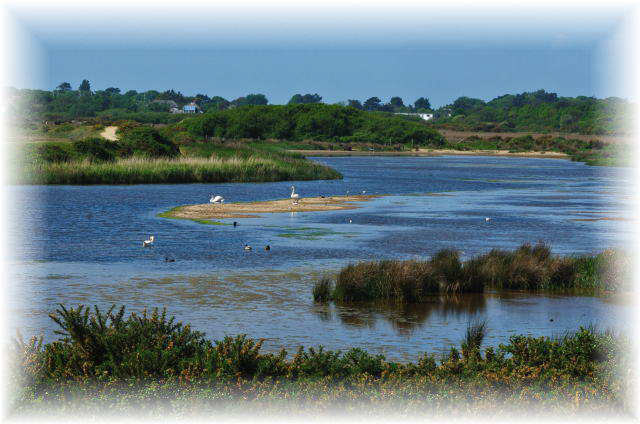
The stretch of coastline between Lymington and Keyhaven is a nationally recognised site for rare domestic and migrant waterfowl. The expansive inland water bodies adjacent to the sea wall also serve as prime habitats for coastal dragonfly species, including the Hairy Dragonfly.
In addition to the lagoons, there is a balancing pond situated alongside the track leading from Lower Pennington to Keyhaven. Although this pond is enclosed, the gorse track bordering it provides an ideal resting spot for damselflies. Furthermore, the bordered section of Iley Lane typically harbours a diverse selection of dragonflies engaged in feeding due to the proximity of Avon Water, a river that originates from the bogs of the New Forest near Holmsley.
Park here or here
In addition to the lagoons, there is a balancing pond situated alongside the track leading from Lower Pennington to Keyhaven. Although this pond is enclosed, the gorse track bordering it provides an ideal resting spot for damselflies. Furthermore, the bordered section of Iley Lane typically harbours a diverse selection of dragonflies engaged in feeding due to the proximity of Avon Water, a river that originates from the bogs of the New Forest near Holmsley.
Park here or here
Burley Heath
Burley Heath is a spacious and relatively tranquil area situated in the southern region of the New Forest. However, Burbush Car Park has recently exhibited a propensity to become congested with cyclists during peak seasons and weekends. Consequently, it is advisable to arrive early to secure a parking space.
From this location, you can proceed southeastward to Whitten Pond, preferably following the feeder channel to the north. This is one of the few locations within the forest where you can observe Brown Hawkers during their breeding season.
To the east of the car park, you will encounter Burbush Pond and Long Pond, both of which are highly suitable habitats for Emerald and Small Red Damselflies. Additionally, there are several seasonal pools situated to the south of the old railway. Notably, the railway itself serves as an optimal location for observing Small Red Damselflies.
From this location, you can proceed southeastward to Whitten Pond, preferably following the feeder channel to the north. This is one of the few locations within the forest where you can observe Brown Hawkers during their breeding season.
To the east of the car park, you will encounter Burbush Pond and Long Pond, both of which are highly suitable habitats for Emerald and Small Red Damselflies. Additionally, there are several seasonal pools situated to the south of the old railway. Notably, the railway itself serves as an optimal location for observing Small Red Damselflies.
Hawkhill Inclosure
Hawkhill Inclosure was once an ideal location for observing Hawkers during the breeding season. Notably, I have observed a significantly higher number of Golden-ringed Dragonflies in this area compared to any other location.
To access the site, park at the grid reference provided and proceed through the gate. Follow the track NNW to a small clearing.
This narrow, sunny clearing was once a haven for butterflies and other insects. It also provided ample perching opportunities for dragonflies. However, the thicket has become overgrown and almost barren, partly due to the clearance of trees that previously offered shelter.
From the clearing, follow the track downhill to the stream at the bottom. This has also affected the main track, which was once swarming with Common Darters during summer. It remains a popular spot for roosting Golden-ringed, Southern, and Migrant Hawkers. Unfortunately, since the forestry commission cleared a substantial area of woodland, the availability of prey has diminished.
Fortunately, the area bordering the stream still offers a good bounty, with Beautiful Demoiselles and Golden-ringed among the breeding species. A suitable circular walk involves following Worts Gutter to SU 36402 02647. Turn left and follow the path to the fork, then proceed along the main gravel cycle track (signposted Brockenhurst) until you reach the boggy area. This area is usually swarming with Keeled Skimmers during the breeding season. Alternatively, you can traverse the boggy area or continue to the crossroads, turn left, and follow the track downhill to the small bridge at the opposite end of the bog. Finally, ascend the hill to the car park.
To access the site, park at the grid reference provided and proceed through the gate. Follow the track NNW to a small clearing.
This narrow, sunny clearing was once a haven for butterflies and other insects. It also provided ample perching opportunities for dragonflies. However, the thicket has become overgrown and almost barren, partly due to the clearance of trees that previously offered shelter.
From the clearing, follow the track downhill to the stream at the bottom. This has also affected the main track, which was once swarming with Common Darters during summer. It remains a popular spot for roosting Golden-ringed, Southern, and Migrant Hawkers. Unfortunately, since the forestry commission cleared a substantial area of woodland, the availability of prey has diminished.
Fortunately, the area bordering the stream still offers a good bounty, with Beautiful Demoiselles and Golden-ringed among the breeding species. A suitable circular walk involves following Worts Gutter to SU 36402 02647. Turn left and follow the path to the fork, then proceed along the main gravel cycle track (signposted Brockenhurst) until you reach the boggy area. This area is usually swarming with Keeled Skimmers during the breeding season. Alternatively, you can traverse the boggy area or continue to the crossroads, turn left, and follow the track downhill to the small bridge at the opposite end of the bog. Finally, ascend the hill to the car park.
Slufters Pond
I strongly advise against parking on the roadside to access this pond. Instead, please park at Milkham Enclosure.
Slufters is a relatively large pond with seepages to the north, where the heather is usually populated with a significant number of Black Darters and Emerald Damselflies. For many years, I was not particularly fond of this pond, as every time I visited, I was subjected to strong winds, and all the species present can be observed elsewhere in the forest. However, in recent years, it has proven to be worth a visit, even though the resident species can be more easily observed elsewhere.
The main pond is not particularly productive, as most activity occurs offshore near the island. The smaller pond at the head of the seepage is far more interesting for bog-loving species. Even the locally-rare Moorland Hawker occasionally visits. Therefore, please choose a calm day to visit.
Broomy Pond
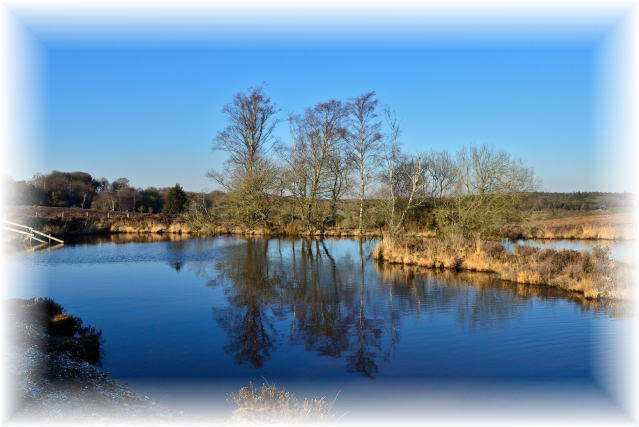
The road leading to the south of Broomy Pond is private and has recently been equipped with a gate at its entrance. Therefore, as with Slufters, it is advisable to park at Milkham Enclosure and proceed on foot. The restricted access to this pond allows it to remain largely undisturbed, surrounded by gorse to the south and reeds to the north.
The reeded area is fenced off to safeguard the habitat, and this is the primary location for emergence. Once emerged, the tenerals can be observed outside the fence among the heather.
This habitat is particularly beneficial for Downy Emeralds and Emerald Damselflies, among other species. It is recommended to thoroughly explore the gorse area, as it serves as an excellent hunting spot.
The reeded area is fenced off to safeguard the habitat, and this is the primary location for emergence. Once emerged, the tenerals can be observed outside the fence among the heather.
This habitat is particularly beneficial for Downy Emeralds and Emerald Damselflies, among other species. It is recommended to thoroughly explore the gorse area, as it serves as an excellent hunting spot.
Eyeworth Pond
A popular tourist destination for feeding ducks, including resident Mandarin ducks, is an excellent place to observe and photograph forest songbirds, such as Downy Emeralds and Red-eyed Damselflies, among others. The site becomes particularly crowded during the peak season and weekends due to these opportunities. Consequently, it is one of my favourite spots to visit during the winter months.
Ipley Cross
Ipley Cross is one of the most suitable locations to observe Black Darter and Common Emerald, and possibly the best population of Silver-studded Blue butterflies in the New Forest.
Rushbush Pond is a shallow, muddy-bottomed pool, backed by a feeder stream for the Beaulieu River. It is a prime location for Beautiful Demoiselles, Golden-ringed Hawks, and Common Darters, as well as other New Forest species. It is usually one of the first ponds to awaken in Spring.
Furzey Pond was a small pond surrounded by heather and gorse. However, in 2014, the authorities decided to remove the surrounding undergrowth, resulting in the death of the once vibrant pond.
Dibden Bottom is a better choice if you are willing to venture off the beaten track. A faint path leads from Furzey Pond to a hidden pond partially surrounded by woodland. Access to the shore is limited, but the best rewards are found among the surrounding heather.
From here, follow the path south and west around the trees to locate the other ponds within the group. These shallow ponds dry out during periods of warm weather, but if they remain, they are ideal for visiting Moorland Hawks.
Rushbush Pond is a shallow, muddy-bottomed pool, backed by a feeder stream for the Beaulieu River. It is a prime location for Beautiful Demoiselles, Golden-ringed Hawks, and Common Darters, as well as other New Forest species. It is usually one of the first ponds to awaken in Spring.
Furzey Pond was a small pond surrounded by heather and gorse. However, in 2014, the authorities decided to remove the surrounding undergrowth, resulting in the death of the once vibrant pond.
Dibden Bottom is a better choice if you are willing to venture off the beaten track. A faint path leads from Furzey Pond to a hidden pond partially surrounded by woodland. Access to the shore is limited, but the best rewards are found among the surrounding heather.
From here, follow the path south and west around the trees to locate the other ponds within the group. These shallow ponds dry out during periods of warm weather, but if they remain, they are ideal for visiting Moorland Hawks.
Linford Bottom
Linford Bottom, situated to the east of the A31, is also a popular destination for dog walkers and picnickers. However, it can become quite congested during peak seasons and weekends.
Similar to Whitten Pond and Blashford Lakes, the proximity to the River Avon renders Linford Bottom one of the few guaranteed locations within the forest where Brown Hawks can be observed. These hawks are typically patrolling the tree line to the north of the stream.
Similar to Whitten Pond and Blashford Lakes, the proximity to the River Avon renders Linford Bottom one of the few guaranteed locations within the forest where Brown Hawks can be observed. These hawks are typically patrolling the tree line to the north of the stream.
Blashford Lakes
Blashford Lakes, a substantial reclaimed gravel pit managed by Hampshire Wildlife Trust, is renowned for its waterfowl and serves as an exceptional habitat for dragonflies. The proximity to the River Avon makes it one of only a select few sites within the New Forest where Brown Hawker can be observed.
The optimal dragonfly viewing occurs along the footpath that traverses the area between Ellingham Lake and Dockens Water, as well as the small clearing situated adjacent to the stream, accessible via the footbridge leading back to the reserve. It is advisable to extend your exploration beyond the gate to the clearing and follow the roadside path that leads back via Ellingham Pound, where the Lesser Emperor has been recorded visiting on a few occasions.
The Centre Pond is also worth visiting for patrolling hawkers, offering exceptional opportunities to observe the Brown Hawker in close proximity.
The optimal dragonfly viewing occurs along the footpath that traverses the area between Ellingham Lake and Dockens Water, as well as the small clearing situated adjacent to the stream, accessible via the footbridge leading back to the reserve. It is advisable to extend your exploration beyond the gate to the clearing and follow the roadside path that leads back via Ellingham Pound, where the Lesser Emperor has been recorded visiting on a few occasions.
The Centre Pond is also worth visiting for patrolling hawkers, offering exceptional opportunities to observe the Brown Hawker in close proximity.
Badminston Common
Badminston Common is a reasonably large recreation area near Fawley, bordered by private gravel works and fishing lakes. Combined with a wooded stream and sheltered path margins, the site provides a great diversity of species roosting and feeding among the heather and gorse. Even the semi-wasteland of old workings throws up some interesting delights such as Ruddy Darter and migrant Red-veined Darters.
High populations of hawkers are usually present, with swarms of 50+ Migrant Hawkers a regular occurrence, although recently their prime breeding area has been victim to the constantly changing topography of the gravel pits themselves.
As of 2015, the south section of the gravel workings is being prepared as a nature reserve, with the large lake given over to fishing. At present, this area is still considered private, and the lake is likely to remain so. As for the proposed nature reserve, I will publish more details as they become available.
Update 2016
The main lake is now fully under the ownership of the local fishing club, which means you are unlikely to gain access without prior permission. The rest of the site is still apparently undecided. Supposedly, a prospective nature reserve has now seen evidence of further workings with signs to deter the general public. This has always been an ethereal site, which up to now has provided some of the unexpected Hampshire species, and we hope we don't lose this valuable coastal location.
Park at the end of Badminston Lane and walk south-west through the gate for the common or across the stile to the left of the garage to walk between the gravel pits.
High populations of hawkers are usually present, with swarms of 50+ Migrant Hawkers a regular occurrence, although recently their prime breeding area has been victim to the constantly changing topography of the gravel pits themselves.
As of 2015, the south section of the gravel workings is being prepared as a nature reserve, with the large lake given over to fishing. At present, this area is still considered private, and the lake is likely to remain so. As for the proposed nature reserve, I will publish more details as they become available.
Update 2016
The main lake is now fully under the ownership of the local fishing club, which means you are unlikely to gain access without prior permission. The rest of the site is still apparently undecided. Supposedly, a prospective nature reserve has now seen evidence of further workings with signs to deter the general public. This has always been an ethereal site, which up to now has provided some of the unexpected Hampshire species, and we hope we don't lose this valuable coastal location.
Park at the end of Badminston Lane and walk south-west through the gate for the common or across the stile to the left of the garage to walk between the gravel pits.