Somerset
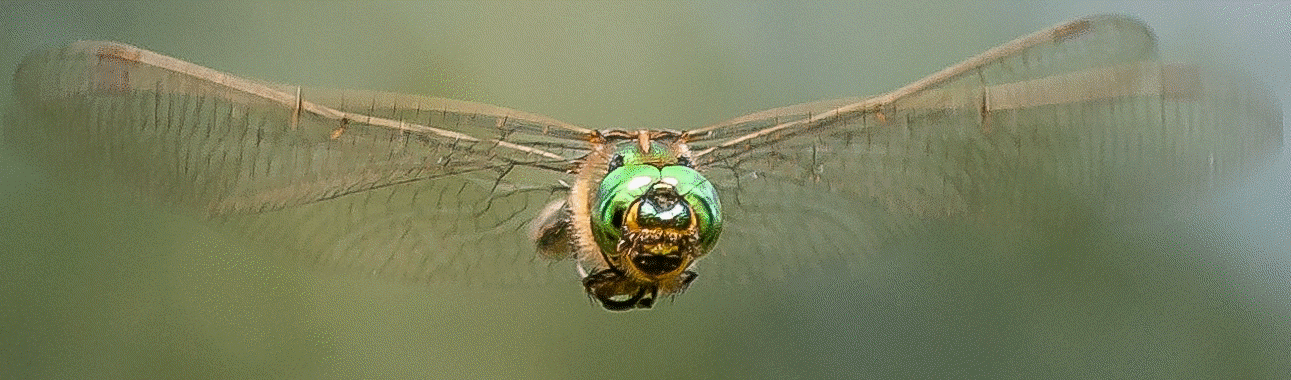
Somerset is another county that warrants further exploration, particularly Exmoor, which was a cherished holiday destination during my childhood. For many years, I dismissed the Somerset Levels as a dreary, flat expanse that clashed with my preference for rolling hills. However, in recent years, it has become a sanctuary that I return to annually during the spring months for the remarkable abundance of Hairy Dragonflies and Variable Damselflies. Additionally, it serves as an ideal destination in late summer for hawkers.
The extensive peat-based standing water and brackish waterways support substantial populations of all resident species. Never before or since have I witnessed such a high concentration of damselflies, creating a vibrant cloud rising from the reed and grass margins. It is also one of the prime locations to observe the Red-eyed damselfly perched inland, providing closer insights and enhanced photographic opportunities.
The extensive peat-based standing water and brackish waterways support substantial populations of all resident species. Never before or since have I witnessed such a high concentration of damselflies, creating a vibrant cloud rising from the reed and grass margins. It is also one of the prime locations to observe the Red-eyed damselfly perched inland, providing closer insights and enhanced photographic opportunities.
Shapwick Heath
This was the site of my first visit after receiving a tip-off from Stewart of Dorset Wildlife Trust. Park at the Information Centre rather than on the roadside. A short walk will bring you to the Reserve Entrance.
Follow the wide path, taking time to explore the area just inside and to the right of the gate. You should spot your first Hairy dragonfly along with damsels aplenty, including Variable, Banded Demoiselles, and Red-eyed. Also perched here are Broad-bodied Four-spotted and Scarce Chasers.
Further along, there is a path leading off to the right. Follow the path around left before branching off right along a small leat. The area at the end should yield a good number of sightings before turning left and continuing to the main intersection. Turn right and follow the path to the Otter Hide. After a few more turns, you will reach a clearing. This is a prime spot, and it enabled me to get my first real chance of a perched female Hairy dragonfly on our first visit. You can continue to the hide or return with a slight diversion.
Any route you take should result in more sightings than you are likely accustomed to.
Follow the wide path, taking time to explore the area just inside and to the right of the gate. You should spot your first Hairy dragonfly along with damsels aplenty, including Variable, Banded Demoiselles, and Red-eyed. Also perched here are Broad-bodied Four-spotted and Scarce Chasers.
Further along, there is a path leading off to the right. Follow the path around left before branching off right along a small leat. The area at the end should yield a good number of sightings before turning left and continuing to the main intersection. Turn right and follow the path to the Otter Hide. After a few more turns, you will reach a clearing. This is a prime spot, and it enabled me to get my first real chance of a perched female Hairy dragonfly on our first visit. You can continue to the hide or return with a slight diversion.
Any route you take should result in more sightings than you are likely accustomed to.
Westhay Moor
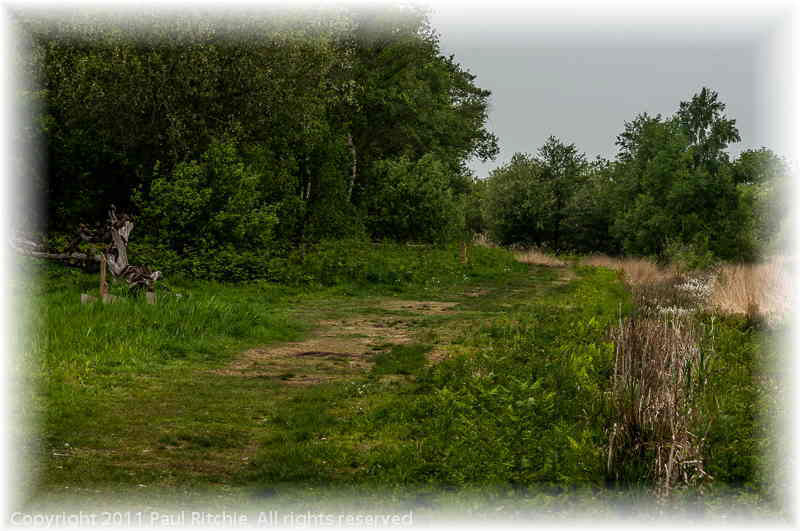
Jerry and Mike from the UK Dragonflies forum kindly recommended this location. A photographer can literally choose their composition here. Continuing past the hide and barely five minutes into the walk, we were surrounded by Hairy Dragonflies. First, a female perched in the reeds, then a mating pair in the centre depression, followed by yet more mating pairs and perched males.
On our first visit, we didn’t even have the time or the inclination to continue any further along the path. However, on a return visit, Sue and I continued what we had started and were glad that we did. Further along, past the carved tree on the right and another boggy channel, you will reach a large pond on the right. This pond was a hive of activity, and among the reeds were the largest population of Four-spotted Chasers we had ever witnessed in one place. Continuing on there were yet more dragons and damsels along the margins. We were only at the start of the season.
We spent four hours along this one track, only returning to the car after all activity on the pond had ceased with the weakening sun and cooler air. However, even this wasn’t the end of activity. With the swarms of midges now on the wing came swarms of Hairys taking advantage of a late afternoon snack before taking roost either in the trees or low down in the vegetation. It is a truly remarkable place.
Park Here
Ham Wall
Priddy Mineries