Surrey
The lowland heaths of Surrey are renowned as prime locations to observe dragonflies. Specifically, Thursley Heath has long been a destination for enthusiasts, with the proximity of the River Wey contributing to the species count.
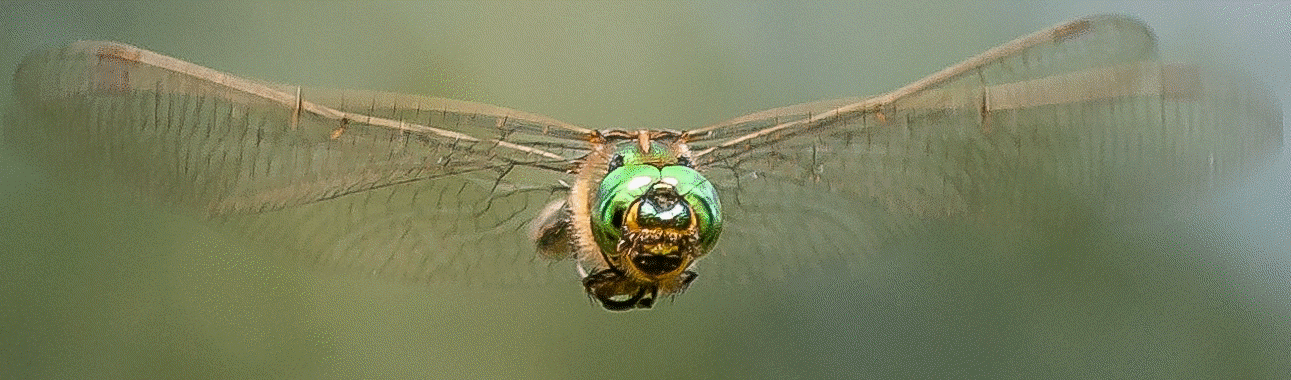
The county also hosts the Brilliant Emerald, which is a result of the high concentration of native woodland.
The county also hosts the Brilliant Emerald, which is a result of the high concentration of native woodland.
Bolder Mere
Bold Mere is a typical Surrey woodland lake, characterised by a magnificent wetland clearing along its southern edge. This clearing serves as a sanctuary for a diverse array of bird species, providing them with a platform to perch, feed, and soar over the sunnier portion of the lake. For optimal viewing, it is advisable to wear waders. In the northern reaches of the lake, where the water is darker, you may encounter Brilliant Emeralds patrolling the area.
Esher Common
Esher Common is a reasonably large area straddling the A3 just inside the M25.
The area north of the road around and including Black Pond is good for all species.
The area north of the road around and including Black Pond is good for all species.
Papercourt Lock
Grid Reference TQ 03201 56575
Papercourt Lock is situated along a section of the Wey Navigation canal. The entire stretch from Newark New Bridge to Cartbridge is worthy of exploration, encompassing the meadow that leads to the River Wey itself. Should you require an incentive, the combination of Brilliant Emeralds and Brown Hawkers, along with the presence of a pub at each end of the walk, should provide ample motivation. Other notable features include the impressive displays of Banded Demoiselles and a substantial population of White-legged Damselflies.
Thundry Meadows
Grid Reference SU 89772 43991
Thundry Meadows is a tranquil reserve situated on the banks of the River Wey, in the vicinity of Elstead. Visitors can anticipate encountering the majority of the same species as Thursley, albeit with more prominent displays of Banded Demoiselles. Although I have only visited the reserve once thus far, my initial impressions were of a serene riverside meadow, ideal for spending a summer afternoon observing dragonflies. Additionally, there are nearby pubs within walking distance. The reserve provided space for one or two vehicles.
Thursley Common
Grid Reference SU 89937 41539
An exceptional website dedicated to dragonflies. A few metres from the car park lies a substantial pond known as The Moat, which serves as an ideal location for patrolling Downy Emeralds. If fortunate, you may even catch a glimpse of the rare Brilliant Emerald.
To the east, an expansive area of heath encompasses numerous boggy pools that can be easily traversed by a well-constructed walkway. Each pool offers unique attractions, and the surrounding heather is particularly conducive to Black Darters and Emerald Damselflies.
Thurley Common was once home to the southernmost population of the White-faced Darter, but due to habitat degradation and frequent heath fires, it is believed that this population has now become extinct.
White-legged Damselflies can also be found within the heath, and for reptile enthusiasts, the walkways provide convenient dry basking areas for what appears to be the largest congregation of Common Lizards I have observed in a single location.
To the east, an expansive area of heath encompasses numerous boggy pools that can be easily traversed by a well-constructed walkway. Each pool offers unique attractions, and the surrounding heather is particularly conducive to Black Darters and Emerald Damselflies.
Thurley Common was once home to the southernmost population of the White-faced Darter, but due to habitat degradation and frequent heath fires, it is believed that this population has now become extinct.
White-legged Damselflies can also be found within the heath, and for reptile enthusiasts, the walkways provide convenient dry basking areas for what appears to be the largest congregation of Common Lizards I have observed in a single location.